Index
Classes with this recipe
Index
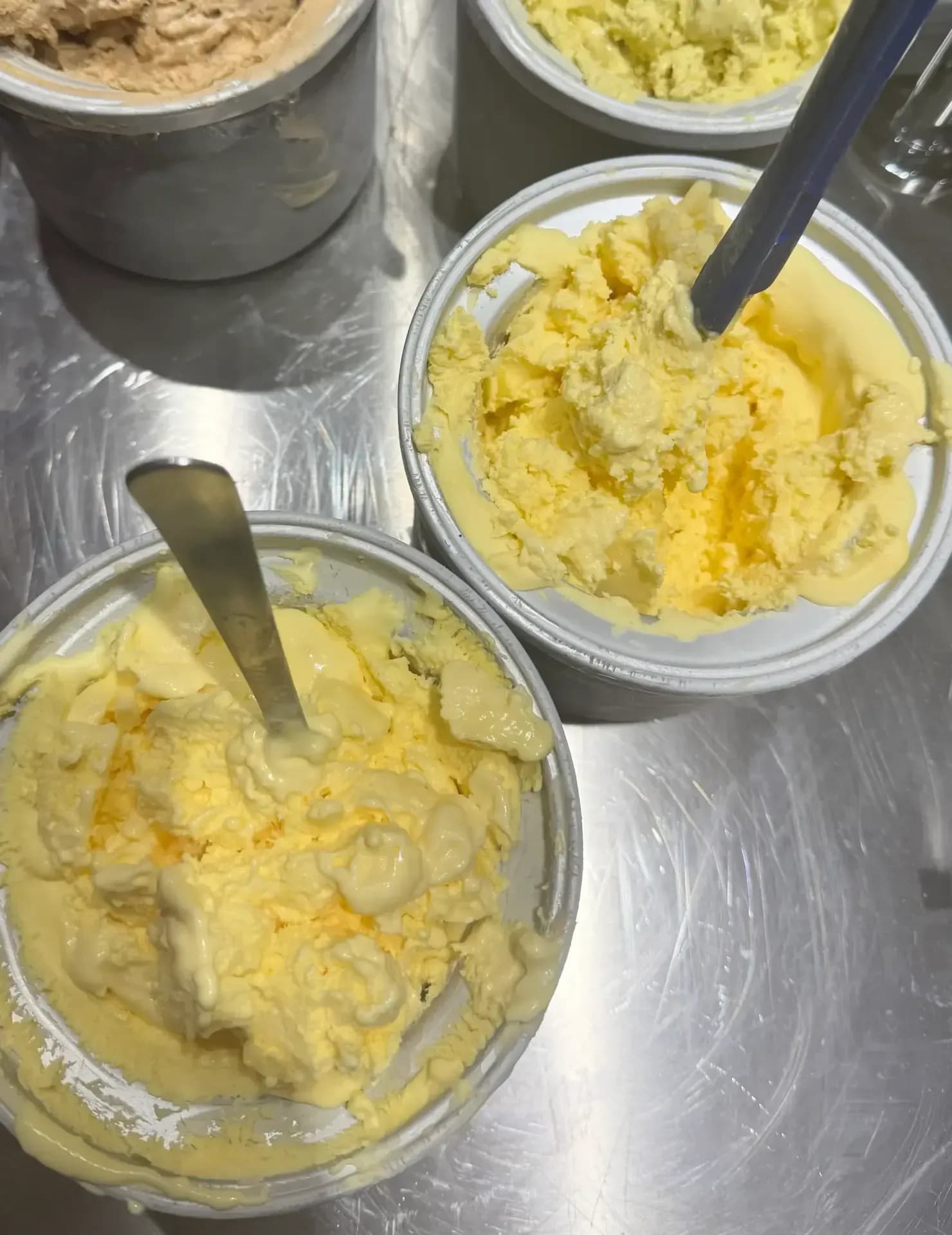
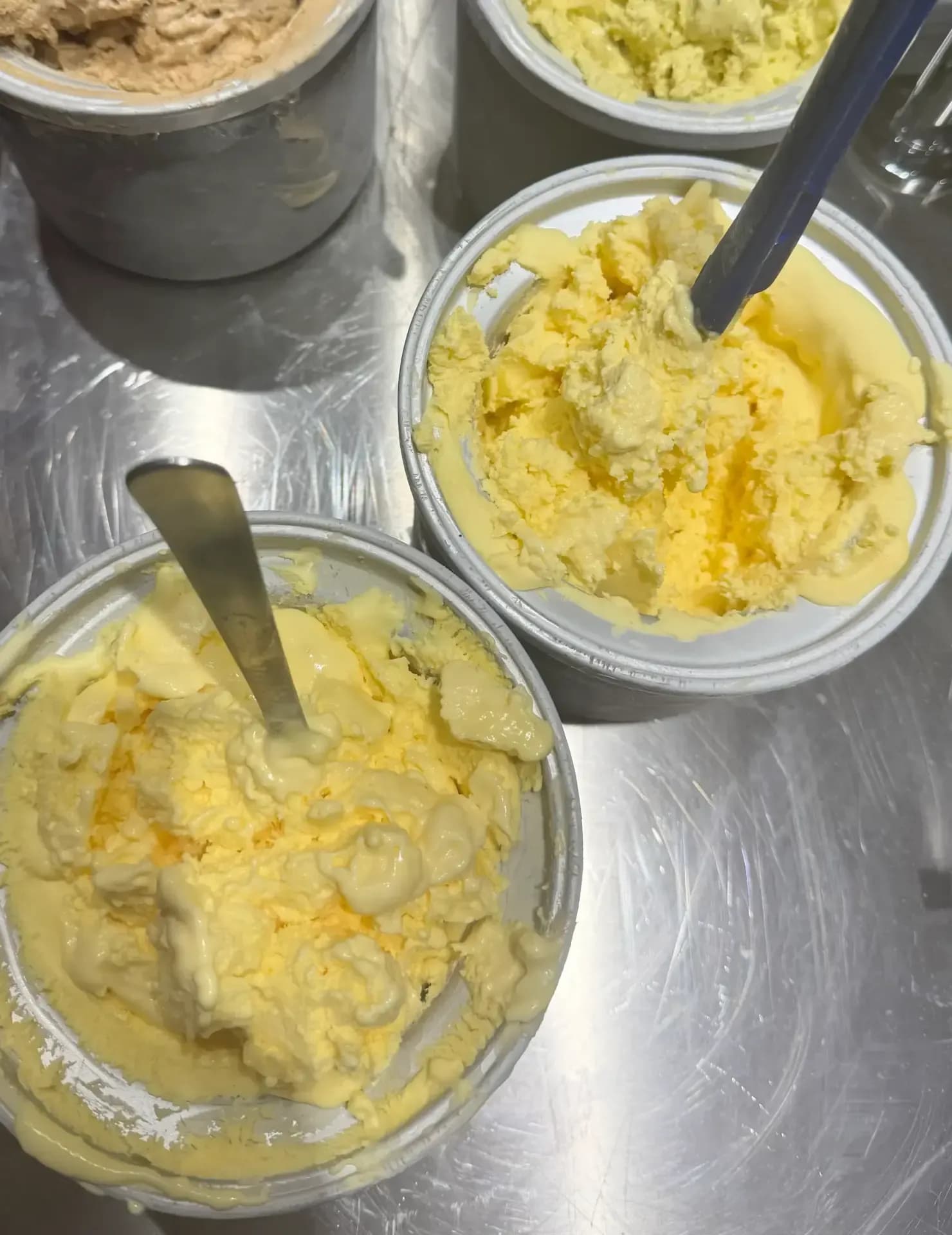
Somebody pours the base into the jug, looks at it and asks whether it went wrong. It is the color: pale olive, closer to khaki than to anything on a gelateria sign. Nothing went wrong. That is what 100 g of real pistachios look like once they meet milk and cream, and it happens at Piazza Margana 22 in nearly every gelato class we run.
This is the pistachio gelato recipe we teach in that 90-minute class, and the point of it is that you don't need a machine. The base is milk, cream, sugar and the nuts, no eggs, no whipped cream folded in at the end. The freezer does the churning, as long as you do your part: a stir every 30 minutes for 3 hours. The rest is why each choice is made, and what people tell us went wrong the week after.
The pistachio gelato recipe for four, counted per person
Four portions come out of 300 ml of whole milk, 200 ml of fresh cream, 120 g of sugar, 20 g of dextrose, 100 g of shelled unsalted pistachios and 1 g of salt, plus 20 g of pistachios chopped for the top. Per person that is 75 ml of milk, 50 ml of cream, 30 g of sugar, 5 g of dextrose, 25 g of pistachios and 5 g on top. Double it for eight, in two trays.
The pistachios are raw and unsalted. Not the roasted snack kind: roasting pushes the color to brown and the salt is anybody's guess. Pure pistachio paste, 100 g, stands in for the nuts.
Liquid cream, at least 35% fat, and whole milk. Every gram of fat you take out is a gram of water you add, and water is what freezes hard.
Dextrose is the one thing people don't have at home. It is glucose powder, from pharmacies and brewing shops. Twenty grams of mild honey does a similar job. Without it the gelato still works, just firmer.
Why real pistachio gelato is beige and not green
Under the shell and under a purple-brown skin, a pistachio kernel is green. Grind it with milk and cream and the green thins out to olive. The bright emerald you see in some shop windows comes from coloring, or from the old cheap trick of almond paste with green dye and a little pistachio flavoring.
The skin matters more than the shade of the kernel. Leave it on and it grinds into the paste as brown specks and a tannic, bitter edge, so the gelato comes out gray. One minute in boiling water, a rub in a towel, ten minutes on the towel to dry. It is the step most people at home skip because it looks fussy. It isn't.
Then there is Bronte. The pistachios grown on the slopes of Etna are long and deep green, with an aroma that carries straight through the milk, and the name is protected. A fair share of what is sold as Bronte to tourists is not. Honest Sicilian, Iranian or Californian nuts still make a pistachio gelato. Green dye does not.
No eggs, and what the sugar is actually for
A lot of gelato up north starts from a custard: yolks, milk, sugar, cooked like a crema. The Sicilian way, and the way we teach for pistachio, is a plain milk-and-cream base with no eggs at all. Egg yolk brings its own flavor, and against pistachio that flavor is noise. Without it you taste the nut first, then the milk, then the faint bitterness of a real pistachio.
Sugar in gelato is structure before it is sweetness. At freezer temperature, sugar keeps part of the water unfrozen, and that unfrozen water is what lets a spoon go in. The low-sugar batch that somebody in class describes as proof the recipe doesn't work is, every single time, a brick.
The 20 g of dextrose does the same job with less sweetness. Two sugars, one for taste and one for softness, is how a gelateria balances a mix.
Eighty-five degrees, and off. The base is heated so the sugar dissolves and the fat and proteins settle together, not to cook. Past a boil, milk tastes cooked and cream holds air worse. A thermometer costs less than one batch of pistachios.
The freezer is the machine: what the stirring replaces
A gelato machine does two things while the mix freezes: it keeps it moving, so ice forms as thousands of crystals too small to feel, and it works some air in. A tray sitting in a freezer does neither. Left alone, the base freezes from the walls inward over hours and the crystals grow long enough to crunch.
Every stir is you doing the machine's job for twenty seconds. Break the frozen rim into the soft middle, beat it, put it back. The rhythm is every 30 minutes, and the second time you skip a round you can taste it.
Your tray does the rest. Shallow, metal, pre-chilled in the freezer while the base rests in the fridge. Metal pulls the heat out fast; a deep plastic tub insulates, which is the opposite of what you want. Two to three centimeters of base, no more.
Expect it denser than a shop gelato anyway. Not a flaw: no machine, no air pumped in, more pistachio per spoon.
How the pistachio gelato recipe runs, from nuts to spoon
Count back about nine hours from the moment you want to eat it. Forty of those minutes are work. The rest is a fridge, a freezer and an alarm on your phone.
The first quarter of an hour belongs to the nuts. Blanched for their 60 seconds, rubbed, left 10 minutes on the towel, they go into the blender with two tablespoons borrowed from the 120 g of sugar. That sugar is there for the blades, not for taste. Listen rather than watch: the rattle of dry nuts turns into a dull thud as the oil comes out, in the third or fourth minute, in bursts of 20 seconds so the motor doesn't warm the nuts. When the paste holds together under a finger, stop.
The pan takes about 8 minutes and wants the whisk moving from cold. Milk, cream, the rest of the sugar, the dextrose and the salt over medium-low heat, whisk going before the bottom is warm so the sugar dissolves instead of catching. In class the thermometer sits in the pan from the start and nobody touches it until it reads 85 °C. Without one: steam, a ring of tiny bubbles at the rim, off before anything rolls.
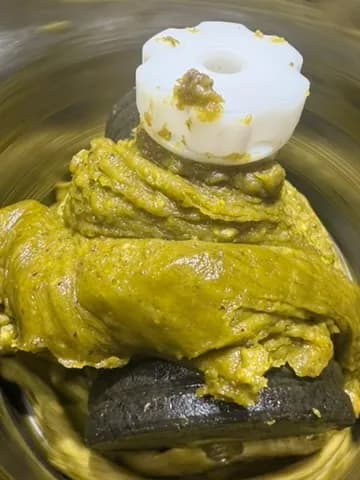
Then the moment that decides whether it will be smooth. The hot base goes over the paste, back in the blender, and runs for 90 seconds with one scrape of the sides. It has to be this way round: cold liquid leaves pistachio paste in clumps with oil floating on top, hot liquid opens it and takes the oil in. You want a pale olive cream that coats the back of a spoon. Flecks are fine, lumps mean another 30 seconds.
Now the wait, and it is not optional. Plastic wrap on the surface, 30 minutes on the counter, then 4 hours in the fridge or overnight, so fat and pistachio oil bind with the water. The empty metal tray goes into the freezer now.
The last four hours run on a timer. Thirty seconds with the beaters until the cold base foams, then 2 to 3 cm deep into the frozen tray. From here it is the routine above: out every 30 minutes for a 20-second beating, rim into center, for 3 hours, then one hour with the door shut. Ten minutes on the counter, a warm spoon dragged across the top so it curls, chopped pistachios over, cold bowls.
What people bring home from class, and what goes wrong
Failures reach us the following week, and they cluster.
- The skins stayed on. Gray gelato, bitter finish, and the person swears the pistachios were expensive. They were. The skins came free.
- The base went in warm. Somebody skipped the four hours in the fridge because the evening was getting late. Coarse crystals, nothing to be done.
- Deep plastic tub. The outside froze solid while the middle was still liquid, so the stirring turned into chipping.
- Two rounds skipped. A movie, a phone call. The crystals you can feel on the tongue grew in those sixty minutes.
- Sugar cut to 80 g. Rock hard, and it never softens properly on the counter either.
- The base was boiled. A cooked-milk taste that pistachio cannot cover, plus a skin to fish out.
- Whipped cream folded in at the end. A shortcut to softness on paper. On the spoon, a mousse that melts to foam and tastes of cream first.
- Scooped straight from the freezer. Bent spoon, chipped tray, and the recipe gets the blame.
One rescue does exist. If the tray has frozen into a block because you missed too many rounds, let it soften on the counter, break it up, blend it briefly, and put it back through the last three rounds. Not as smooth as a batch done right, far better than the block.
Making it ahead, keeping it, and the hazelnut version
Make the base ahead, not the gelato. Under plastic wrap it sits overnight in the fridge: blend on Friday evening, freeze on Saturday morning, when somebody is around to stir.
Once frozen, eat it within a week. After that it dries out on the surface, the crystals grow back and no stirring brings it around. Keep it in the metal tray, plastic wrap pressed on the surface, never in a tub with air above it.
Hazelnut is the other gelato we make in class, and it is not this base with a swap. The nuts are toasted at 180 °C and rubbed out of their skins instead of blanched, the base is sweetened partly with honey and only goes to 70 °C, and the cream goes in off the heat. Same freezer, different logic, which is why the hazelnut gelato recipe has its own page. Neither one pairs with fruit: a scoop of strawberry or lemon next to pistachio fights the fat, and the nut loses.
Where to learn pistachio gelato in Rome
In our kitchen at Piazza Margana 22, in the historic center. The gelato making class lasts about 90 minutes and is built around the base: you prepare it from scratch with the chef, balance the ingredients and work on the texture, without any machine, so what you learn is what you repeat at home. It opens with a welcome of Italian wines, freshly made espresso and traditional cookies, and pistachio and hazelnut are the classics on the sample menu.
That same gelato closes the pizza making class with gelato, about two and a half hours where the dough comes first and the gelato is made once the pizzas are out of the oven; the pizza dough recipe from that class is on the blog too. Both formats also exist as private sessions. The other classes are on the cooking classes page.
Bring the thermometer question with you. It is the one we get asked most, and the answer never changes: 85 degrees, and off.
Recipe details
Pistachio gelato as we make it in our kitchen at Piazza Margana 22, with no ice cream machine: a base of whole milk, fresh cream, sugar and a little dextrose for softness, blended hot with pistachios ground to a paste. No eggs, no colouring, no whipped cream folded in as a shortcut. The colour is olive, not bright green, and the freezer does the churning, one stir every thirty minutes.
Preparation
Blanch and peel the pistachios
Bring a small pan of water to the boil, drop in 100 g of shelled unsalted pistachios and count 60 seconds, no more. Drain, tip them onto a clean towel and rub: the purple-brown skins slide off and the kernel underneath is green. Pick out the stubborn ones by hand. Spread them on the towel to dry for 10 minutes. This is the step most people skip, and it is why their gelato comes out grey-brown with a bitter edge instead of olive green and clean.
Grind them into an oily paste
Put the dry pistachios in a blender or food processor with 2 tablespoons taken from the 120 g of sugar; the sugar acts as grit and helps the blades bite. Run it in bursts of 20 seconds with pauses so the motor does not heat the nuts. First you get flour, then a crumbly mass, then after 3 or 4 minutes the oil comes out and it turns into a stiff paste that holds together when pressed. Stop there. If you own pure pistachio paste, 100 g of it replaces this step.
Heat milk, cream and sugar to 85 °C
Pour 300 ml of whole milk and 200 ml of fresh cream into a saucepan, add the remaining sugar, 20 g of dextrose and 1 g of salt. Medium-low heat, stirring with a whisk from the start so the sugar dissolves before the bottom gets hot. Take it to 85 °C on a thermometer, which takes about 8 minutes: steam rising, a ring of small bubbles at the edge, no rolling boil. Boiling gives the milk a cooked taste and a skin you will have to fish out.
Blend the hot base into the pistachio paste
Scrape the pistachio paste into a tall jug or back into the blender, pour the hot base over it and blend for 90 seconds, scraping down the sides once halfway. Hot liquid opens the paste and pulls the pistachio oil into the mix; cold liquid leaves it in clumps with a greasy film on top. The result should be smooth, pale olive, and coat the back of a spoon. Small dark flecks are fine, lumps are not: blend 30 seconds more.
Cool it, then mature it 4 hours in the fridge
Pour the base into a bowl, press film onto the surface so no skin forms, and leave it 30 minutes at room temperature. Then 4 hours in the fridge, or overnight. This rest is not optional: the fat and the pistachio need time to bind with the water, and a base frozen while still warm makes coarse crystals whatever you do afterwards. While it waits, put a shallow metal tray in the freezer so it is ice-cold when the base goes in.
Freeze in the cold tray, stirring every 30 minutes
Whisk the cold base for 30 seconds with electric beaters until the surface is foamy, pour it 2 to 3 cm deep into the frozen tray and put it back in the freezer. Every 30 minutes, take it out and beat it hard for 20 seconds, scraping the frozen rim into the soft centre; a fork works, beaters work better. After the third pass it looks like thick porridge, after the fifth or sixth it holds a ridge. Do this for 3 hours, then leave it 1 more hour without touching it.
Temper and serve
Straight from the freezer a home gelato is harder than a shop one, because there is no machine air in it. Leave the tray on the counter for 10 minutes, then drag a warm spoon across the surface rather than digging in: it should curl into a ribbon. Scatter 20 g of chopped pistachios on top. Eat it within a week; after that it dries out, the crystals grow back, and no amount of stirring fixes that.
Why home gelato turns into a block of ice
The complaint we hear most in class is always the same: I made the base, I froze it, and the next day I had a pistachio brick. Nearly every time the cause is not the recipe but the freezing. A machine keeps the mix moving while it freezes, so the ice forms as thousands of tiny crystals and air gets folded in. A tray in the freezer does none of that on its own. The stirring every 30 minutes is not a nicety, it is the machine, done by hand. Skip two rounds and the crystals grow big enough to feel on the tongue.
The second cause is the tray. A deep plastic tub freezes from the outside in over hours; a shallow metal tray, pre-chilled, freezes in a thin layer that you can break up every half hour. Two to three centimetres of base, no more.
The third is sugar cut down for health. Sugar in gelato is not only sweetness, it is what keeps part of the water unfrozen at freezer temperature, and that unfrozen water is the softness. Take it from 120 g to 80 g and the same base freezes solid. The 20 g of dextrose do the same job with less sweetness, which is why we add it instead of more sugar.
And one we see with people who have read too much: boiling the base. Milk that has boiled tastes cooked and the cream loses part of its ability to hold air. Eighty-five degrees, a thermometer, and off the heat.
Which pistachios to buy, and the difference between paste and cream
The pistachio Italian gelato is famous for comes from Bronte, on the slopes of Etna, where the trees give fruit every second year and the kernel is long, deep green and intensely aromatic. It is also expensive, and a fair part of what is sold as Bronte in tourist shops is not. If you can get it, it shows: the gelato tastes of the nut without help. If you cannot, unsalted shelled pistachios from Sicily, Iran or California all make an honest gelato. What to avoid is the roasted, salted snack kind: the salt is uncontrollable and the roasting turns the colour brown.
Read the label if you buy a jar. Pure pistachio paste, pasta di pistacchio, is 100% pistachio, oily, dark olive and not sweet, and 100 g of it replaces the 100 g of nuts in this recipe. Pistachio cream, crema di pistacchio, is a spread: sugar first, then oils, white chocolate and somewhere between 20 and 45% pistachio. Used in place of the paste it makes a sweet, pale dessert that tastes mostly of sugar, and it throws the sugar balance off. If it is all you have, halve the sugar in the base and accept a different result.
Dextrose is sold in pharmacies, brewing shops and online as glucose powder; 20 g of mild honey, acacia for instance, does a similar job on the softness with a small change of flavour. Whole milk is not negotiable and neither is fresh cream with at least 35% fat: low-fat versions leave more water to freeze and you are back to the block of ice. Skimmed milk powder, a tablespoon whisked into the cold milk, is the trick gelaterie use to add body without adding water, and it is worth trying once you have made the plain version.
Olive, not neon: recognising a real pistachio gelato
The colour is the first tell. Pistachio kernels are green under a purple skin, and once they are ground with milk and cream the colour lands somewhere between olive and khaki, never bright green. A vivid emerald gelato has colouring in it, or almond paste with green dye, which was the standard cheap version for decades. In class someone always asks whether it is a failure when the base comes out that dull shade. It is the opposite.
The second tell is what happens on the tongue. Real pistachio has a bitter, resinous note behind the sweetness and leaves a faint oiliness on the palate. A gelato that tastes only of sweet and marzipan is telling you what it was made from.
In Sicily this is breakfast: a scoop of pistachio gelato pressed into a warm brioche col tuppo, sometimes with a spoon of whipped cream. In Rome it is an afternoon cone, and it pairs with hazelnut or dark chocolate, never with fruit flavours, which fight the fat. Serve it a few degrees warmer than the freezer, after 10 minutes on the counter, in cold bowls.
This is the gelato we make from scratch in the gelato class, 90 minutes spent on base, balance and texture in our kitchen at Piazza Margana 22, and the one that closes the pizza and gelato class after the dough is out of the oven. It contains no flour, so the same recipe runs unchanged in our gluten-free pizza and gelato class. Both the gelato class and the pizza and gelato class also exist as private sessions.
Gelato is naturally gluten-free: in the gluten-free pizza and gelato class only the cone changes, for a gluten-free version.
Ingredients
300 ml of whole milk, 75 ml per person, full fat
200 ml of fresh cream, 50 ml per person, at least 35% fat, liquid not whipped
120 g of white sugar, 30 g per person
20 g of dextrose, 5 g per person, or the same weight of mild honey
100 g of shelled unsalted pistachios, 25 g per person, raw, or 100 g of pure pistachio paste
1 g of fine salt, a pinch, to bring the pistachio forward
20 g of pistachios for the top, 5 g per person, roughly chopped
Water for blanching the pistachios, a small pan brought to the boil
Method
- 1
Everything starts with the pistachios. One hundred grams of shelled, unsalted pistachios, blanched for one minute in boiling water and rubbed out of their purple skins in a towel, then ground in a blender with two spoons of the sugar until they stop being flour and turn into a stiff, oily paste. That takes three or four minutes, in bursts, so the motor does not heat the nuts.
- 2
The base is milk, cream and sugar, heated but never boiled. Three hundred millilitres of whole milk, 200 ml of fresh cream, 120 g of sugar, 20 g of dextrose and a gram of salt in a saucepan over medium-low heat, stirring, until it reaches 85 °C: steam rising, small bubbles at the rim, no rolling boil.
- 3
Hot base into the paste, not the other way round. Pour the hot liquid over the pistachio paste and blend for a good 90 seconds, until nothing sits at the bottom of the jug. Cold milk will not open the paste. Hot milk does, and pulls the pistachio oil into the mix instead of leaving it floating on top.
- 4
Then the base has to get cold before it gets frozen. Room temperature first, then 4 hours in the fridge. A shallow metal tray goes into the freezer in the meantime.
- 5
The freezer is the machine. Whisk the chilled base for 30 seconds with electric beaters, pour it into the frozen tray, and from then on stir it hard every 30 minutes for 3 hours, scraping the frozen edges into the soft middle. One more hour undisturbed, 10 minutes on the counter, and it scoops.

Written by
Francesco Ieriti
Founder of Italian Cooking Classes in Rome and head chef, with more than 14 years in international hospitality. He writes the recipes on this blog the way they are taught in class at Piazza Margana 22: per person, mistakes included.