Index
Classes with this recipe
Index
Every week someone walks into this kitchen convinced carbonara is hard. It is not hard, it is precise. Four ingredients in the sauce, none of which forgives a substitution, and a thirty-second window in which you decide whether you get a cream or an omelette.
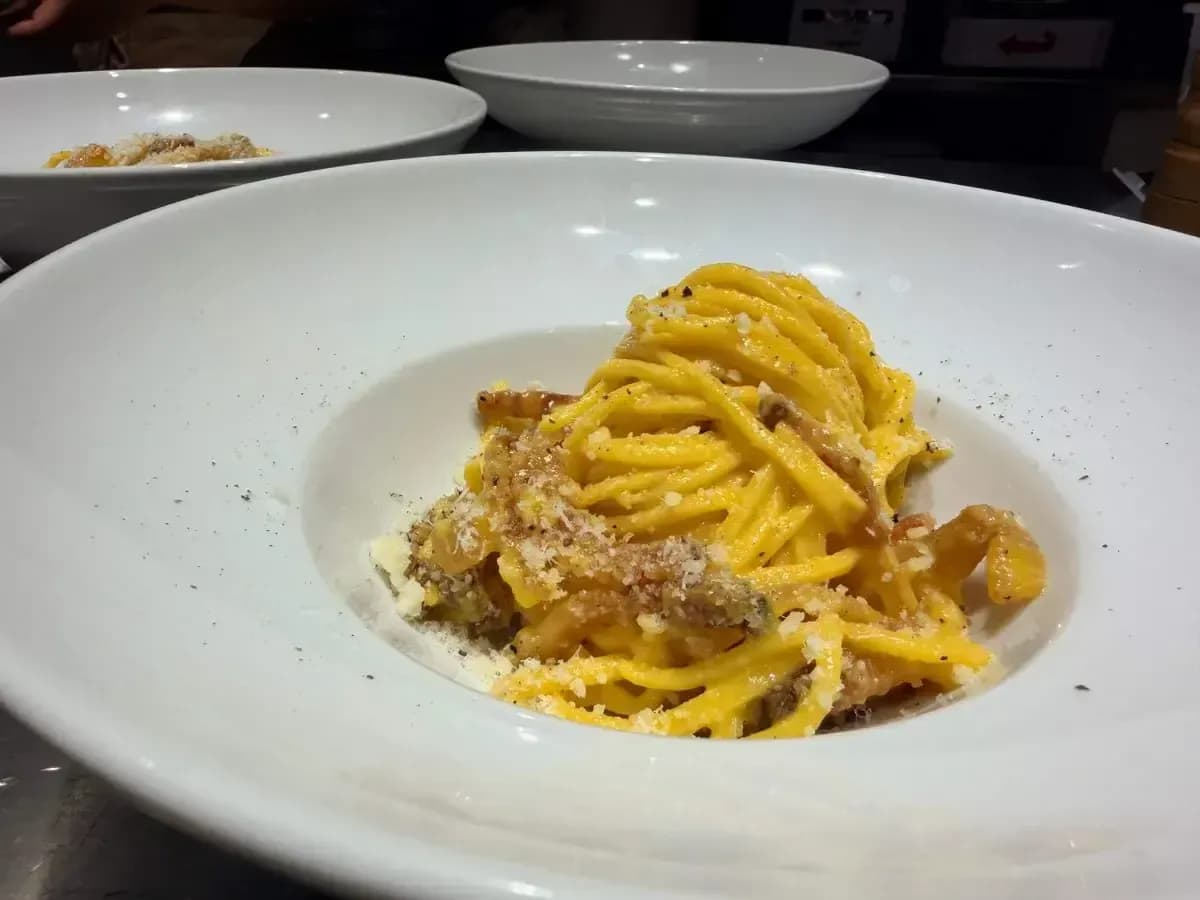
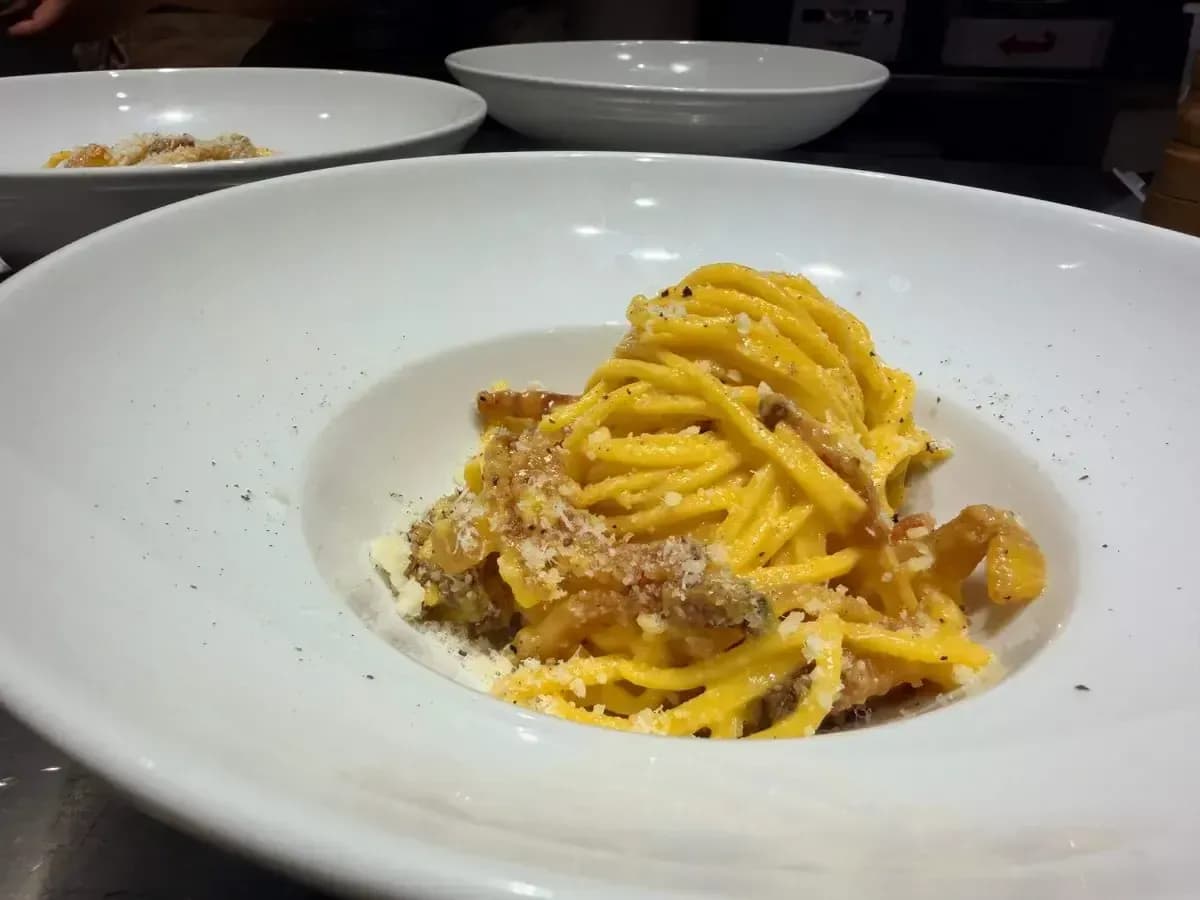
This is the carbonara we make at Piazza Margana 22, a short walk from Piazza Venezia, and we keep the measures per person so there is nothing to convert: one slice of guanciale for every two people, one egg yolk per person plus one whole egg for the pan, a handful of pecorino romano per person, black pepper. That is it. No cream, no garlic, no onion, no oil in the pan, no parmigiano. The pasta is fresh hand-rolled tonnarelli, and the cream is built in two stages: first in the guanciale fat with the cooking water, then off the heat with the eggs.
Carbonara ingredients for 4 people
For four people you need two slices of guanciale, four yolks and one whole egg, four handfuls of pecorino and pepper.
- 2 slices of guanciale, one for every two people, about 100 g each, cut into cubes
- 4 egg yolks, one per person: set the whites aside
- 1 whole egg, for the pan: it gives the mixture the water it needs to bind
- 4 handfuls of pecorino romano, one per person, about 30 g, finely grated
- black pepper, freshly ground, plenty
- fresh tonnarelli for 4, from the fresh pasta recipe; or 320 g of dried pasta, 80 g per person
Four yolks in the sauce, plus one whole egg for the pan. The rule holds at any number: six people, three slices of guanciale, six yolks, six handfuls of pecorino, and always a single whole egg for the pan. If you are not making the pasta, 80 g of dried spaghetti per person.
Why one whole egg in a yolks-only carbonara
Yolks bring fat, colour and the lecithin that makes the emulsion; whites bring water and proteins that cook early and in threads. With yolks alone the mixture comes out rich but dense, and in the pan it tends to dry before it has coated every strand. The whole egg, just one for the whole pan, gives the mixture the water it needs to flow and bind without curdling, without bringing enough white to make an omelette. One yolk per person plus one whole egg: it is the proportion we use in class, and it holds from two people to eight.
The cheese is pecorino romano, sharp and salty, and in our kitchen it is the only cheese in a carbonara: a handful per person, finely grated, that melts into the yolks without leaving lumps. That is also why the pot is salted with a light hand: guanciale and pecorino bring their own salt.
The guanciale: cubed, in a non-stick pan, no oil
Guanciale is pork jowl cured with salt and pepper, two thirds fat, and the fat is the point of the dish: melted in the pan it becomes the base the pasta is tossed in and the pecorino melts on. One slice for every two people, cut into cubes, in a non-stick pan with no oil, over medium heat, until the cubes are crispy outside and the fat has melted onto the bottom.
That fat is not thrown away. Every so often someone looks at the pan once the guanciale is done, decides that is too many spoonfuls of fat and pours it down the sink: that is the sauce leaving. Switch off the heat and keep everything aside, cubes and fat, until the pasta is ready. Pancetta is the honest substitute if guanciale cannot be found, leaner and with less fat in the pan; smoked bacon makes a different dish.
How to make carbonara, step by step
Guanciale first. Cubes in a non-stick pan, no oil, until crispy. Heat off, pan set aside with its fat.
The mixture in the bowl. Four yolks and one whole egg whisked with four handfuls of finely grated pecorino and plenty of black pepper, until they look like a thick cream. The bowl waits next to the stove.
The tonnarelli. Two to three minutes in lightly salted boiling water; with dried spaghetti, al dente according to the packet. Before draining, a mug of cooking water set aside.
The tossing in the fat. The drained pasta goes into the guanciale pan with a few spoonfuls of cooking water, over the heat, kept moving, until the starch and the fat make a cream that coats the strands. One minute.
Off the heat, the eggs. Pan off the flame, mixture in, and stir quickly without stopping: the eggs bind with the fat and the starch and the cream turns glossy. If it tightens, a spoonful of cooking water. Warm plates, more pecorino, more pepper, to the table.
How to avoid scrambled eggs, and the other mistakes we see in class
Heat. It is the first, and it explains almost every scrambled carbonara that has come out of this kitchen. Someone drains the pasta, tosses it, and pours in the eggs with the pan still on the flame: in four seconds it is a sweet omelette. Egg yolk sets between 65 and 70 °C. The pan comes off the flame before the eggs go in, and the heat of the pasta and the fat is more than enough.
Oil. Guanciale is mostly fat and leaves more in the pan than you need. Adding oil gives a slick that will not bind with anything and a puddle at the bottom of the plate.
Water by the ladle. Half a ladle at once drops the temperature and thins the cream past the point where the cheese can hold it, and the instinct to put the pan back on the heat lands you straight back at mistake number one. One spoon, stir, look, repeat.
The grater. Pecorino grated on the coarse holes stays in lumps and never melts into the yolks. The fine side, the one that makes something close to powder.
If it splits. Threads of cooked egg: it is gone, and we would rather say so than sell you a rescue trick. If it is merely tight and pasty, a spoonful of water and a few turns off the heat bring it back.
Guanciale vs pancetta, and what changes with dried pasta
Use guanciale, one slice for every two people. If your shop does not carry it, pancetta is the fallback; bacon is not. Guanciale comes from the jowl: fattier, softer, and the rind is rubbed with black pepper, so it seasons the dish as it renders. Pancetta comes from the belly: leaner in the pan, less fat rendered, a flatter flavour. With pancetta expect half the fat, and hold back an extra spoonful of cooking water to compensate. Smoked bacon brings a smoke that covers the pecorino: if that is all there is, half the amount, rendered very slowly, and no salt in the water.
On the pasta, fresh square-cut tonnarelli are the Roman shape for these sauces: more surface than a spaghetto, and a rougher one, so the eggs and cheese grip instead of sliding off. With dried pasta carbonara is made the same way: spaghetti or rigatoni, 80 g per person, drained a minute early. Dried pasta water is thinner than the water left by tonnarelli, so you will need an extra spoonful, still one at a time.
Cream without cream: what holds a carbonara together
What holds a carbonara together is an emulsion: fat from the guanciale, fat and protein from the cheese, lecithin from the yolks, starch from the cooking water. Cream is a shortcut that covers up bad technique and flattens the pepper, which is half the point of the dish.
The method is in two stages, and that is why it holds. First the pasta is tossed in the guanciale fat with a little water: the starch and the fat make a first cream, hot, that coats the strands. Then the pan comes off the heat and the egg and pecorino mixture goes in while everything is moving: it meets a warm cream, not a flame, and binds without curdling. Thirty seconds of stirring before you judge anything: cheese needs contact and movement to melt, and a cream that looks broken at five seconds is often perfect at twenty.
Where to learn Roman carbonara in Rome
In our kitchen at Piazza Margana 22, in the historic centre, a short walk from Piazza Venezia. The Carbonara Cooking Class Rome covers all three Roman sauces in one session, carbonara, cacio e pepe and amatriciana, with the fresh pasta made by hand on the day, wine and Italian espresso included. At the end you sit down at the table and eat what you cooked, which is also the moment you find out whether the sauce came out right.
Shared classes are always taught in English; for Italian or Spanish, book a private session and choose the language when you book. The full list of what we run is on the cooking classes page.
Recipe details
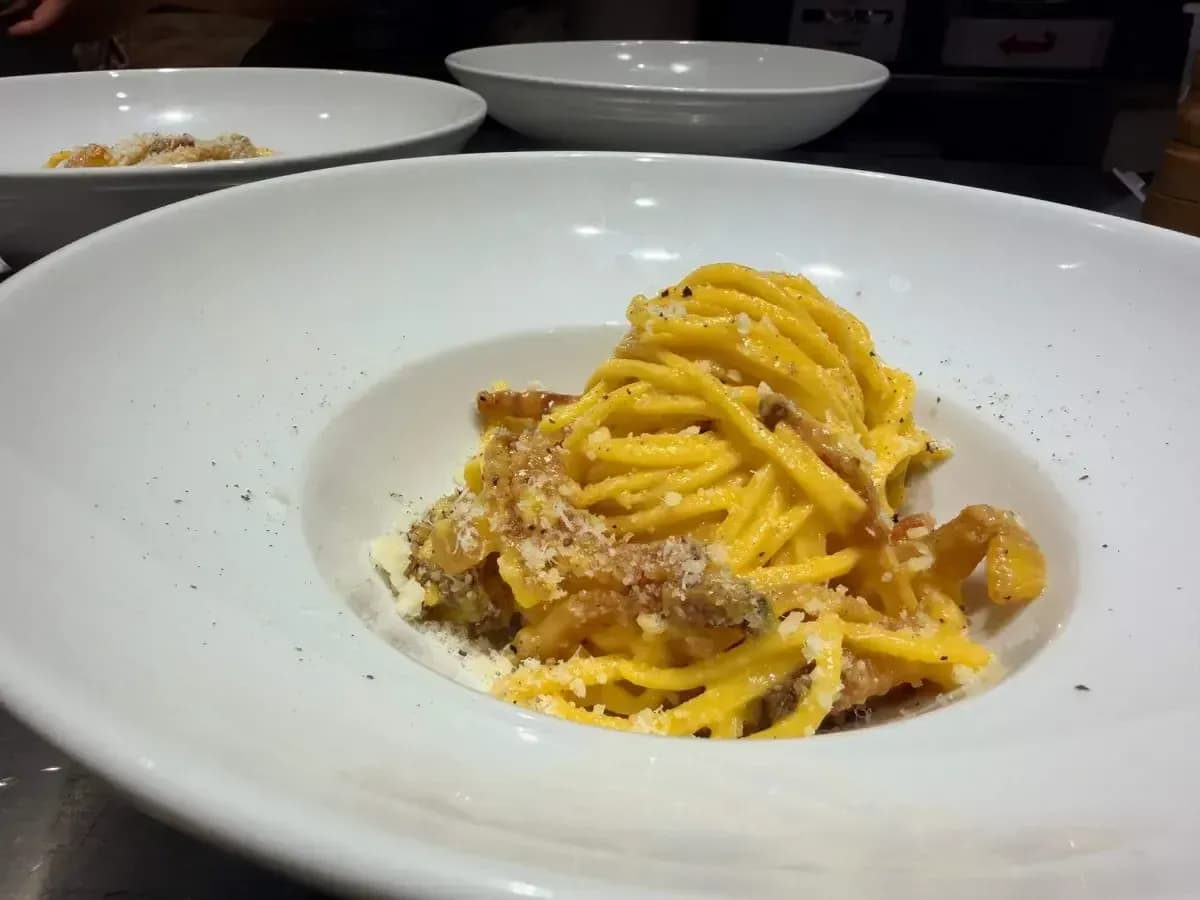
Carbonara the way we teach it in our kitchen a few steps from Piazza Venezia: one slice of guanciale for every two people, cut into cubes and crisped in its own fat in a non-stick pan, one egg yolk per person plus one whole egg for the pan, a handful of pecorino romano per person and black pepper. The pasta is tossed in the guanciale fat with a little cooking water until it turns creamy, then the pan comes off the heat and only then do the eggs go in. No cream, no garlic, no oil, no parmigiano.
Preparation
Crisp the guanciale
Cut the 2 slices of guanciale into cubes and put them in a non-stick pan with no oil: the guanciale brings all the fat you need. Medium heat, until the cubes are crispy outside and the fat has melted into the pan. Switch off and set aside, fat included.
Whisk yolks, egg and pecorino
In a bowl whisk the 4 yolks and the whole egg with 4 handfuls of finely grated pecorino romano and plenty of freshly ground black pepper, until you have a thick, even cream. The whole egg is for the pan: it gives the mixture the water it needs to bind without drying out.
Cook the tonnarelli
Bring 4 litres of water to the boil with 40 g of coarse salt, with a light hand, and drop in the tonnarelli: they float after a minute and are done 60 to 90 seconds later. With dried spaghetti, al dente according to the packet. Before draining, set aside a mug of cooking water.
Toss in the guanciale fat
Drain the pasta into the guanciale pan, add a few spoonfuls of cooking water and toss it over the heat, keeping it moving, until the starch and the fat make a cream that coats the strands. One minute: the bottom of the pan should stay glossy.
Off the heat, pour in the eggs
Take the pan off the flame. Pour in the egg and pecorino mixture and stir quickly without stopping, so the eggs bind with the fat and the starch without curdling. The heat of the pasta is enough: the flame is not. In half a minute the cream turns glossy and coats every strand.
Adjust the cream and serve
If the cream tightens, add a spoonful of cooking water and keep stirring; if it is loose, a few more turns off the heat. Warm plates, another grating of pecorino and a grinding of black pepper, straight to the table.
The three mistakes we see every week in class
Heat is the first, and it explains almost every scrambled carbonara that has come out of our kitchen. Someone drains the pasta, puts the pan back on the burner, pours in the eggs and watches the sauce turn into a sweet omelette in about four seconds. Egg yolk sets between 65 and 70 °C: the pan has to come off the flame before the eggs go in, and the heat of the pasta is more than enough. The second is oil. Guanciale is mostly fat and leaves more in the pan than you need; pour oil on top and you get a slick that will not emulsify with anything and a puddle at the bottom of the plate. The third is cooking water by the ladle: it drops the temperature, thins the cream past the point where the cheese can hold it, and the instinct to put the pan back on the heat lands you straight back at mistake one. One spoon, stir, look, repeat.
Guanciale, pecorino and what to do outside Italy
Guanciale is cured pork jowl, roughly two thirds fat, and that fat is the point of the dish. Pancetta is the honest substitute if guanciale cannot be found: leaner, it leaves less fat in the pan, so add an extra spoonful of cooking water. Smoked bacon makes a different dish. Pecorino romano is the sharp, salty, unmistakably sheepy one: a young pecorino from a deli counter will not behave the same way, and where romano is out of reach, take the most aged sheep's cheese you can find and keep the handful as it is. Grate it fine: coarse shreds sit in lumps and never melt into the eggs. With dried pasta carbonara is made the same way: spaghetti or rigatoni, 80 g per person, drained a minute early, with an extra spoonful of water because they shed less starch than tonnarelli.
Cream without cream, and what to do when it splits
What holds a carbonara together is an emulsion: fat from the guanciale, fat and protein from the cheese, lecithin from the yolks, starch from the water. Cream is a shortcut that covers up bad technique and flattens the pepper, which is half the point of the dish. The mixture is made in the bowl, never in the pan: yolks, egg, pecorino and pepper worked into a thick cream. Then the pasta is tossed in the fat with a little water, the pan comes off the heat and the eggs go in while everything is moving. If you can see threads of cooked egg, it is gone, and we would rather say so than sell you a rescue trick; if it is merely tight and pasty, a spoonful of water and a few turns bring it back. In the Carbonara Cooking Class we cook all three Roman sauces, carbonara, cacio e pepe and amatriciana, and everyone rolls their own pasta before sitting down to eat it with wine and espresso. Shared classes run in English; for Italian or Spanish, book a private session.
Ingredients
Fresh tonnarelli for 4, from our fresh pasta recipe; or 320 g of dried pasta, 80 g per person
2 slices of guanciale, one for every two people, about 100 g each, cut into cubes
4 egg yolks, one per person, plus 1 whole egg for the pan
4 handfuls of finely grated pecorino romano, one per person, about 30 g
Freshly ground black pepper, plenty
Pasta cooking water, a few spoonfuls, for the tossing
4 litres of water and 40 g of coarse salt for the pot, with a light hand: guanciale and pecorino are salty already
Method
- 1
Guanciale in cubes, in a non-stick pan. One slice for every two people, cut into cubes, in a non-stick pan with no oil, until it is crispy and has released its fat.
- 2
Eggs and pecorino in the bowl. One yolk per person plus one whole egg, whisked with a handful of pecorino per person and plenty of black pepper, until they look like a thick cream.
- 3
The pasta into the fat, with a little water. The drained tonnarelli go into the guanciale pan with a few spoonfuls of cooking water and are tossed over the heat until the starch and the fat make a cream that coats the strands.
- 4
Off the heat, the eggs. Take the pan off the flame and pour in the egg and pecorino mixture, stirring quickly so the eggs bind without curdling. If needed, another spoonful of cooking water. More pecorino and more pepper on the plate.

Written by
Francesco Ieriti
Founder of Italian Cooking Classes in Rome and head chef, with more than 14 years in international hospitality. He writes the recipes on this blog the way they are taught in class at Piazza Margana 22: per person, mistakes included.
