Index
Classes with this recipe
Index
Somebody always reaches for an onion. The guanciale is in the pan, the sauce is ready on the counter, and a hand goes toward the onion basket. We take it back. The amatriciana we teach at Piazza Margana 22 has no onion in it, no garlic either, and once you have tasted it you understand why: the sweetness of the guanciale is all it needs, and onion covers it.
What is left is short: one slice of guanciale for every two people, tomato sauce to taste, a handful of pecorino romano per person, black pepper. Four things, and the guanciale fat as the only seasoning. No oil, no wine, no chilli, no sugar. Everything below is measured the way we count it in class, per person, on fresh tonnarelli rolled by hand.
Amatriciana ingredients for 4, counted per person
For four people you need two slices of guanciale, about 400 g of tomato sauce, four handfuls of pecorino and pepper.
- 2 slices of guanciale, one for every two people, about 100 g each, cut into strips
- tomato sauce to taste, about 400 g, 100 g per person: passata, or whole peeled tomatoes crushed
- 4 handfuls of pecorino romano, one per person, about 30 g, finely grated
- black pepper, freshly ground
- fresh tonnarelli for 4, from the fresh pasta recipe; or 320 g of dried pasta, 80 g per person
Nothing else. No oil, no onion, no garlic, no wine, no sugar. The rule holds at any number: six people, three slices of guanciale, 600 g of sauce, six handfuls of pecorino. If you are not making the pasta, 80 g of dried spaghetti or rigatoni per person.
Why the guanciale crisps on its own, with no oil
Guanciale is pork jowl cured with salt and pepper, two thirds fat, and in the pan it leaves more fat than four people need. That fat is what the sauce cooks in, and it is what gives amatriciana the orange sheen at the rim of the plate. Adding oil does nothing: it only adds a slick that will not bind with the tomato.
One slice for every two people, cut into strips, in a wide pan with no oil, over medium heat. Too high a flame, and the lean part turns to leather before the fat has rendered. When the strips are crisp outside and still soft inside, lift them out with a slotted spoon and let them rest on a plate: they go back in at the end, so they stay crisp. The fat stays where it is, and this is the mistake we correct most often: somebody pours it down the sink because it looks like too much, and the sauce goes with it.
The sauce: twenty minutes in the fat, low flame, lid on
The tomato sauce goes into the guanciale fat, not into a clean pan. A grinding of pepper, a pinch of salt if needed, the lid, and at least twenty minutes over a low flame, stirring now and then. That is the time it takes for the tomato to lose its sharpness and its water, thicken until it holds a line behind the spoon, and take on the flavour of the guanciale. Three minutes and the sauce is raw and watery and will not cling to the pasta; the lid keeps it from drying out while it cooks slowly.
For the tomato, a passata or whole peeled tomatoes crushed by hand, San Marzano if you can find them: peeled tomatoes give a slightly rougher sauce, passata a smoother one. The sauce can be made ahead: cooked, without the guanciale, it keeps in the fridge for a couple of days and is reheated when needed.
The Amatrice rule: no onion, no garlic, and a recipe written down on paper
Amatriciana is the only sauce in the Roman family with an official written recipe. The Comune di Amatrice, a mountain town in the province of Rieti, filed it as a De.Co., and since 2020 the European Union has protected the traditional version as a Traditional Speciality Guaranteed. The specification lists guanciale, tomato, olive oil, white wine, salt, chilli or black pepper, and pecorino, and it excludes garlic, onion and pancetta by name.
The dish was born white, as gricia, and took on the tomato only at the end of the eighteenth century, when the shepherds who moved their flocks between the Apennines and the Roman countryside carried it into the city. Rome then did what Rome does: many trattorias soften onion in the fat before the tomato goes in, some add a clove of garlic, and Amatrice has been arguing against both for decades.
We teach the version with no onion and no garlic, partly because it is the one you can point to on paper, mostly because the sweetness of the guanciale is easier to taste without them. From the Amatrice text we also leave out the wine, the chilli and the spoonful of oil: with one slice of guanciale for every two people there is already more fat in the pan than the sauce can absorb, and black pepper, which the specification allows, does the chilli's job.
How to make amatriciana, step by step
The guanciale. In strips, in a pan with no oil, over medium heat, until crispy. Take it out to rest on a plate, the fat stays.
The sauce. Into the guanciale fat, with a grinding of pepper, lid on, at least twenty minutes over a low flame, stirring now and then.
The tonnarelli. Two to three minutes in salted boiling water; with dried spaghetti, al dente according to the packet. Before draining, a mug of cooking water set aside.
In the pan. The drained pasta into the sauce, half a minute over the heat, stirring so every strand is coated, a spoonful of cooking water if the sauce tightens. The guanciale goes back in at the very end.
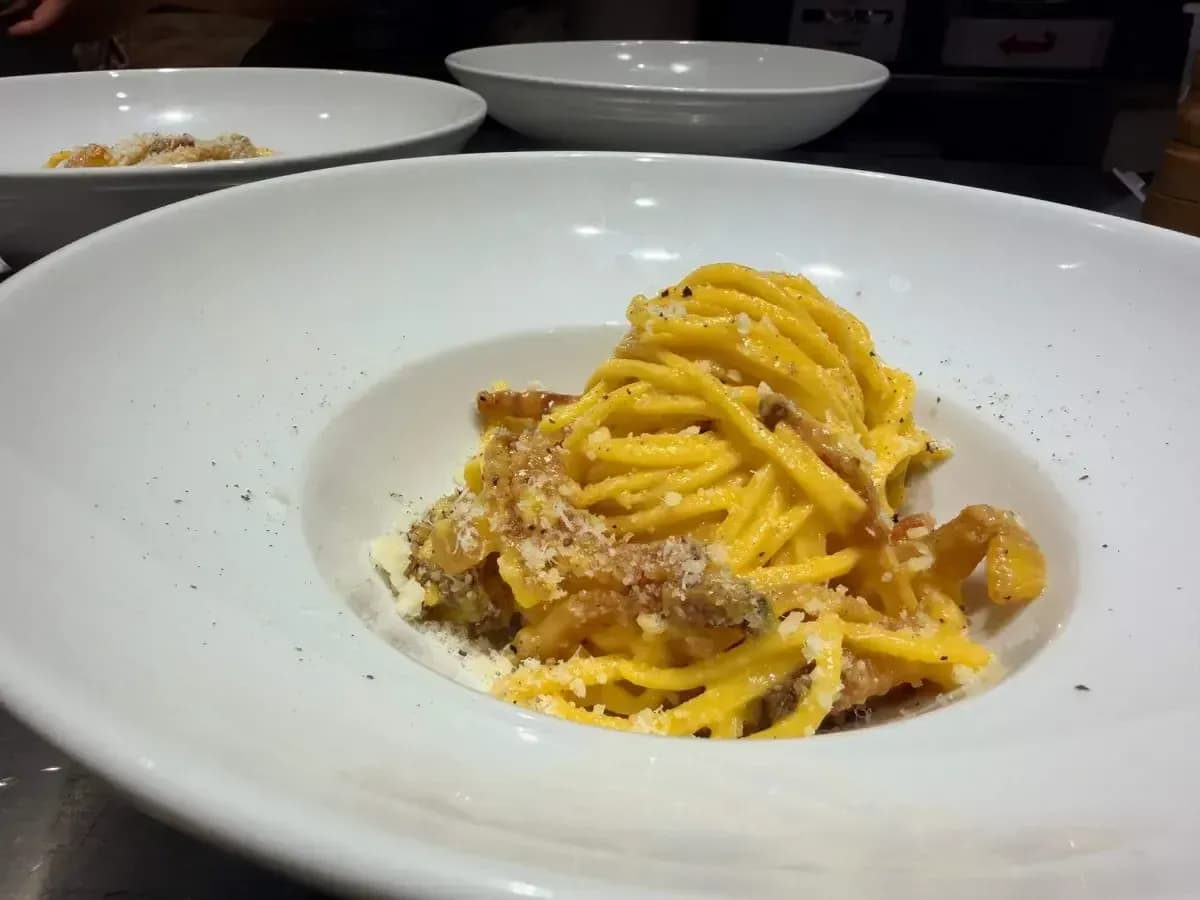
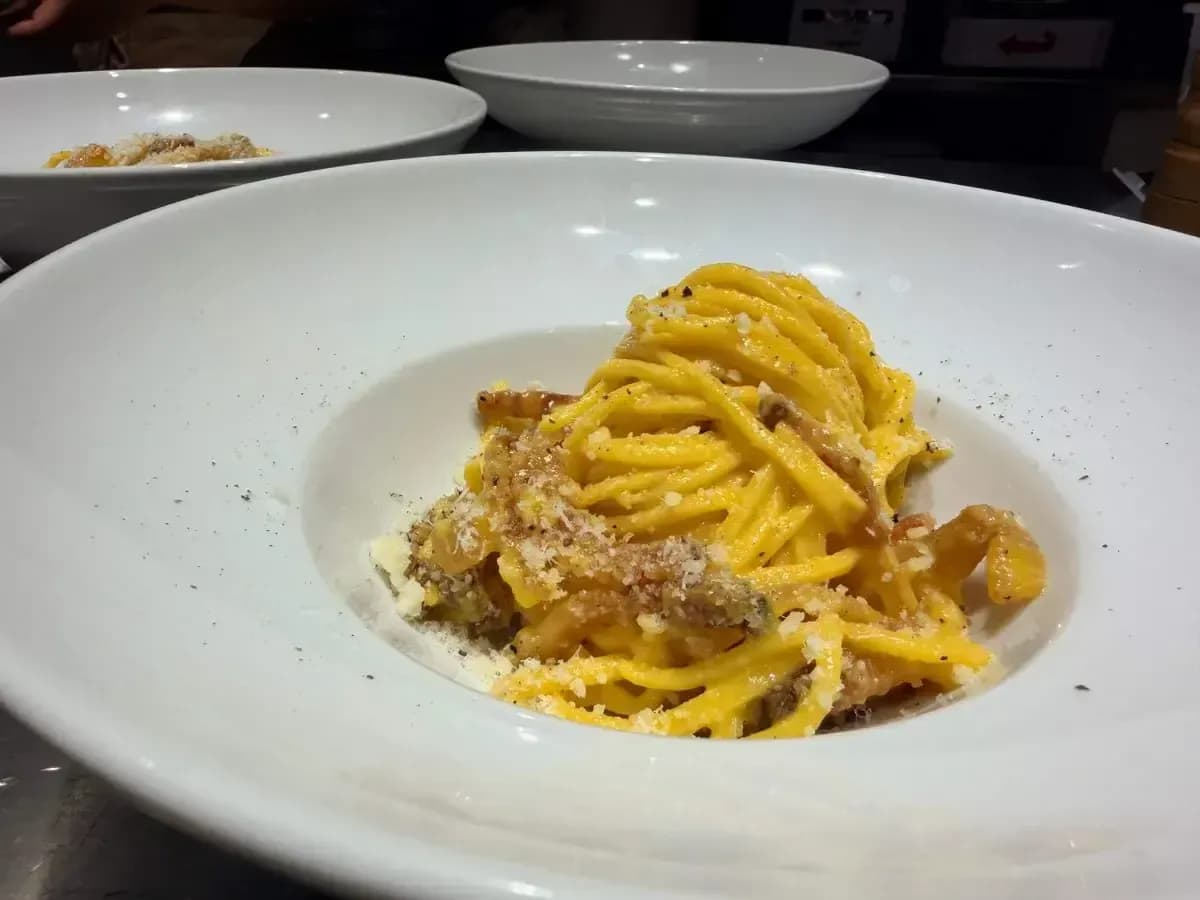
On the plate. A handful of pecorino romano per person and a grinding of black pepper on each portion. Straight to the table, while the guanciale is crisp.
The mistakes we see in class, in the order they happen
Fat down the sink. Every few classes somebody looks at the pan after the guanciale comes out, decides four spoonfuls of fat cannot be right and pours them away. They are the sauce. The tomato cooks in them.
A high flame under the guanciale. The lean part turns to leather and the fat burns before it renders. Medium heat, patience.
Tomato in a hurry. Three minutes and the sauce is raw and watery; uncovered over a high flame it dries out and sticks. Twenty minutes over a low flame, covered, stirring now and then.
Pecorino in the pan over the heat. Sheep's cheese goes stringy above a certain temperature and knots into threads instead of melting. In our kitchen it goes on the plate, a handful per person, on the hot sauce.
The onion. Every week. We take it back.
Outside Italy: guanciale, pecorino and tomato
Guanciale is cured pork jowl, roughly two thirds fat, and that fat is the whole point. Pancetta is the workable substitute: expect about half the fat, so take the strips out a little sooner and add no salt. Smoked bacon turns the dish into something else: if it is all you can find, blanch the strips for a minute to knock back the smoke and dry them before they go into the pan.
Pecorino romano is hard, salty and unmistakably sheep. A young pecorino from a deli counter will melt but will not season; an aged one from Sardinia or Tuscany comes closer. Whatever you use, grate it fine on the small holes so it disappears into the hot sauce instead of sitting in flakes. For the tomato, a good passata or whole peeled tomatoes, San Marzano if possible: diced tomatoes and ready-made sauces cook differently and give a flatter result.
Where to learn amatriciana in Rome
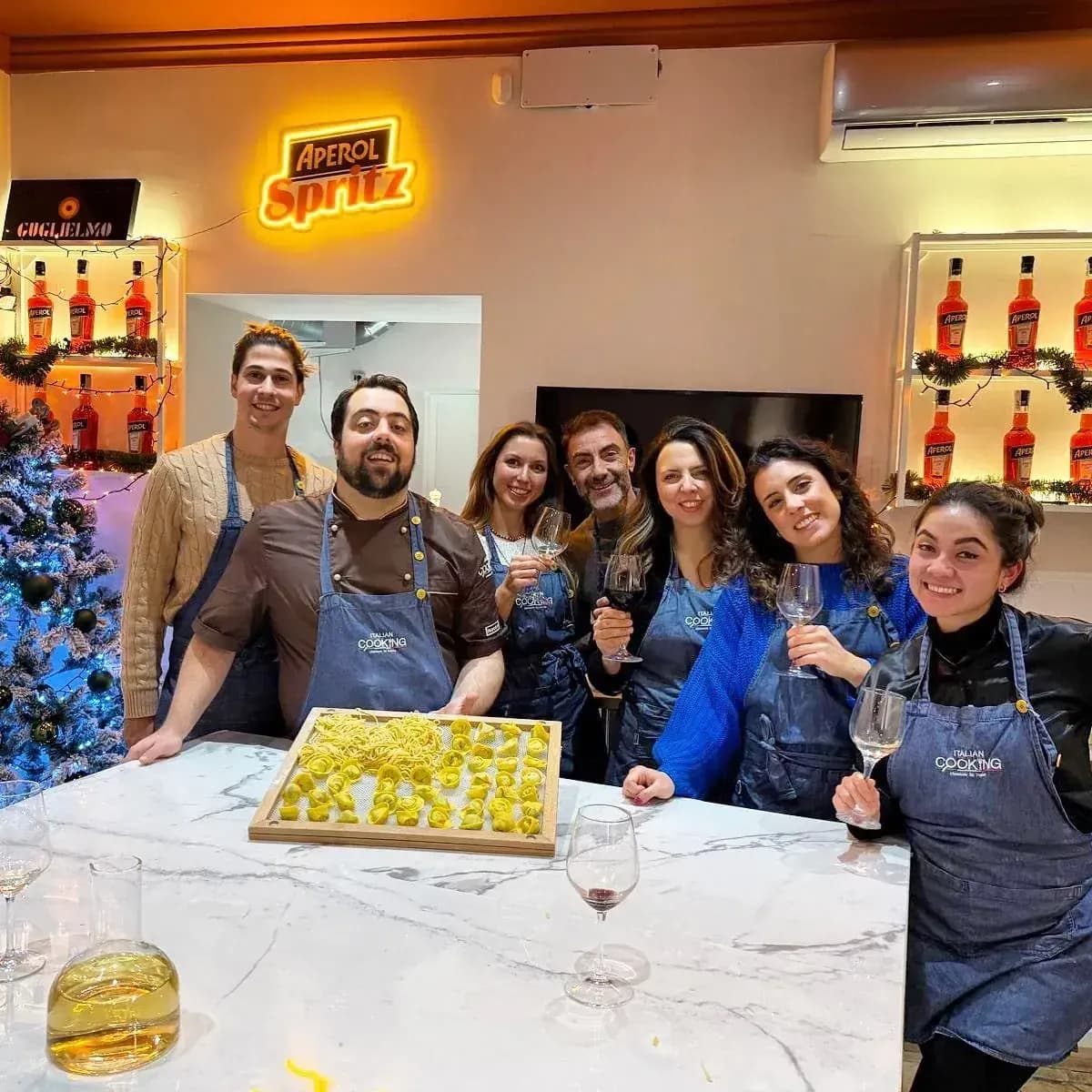
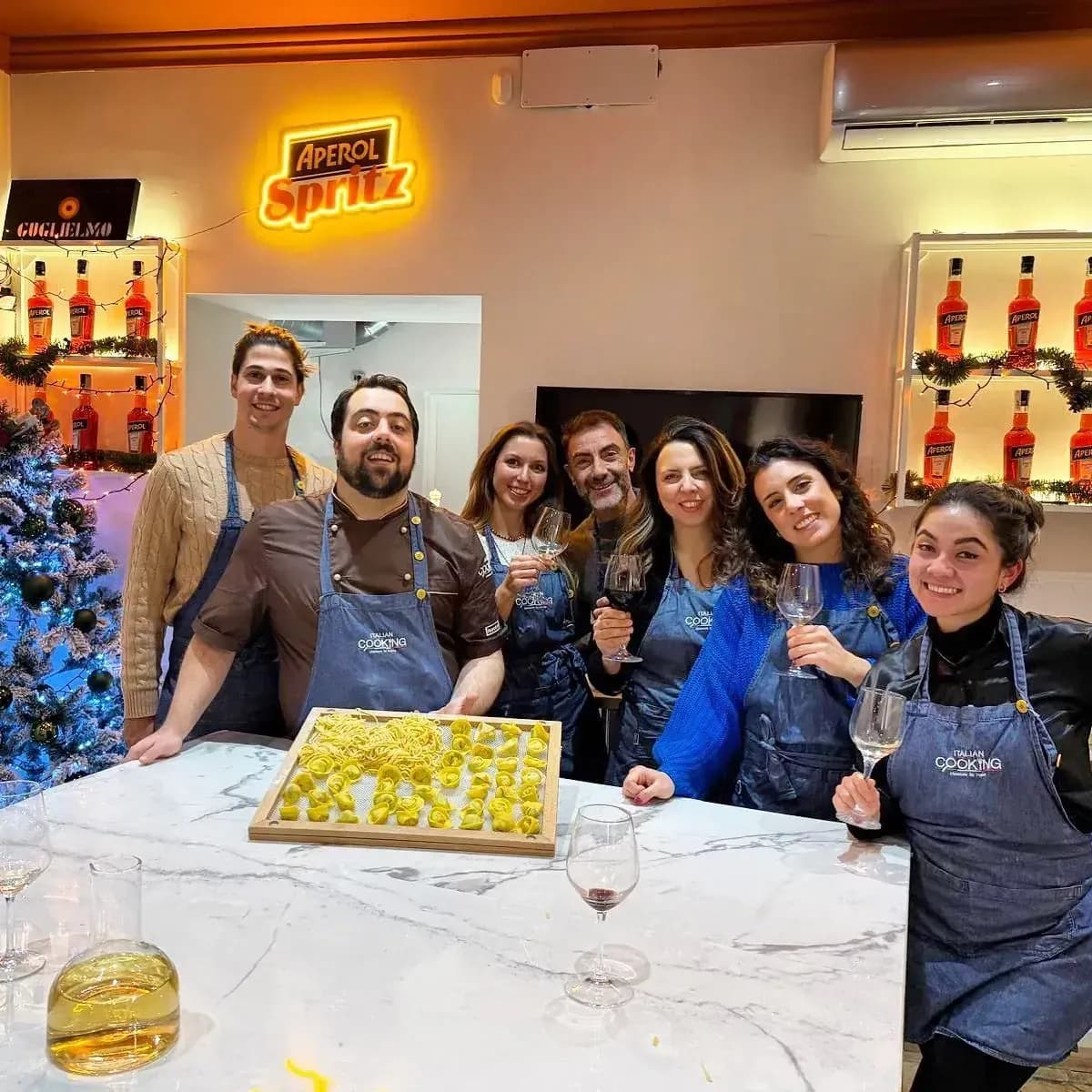
In our kitchen at Piazza Margana 22, in the historic centre of Rome. Amatriciana is one of the three sauces of the Carbonara Cooking Class, where carbonara, cacio e pepe and amatriciana go onto the tonnarelli you rolled and cut yourself on the chitarra. It is also the sauce of the pasta making class with tiramisu, where the menu runs amatriciana, ravioli and tiramisù, and it appears in the gluten free pasta class on a gluten-free dough. Each has a private version for a group that wants the kitchen to itself. Shared classes are taught in English; for Italian or Spanish, book a private session. Everything else we teach is on the cooking classes page.
Recipe details
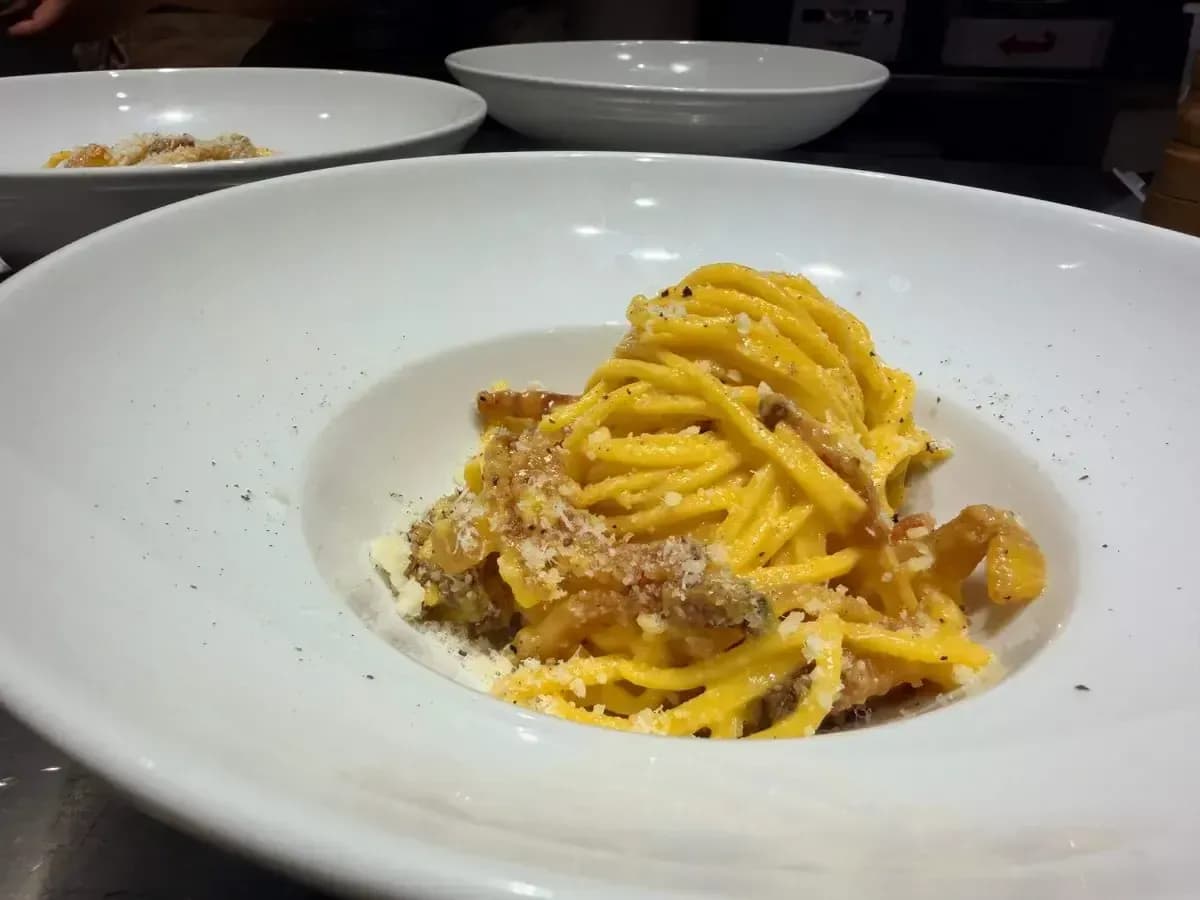
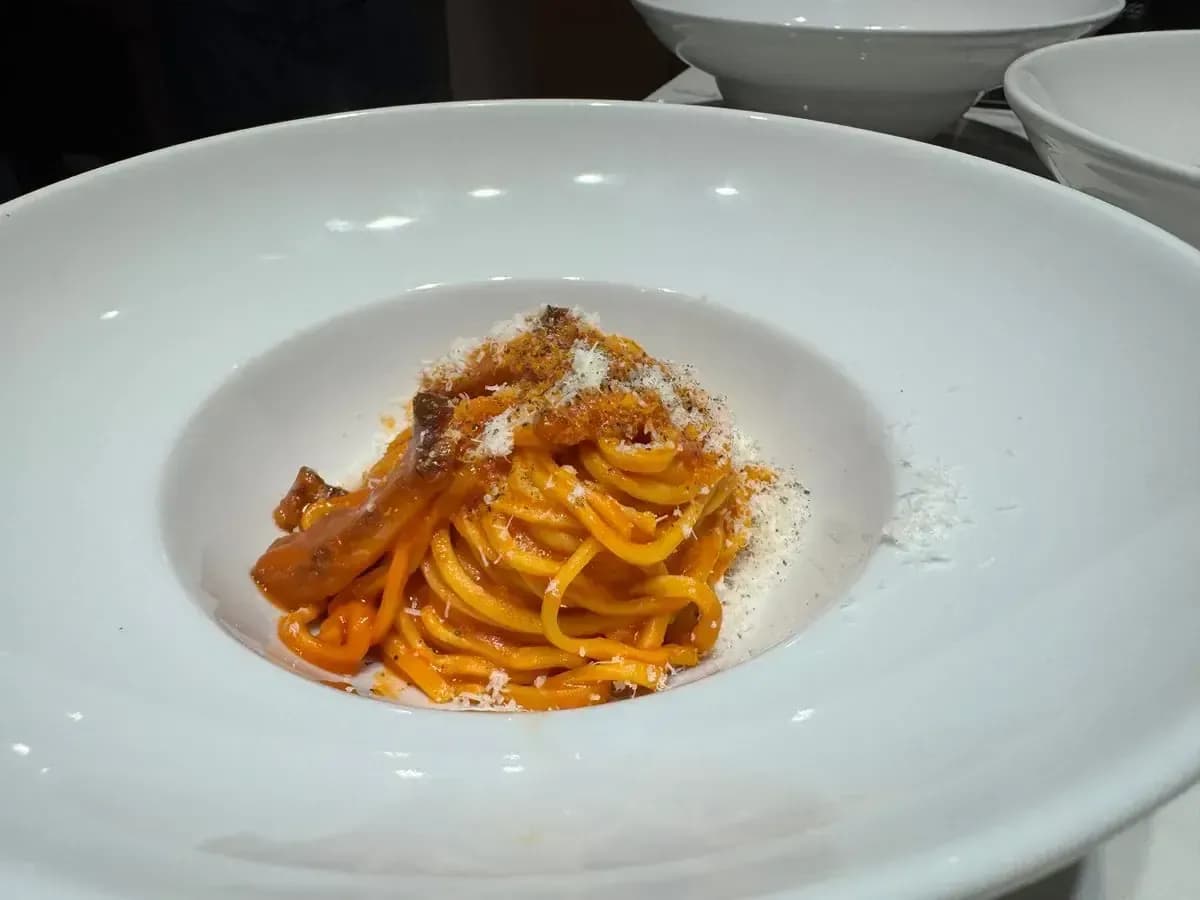
Amatriciana as we cook it in the kitchen at Piazza Margana 22: one slice of guanciale for every two people, cut into strips and crisped in its own fat, tomato sauce that cooks in that fat for at least twenty minutes over a low flame with the lid on, a handful of pecorino romano per person and black pepper. No onion and no garlic, which is the Amatrice rule; no oil, because the guanciale gives all the fat the sauce needs; no wine. On fresh hand-rolled tonnarelli, which hold the sauce better than dried pasta.
Preparation
Crisp the guanciale
Cut the 2 slices of guanciale into strips and put them in a wide pan with no oil, over medium heat, until they are crispy and the fat has melted onto the bottom. Lift them out with a slotted spoon and let them rest on a plate: they go back in at the end. The fat is not thrown away, it is the base of the sauce.
Cook the sauce in the fat, with the lid on
Pour the tomato sauce into the guanciale fat, add a grinding of black pepper and, if needed, a pinch of salt. Cover with the lid and let it cook over a low flame for at least twenty minutes, stirring now and then: the sauce thickens, loses its sharpness and takes on the flavour of the guanciale.
Cook the tonnarelli
Bring 4 litres of water to the boil with 40 g of coarse salt and drop in the tonnarelli: they float after a minute and are done 60 to 90 seconds later. With dried spaghetti, al dente according to the packet. Before draining, set aside a mug of cooking water.
Toss the pasta in the sauce
Drain the pasta into the pan with the sauce and toss it over the heat for half a minute, stirring so every strand is coated. If the sauce tightens, a spoonful of cooking water. Put the guanciale strips back in and give it a last turn.
Pecorino and pepper on the plate
Divide between warm plates and finish each portion with a handful of finely grated pecorino romano and a grinding of black pepper. Straight to the table, while the guanciale is still crisp.
Where the sauce goes wrong at the stove
The first thing we correct is the flame under the guanciale: too high, and the lean part turns to leather before the fat has rendered. Medium heat, patience, and the strips come out crisp outside and soft inside. The second is the fat, which every so often someone pours down the sink because it looks like too much: it is the sauce. The tomato cooks in it, and the finished plate should show an orange sheen at the rim. The third is the tomato's time: three minutes and the sauce is raw and watery and will not cling to the pasta; twenty minutes over a low flame with the lid on, stirring now and then, and it turns thick and round. The fourth is pecorino added in the pan over the heat, where it goes stringy: in our kitchen it goes on the plate, a handful per person, and melts on the hot sauce.
Amatrice, Rome and the written recipe
Amatriciana is the one dish in the Roman pasta family with an official written recipe: the Comune di Amatrice, in the province of Rieti, filed it as a De.Co., and since 2020 the European Union has protected the traditional version as a Traditional Speciality Guaranteed. The text lists guanciale, pecorino, tomato, white wine, chilli, salt and a spoonful of olive oil, and it excludes onion, garlic and pancetta by name. The dish began without tomato, as gricia, and took on the red only at the end of the eighteenth century, when the shepherds who moved their flocks between the Apennines and the Roman countryside carried it into the city. Rome changed it: many trattorias soften a little onion in the fat before the tomato goes in, some add garlic, and Amatrice has been arguing against both for decades. We teach the version with no onion and no garlic, because the sweetness of the guanciale is easier to taste without them. From the Amatrice text we also leave out the wine, the oil and the chilli: guanciale, tomato, pecorino and pepper, with the guanciale fat as the only seasoning.
Outside Italy, and which classes cook it
Guanciale is cured pork jowl, two thirds fat, and that fat is the whole point. Pancetta is the workable substitute: about half the fat, so take the strips out a little sooner. Smoked bacon changes the dish. Pecorino romano is hard, salty and unmistakably sheep: a young pecorino will melt but will not season, an aged one from Sardinia or Tuscany comes closer. For the sauce, a passata or whole peeled tomatoes crushed by hand, San Marzano if you can. We cook amatriciana on fresh tonnarelli in the Carbonara Cooking Class, where the three Roman sauces, carbonara, cacio e pepe and amatriciana, go onto the pasta you have rolled yourself; it is also the sauce of the pasta making class with tiramisu, and it appears in the gluten free pasta class on a gluten-free dough. The private versions can be booked by a group that wants the kitchen to itself.
Ingredients
Fresh tonnarelli for 4, from our fresh pasta recipe; or 320 g of dried pasta, 80 g per person
2 slices of guanciale, one for every two people, about 100 g each, cut into strips
Tomato sauce to taste, about 400 g, 100 g per person: passata or crushed peeled tomatoes
4 handfuls of finely grated pecorino romano, one per person, about 30 g
Freshly ground black pepper
Salt for the pasta water, with a light hand, and a pinch in the sauce if needed
4 litres of water and 40 g of coarse salt for the pot
Method
- 1
The guanciale in strips, until crispy. One slice for every two people, in a pan with no oil, over medium heat: when it is crispy, take it out and let it rest on a plate. The fat stays in the pan.
- 2
The sauce in the fat, twenty minutes with the lid on. Pour the tomato sauce into the guanciale fat, cover and let it cook for at least twenty minutes over a low flame, stirring now and then. The sauce thickens and takes on the flavour of the guanciale.
- 3
The tonnarelli, and some of their water. Two to three minutes in salted boiling water; drain, keeping a mug of the cooking water.
- 4
Into the pan with the sauce, then the pecorino. Toss the pasta in the sauce, with a spoonful of its water if the sauce tightens, and the guanciale goes back into the pan at the very end. On the plate, a handful of pecorino per person and a grinding of black pepper.

Written by
Francesco Ieriti
Founder of Italian Cooking Classes in Rome and head chef, with more than 14 years in international hospitality. He writes the recipes on this blog the way they are taught in class at Piazza Margana 22: per person, mistakes included.