Index
Classes with this recipe
Index
Every week someone in the kitchen makes the same face: the pecorino has turned into a lump of chewing gum at the bottom of the pan and the water around it has gone clear again. It is not bad luck, it is temperature, and cacio e pepe is learned the moment you understand where the cheese belongs and where it does not.
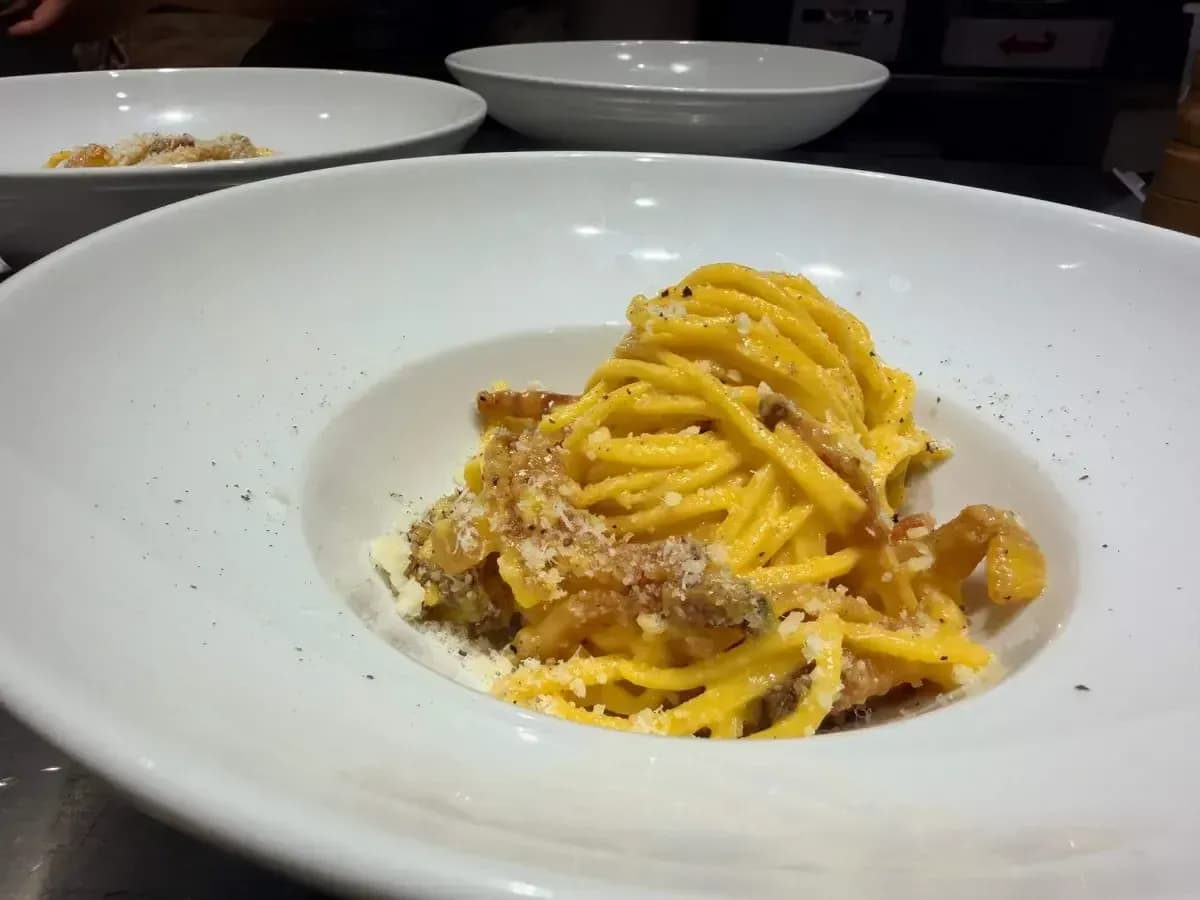
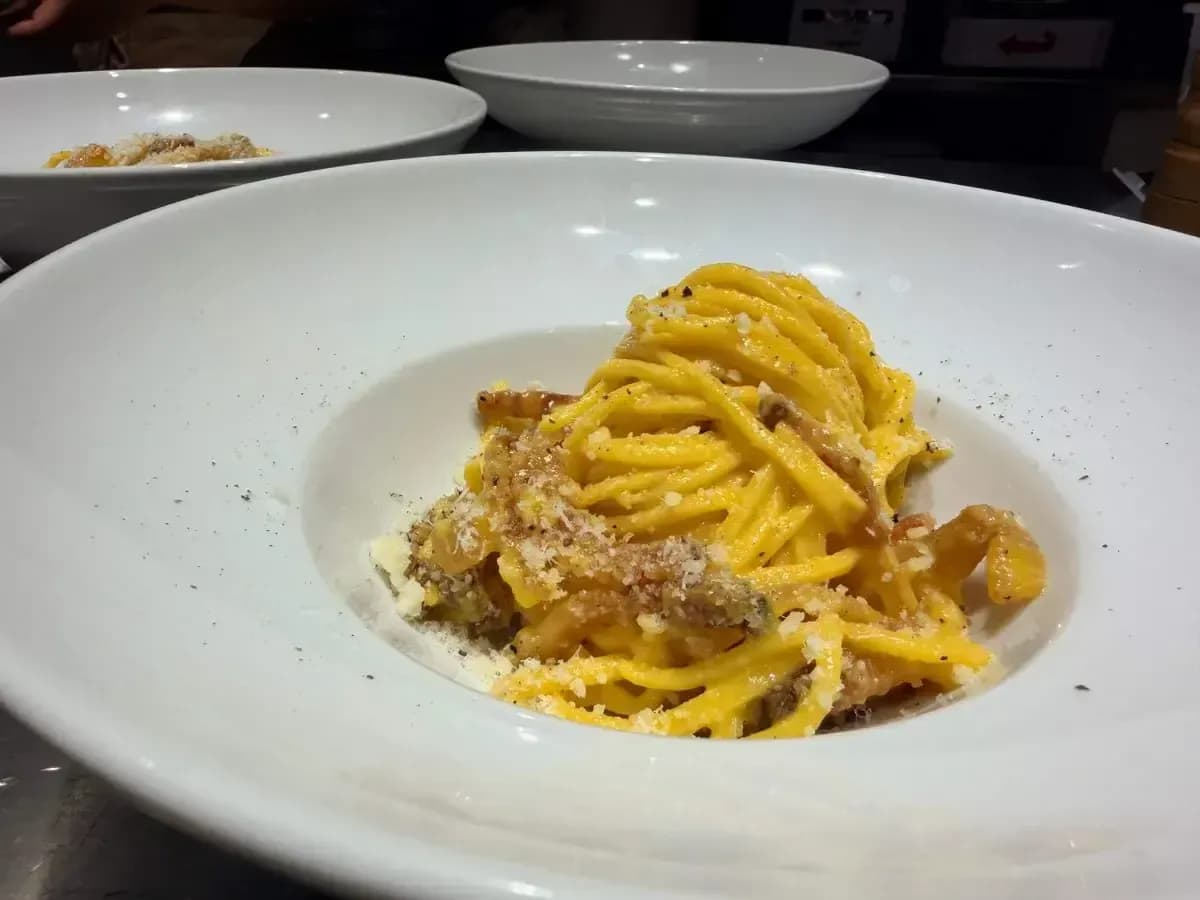
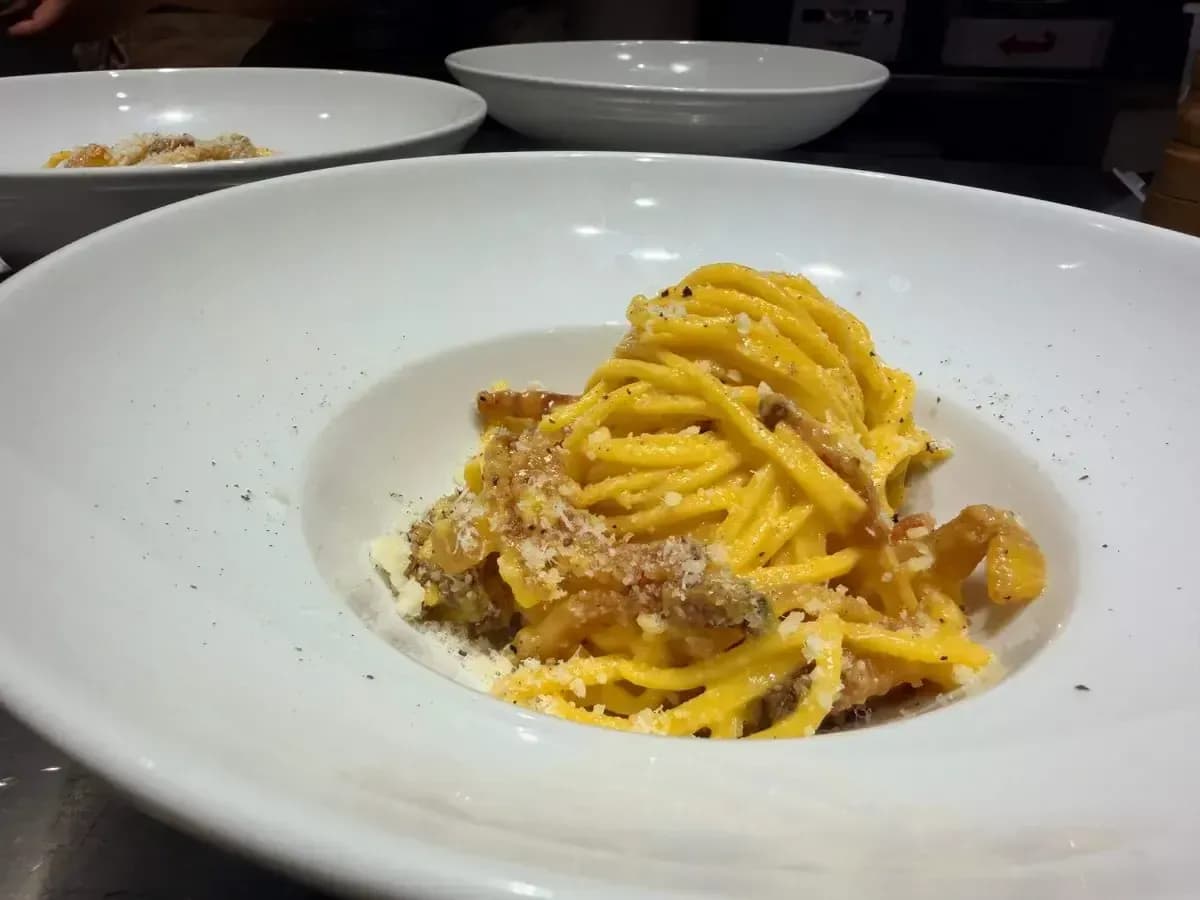
The recipe we teach at Piazza Margana 22 fits in one line: a handful of pecorino romano per person, plenty of freshly ground black pepper, a little cold water to turn them into a paste, and the water the tonnarelli cooked in. No butter, no oil, no cream. The cream is not made with the cheese: it is made in the pan with the starch of the water, over the flame; the pecorino goes in afterwards, with the heat off, and melts into that cream without going stringy. Everything else is detail, and it is below.
Cacio e pepe ingredients for 4 people
For four people you need four handfuls of pecorino, plenty of pepper, a few spoonfuls of cold water and one ladle of cooking water per person.
- fresh tonnarelli for 4, from the fresh pasta recipe; or 320 g of dried pasta, 80 g per person
- 4 handfuls of pecorino romano, one per person, about 60 g, finely grated
- whole black peppercorns, freshly ground, plenty
- a little cold water, a few tablespoons, for the cheese paste
- 4 ladles of pasta cooking water, one per person, for the tossing
- 4 litres of water and 40 g of coarse salt for the pot, less than usual: the pecorino is salty already
The per-person rule holds at any number: six people, six handfuls, six ladles. The pepper is not counted: you grind until it looks like too much, and then a little more.
The cheese paste: pecorino, pepper and cold water
The first move happens before the water even goes on the stove. In a wide bowl put the finely grated pecorino and the ground pepper, then add a little cold water, one spoonful at a time, and stir with a fork. The cheese goes from wet sand to a thick, smooth, spreadable paste. Stop there: it should stay a paste, not become a runny cream.
Cold water is the point. Pecorino romano is an aged sheep's cheese with proteins that tighten fast under heat: above 70 °C the casein contracts, squeezes out its fat and the cheese separates into strings and grease. Hydrated cold, instead, it melts gently when it meets the starch cream, and the flame never sees it. The bowl waits next to the stove until the pasta is in the pan.
Why the cream is made with the water, not with the cheese
What holds a cacio e pepe together is starch. The water fresh tonnarelli cooked in is cloudy with flour and starch, and when you reduce it in the pan with the pasta it turns into a cream that coats the strands before the cheese even goes in. That cream is where the pecorino melts: it finds a thick, warm liquid and binds to it without separating.
That is why you keep a generous mug of cooking water before draining, and why the pan matters: wide, so the tonnarelli lie in one layer and the cream forms in a minute. In a small, deep pan the pasta sits in a pile, the bottom overheats and the top stays dry. Fresh tonnarelli, with their rough surface and the flour they shed, help more than any dried shape; with dried pasta you simply need a little more water.
How to make cacio e pepe, step by step
Cook the tonnarelli in 4 litres of water with 40 g of coarse salt: they float after a minute and are done sixty to ninety seconds later, still firm at the centre. With dried spaghetti, al dente according to the packet. Keep a generous mug of cooking water and drain without rinsing.
Toss in the pan with the water. The drained pasta goes into a wide pan with one ladle of cooking water per person, over the heat, kept moving, until the starch thickens the water into a cream that coats the strands: a minute, maybe two. The bottom should stay glossy, never dry.
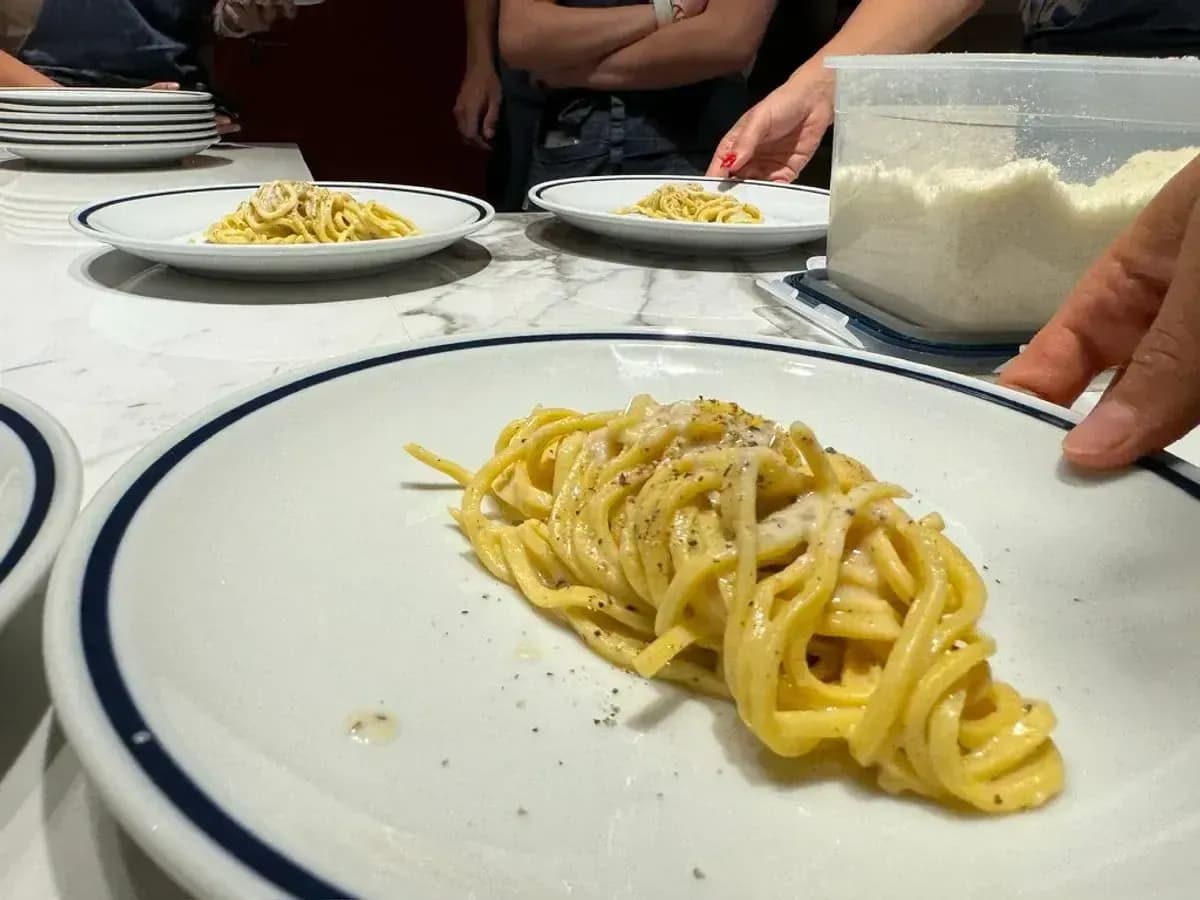
Switch off the heat, add the pecorino paste. Pan onto a cold burner, the cheese and pepper paste in, and stir energetically: it melts into the cream and makes it glossy and tight. If it tightens, a spoonful of cooking water; if it is loose, two more turns off the heat. Warm plates, another grinding of pepper, straight to the table.
The mistakes we see in class, in the order they happen
Cheese into boiling water. Someone pours the pecorino straight into the pan while the water is still bubbling: strings and grease in five seconds. The pecorino hydrates cold in the bowl, and meets the pasta only through the starch cream.
The pan still on the flame. It is instinct: the cream looks loose and the flame stays on while the cheese goes in. Above 70 °C the pecorino goes stringy. Heat off first, cheese second, always in that order.
Too little water kept back. Whoever drains everything and then looks for the water in the sink ends up with dry pasta and cheese that clings in lumps. The mug is filled before draining.
Bagged grated cheese and pre-ground pepper. The first is dry and often cut with starch, and makes a grainy cream; the second has lost its oils and the dish comes out dull. Grate fine, grind whole peppercorns on the spot.
If it splits anyway, add no cheese and do not turn the fire back on: two spoonfuls of cooler water, stir hard, press the lumps against the side. Starch and movement bring back a good part of it. If the cheese has fused into one block, that plate is lost: in class we say so and make a new pecorino paste, which takes two minutes.
Pecorino romano, pepper and what changes outside Italy
Pecorino romano DOP is the cheese and it is not negotiable; the age is. A wheel at eight to twelve months has salt and bite and melts without fighting back; a very old one, the crumbly kind, has lost its moisture and goes stringy more readily: it needs an extra spoonful of water in the cheese paste. Ask for a piece from the middle of the wheel and grate it the same day.
Outside Italy you will find pecorino sardo or pecorino toscano more easily: they are sweeter and they work as cheese, but the plate stops tasting of Rome. Parmigiano makes something pleasant and different, closer to a butter sauce. If romano is out of reach, take the most aged, saltiest sheep's cheese on the counter and keep the quantities as they are.
The pepper should start whole. Pre-ground pepper has lost its oils, and the dish comes out flat instead of warm. Any good black pepper works, coarsely ground on the spot, in a quantity that looks excessive.
A shepherds' dish that became Rome's hardest exam
Cacio e pepe is older than the other two Roman sauces by a long way. Pecorino, dried pasta and black pepper are three things a shepherd from the Roman countryside could carry for weeks without spoiling, and pepper kept the body warm on the cold nights of the transhumance. The dish needed a fire, a pot and nothing else. It arrived in the trattorie of Rome as it was, and Rome kept it that way.
That is why it is unforgiving. Carbonara has yolks and guanciale fat to help the tossing along; amatriciana has tomato. Cacio e pepe has cheese, water and a cook who knows when to switch off the heat. The Accademia Italiana della Cucina, on its tour of the city's restaurants, put it in writing: the mistakes are oil, butter and cream. Some kitchens in Rome still finish it the old way, mixing pecorino and water on the diner's own plate.
The shape matters. Tonnarelli, the square-cut fresh pasta of Rome, hold more cream along their edges than spaghetti and shed more starch into the water, which is why we cook the dish on them. It is served as a first course, in a shallow bowl, with no cheese offered at the table beyond a final grating, and a glass of white from the Castelli Romani.
Where to learn cacio e pepe in Rome
In our kitchen at Piazza Margana 22, in the centre of Rome, a short walk from Piazza Venezia. In the Carbonara class the three Roman sauces are cooked in the same session, carbonara, cacio e pepe and amatriciana, on the tonnarelli you rolled and cut yourself on the chitarra; at the end you sit down and eat what you cooked, which is also the moment you find out whether the cream came out right. The private version is for a group that wants the kitchen to itself. Shared classes are taught in English; for Italian or Spanish, book a private session. The full list is on the cooking classes page.
Recipe details
Cacio e pepe as we teach it in our kitchen at Piazza Margana 22: a handful of pecorino romano per person, plenty of freshly ground black pepper, a little cold water to turn them into a paste, and the water the tonnarelli cooked in. The rule that defines it is that the cheese never sees the flame: the pasta is tossed in the pan with its own water until it turns creamy, the heat goes off, and only then does the pecorino paste go in. No butter, no oil, no cream.
Preparation
The pecorino and pepper paste
In a wide bowl put 4 handfuls of finely grated pecorino romano and plenty of freshly ground black pepper. Add a little cold water, one spoonful at a time, and stir with a fork until you get a thick, smooth, spreadable paste. Cold water is the point: the cheese hydrates without heating and does not go stringy.
Cook the tonnarelli
Bring 4 litres of water to the boil with 40 g of coarse salt, less than usual because the pecorino is salty already, and drop in the tonnarelli. They float after a minute and are done 60 to 90 seconds later, still firm at the centre. With dried spaghetti, cook until al dente according to the packet.
Keep the cooking water
Before draining, dip out a generous mug of cooking water, the cloudy, starchy kind: you need one ladle per person in the pan and a few spoonfuls in reserve. Drain the pasta without rinsing it.
Toss in the pan with the water
Put the drained pasta in a wide pan with one ladle of cooking water per person and toss it over the heat, keeping it moving, until the starch thickens the water into a cream that coats the strands. A minute, maybe two: the bottom of the pan should stay glossy, never dry.
Heat off, then the pecorino
Switch off the flame and move the pan onto a cold burner. Add the pecorino and pepper paste and stir energetically: it melts into the starch cream and makes it glossy and tight. If it tightens too much, a spoonful of cooking water; if it is loose, two more turns off the heat, it thickens as it cools.
Serve at once, with more pepper
Divide between warm plates, spoon over any cream left in the pan and finish with another grinding of black pepper. Serve immediately: after two minutes on the plate the cream sets.
Why pecorino goes stringy, and why our flame is off
Pecorino romano is an aged sheep's cheese with proteins that tighten fast under heat: above 70 °C the casein contracts, squeezes out its fat and the cheese separates into strings and grease. Boiling water is 100. Three things make it split: cheese poured into boiling water, a pan still on the flame when the pecorino goes in, and a cheese too dry that cooks in patches. The method we teach avoids all three: the pecorino hydrates in cold water as a paste, the cream is made in the pan from the starch in the cooking water, and the cheese goes in only with the heat off. If it splits anyway, add no more cheese and do not turn the fire back on: two spoonfuls of cooler water and stir hard, pressing the lumps against the side.
Pecorino romano, pepper and dried pasta
Pecorino romano DOP is the cheese and it is not negotiable; the age is. A wheel at eight to twelve months has salt and bite and melts without fighting back; a very old one crumbles and goes stringy more easily. Grate it fine, on the small holes, the same day: bagged grated cheese is dry and often cut with starch. The pepper must be whole peppercorns, freshly ground and plenty: pre-ground pepper has lost its oils and the dish comes out dull. With dried pasta cacio e pepe is made the same way, and half of Rome makes it that way: spaghetti or dried tonnarelli, 80 g per person, al dente according to the packet, and the same tossing in the pan with the cooking water.
A shepherds' dish that became Rome's hardest exam
Pecorino, dried pasta and black pepper are three things a shepherd from the Roman countryside could carry for weeks without spoiling, and the pepper kept the body warm on the nights of the transhumance. The dish arrived in the trattorie as it was and Rome kept it that way: no butter, no oil, no cream. That is why it is unforgiving: carbonara has yolks and guanciale fat to help, amatriciana has tomato; cacio e pepe has cheese, water and a cook who knows when to switch off the heat. In the Carbonara class and its private version the same hand-rolled tonnarelli carry all three Roman sauces. It is served as a first course, in a shallow bowl, with a glass of white from the Castelli.
Ingredients
Fresh tonnarelli for 4, from our fresh pasta recipe; or 320 g of dried pasta, 80 g per person
4 handfuls of finely grated pecorino romano, one per person, about 60 g
Whole black peppercorns, freshly ground, plenty
A little cold water, a few tablespoons, for the cheese paste
4 ladles of pasta cooking water, one per person, for the tossing
4 litres of water and 40 g of coarse salt for the pot, less salt than usual: the pecorino is salty already
Method
- 1
The cheese paste first. In a wide bowl, mix the finely grated pecorino and plenty of freshly ground black pepper with a little cold water, one spoonful at a time, until they turn into a thick, smooth paste. Cold: that way the cheese does not go stringy.
- 2
Then the tonnarelli. Two to three minutes in lightly salted boiling water. Before draining, keep a generous mug of the cooking water, cloudy with starch.
- 3
The cream is made in the pan with the water, not with the cheese. The drained pasta goes into the pan with one ladle of cooking water per person and is tossed over the heat until the starch binds and the water turns into a cream that coats the strands.
- 4
Heat off, pecorino paste in, toss. Switch off the flame, add the cheese paste and stir energetically: it melts into the starch cream without going stringy. If it tightens, a spoonful of water; if it is loose, two more turns off the heat. More pepper on the plate.

Written by
Francesco Ieriti
Founder of Italian Cooking Classes in Rome and head chef, with more than 14 years in international hospitality. He writes the recipes on this blog the way they are taught in class at Piazza Margana 22: per person, mistakes included.