Index
Index
Fresh homemade pasta is simpler than people expect: ten minutes to knead, ten to rest, a quarter of an hour to roll the sheet and cut it. In our kitchen at Piazza Margana 22 it is the dough every pasta class starts from, and we keep the rule per person so there is nothing to convert: 100 g of flour, half re-milled durum wheat semolina and half 00 flour, one egg yolk, 30 g of water, a circle of extra virgin olive oil and a pinch of salt. Nothing else.
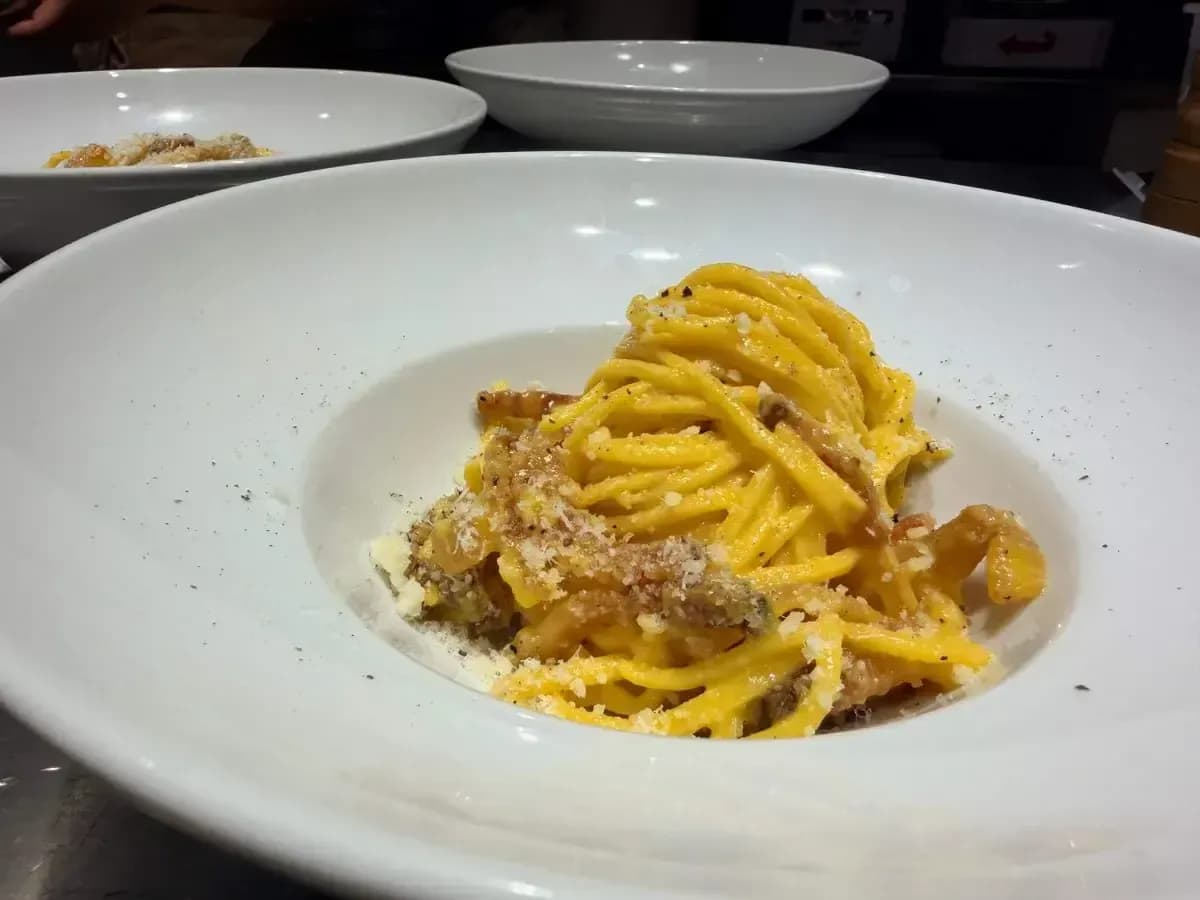
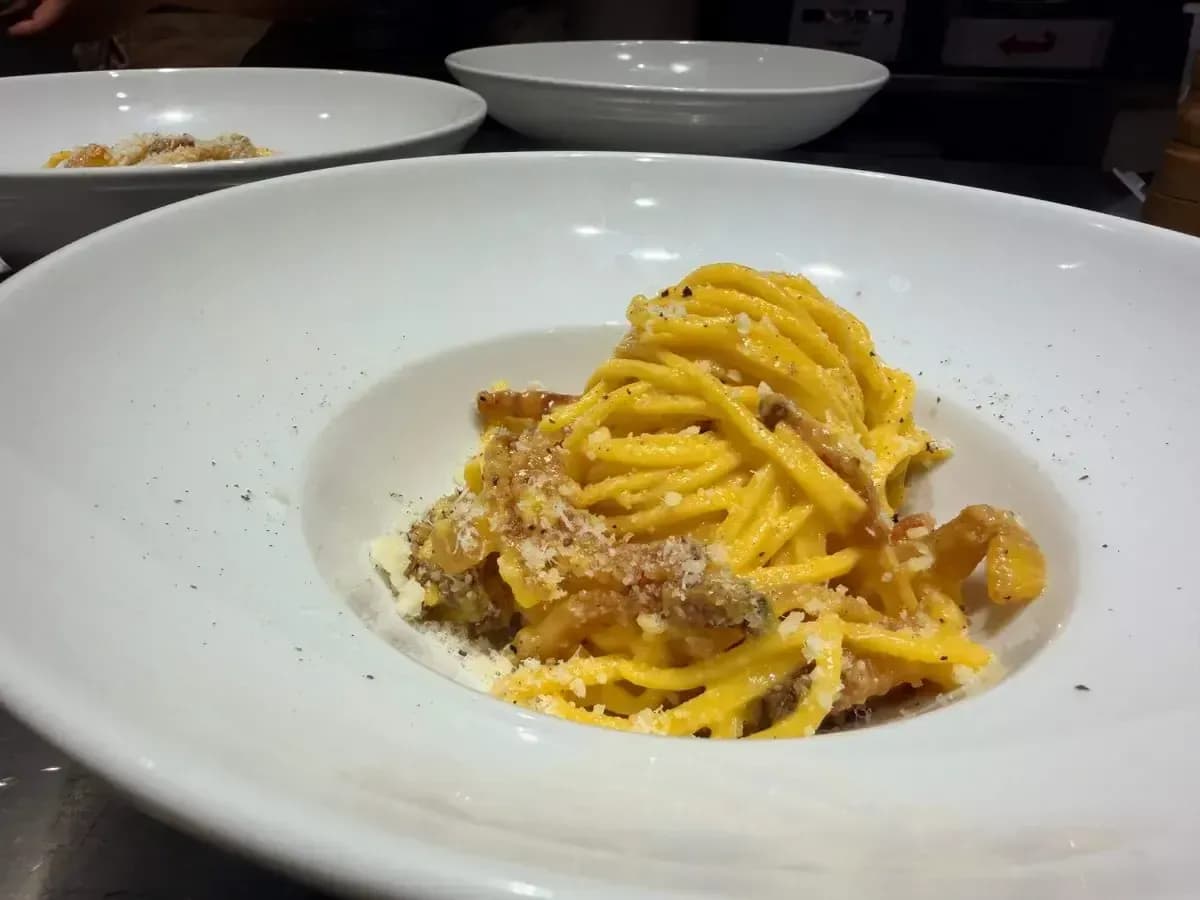
This is not the whole-egg sheet of Emilia: it is a firmer, yellower dough, made for the chitarra, that gives square-sectioned tonnarelli with the rough surface the Roman sauces need. Below is the method as we do it in class, from the flour volcano to the nests, with the tools, the mistakes we correct every week and how to store it.
Fresh pasta ingredients for 4 people
For four people you need 400 g of flour, 4 yolks, 120 g of water, a circle of oil and a pinch of salt.
- 200 g of re-milled durum wheat semolina, 50 g per person
- 200 g of 00 flour, 50 g per person
- 4 egg yolks, one per person: set the whites aside
- 120 g of water, 30 g per person, at room temperature
- a circle of extra virgin olive oil
- a pinch of fine salt
- semolina for dusting the board and the sheets
The rule holds at any number: six people, 300 g of semolina, 300 g of 00, six yolks and 180 g of water. The water is weighed, not poured by eye: it is what sets the consistency, and 30 g per person gives a firm dough that lets itself be rolled.
Why yolk and water, and why half semolina
The yolk brings fat, colour and flavour; the white brings water and proteins that toughen the pasta in the pot. With yolks only and weighed water the sheet comes out yellow, elastic and thin without turning rubbery, and the dough is the same from one day to the next: eggs vary in weight, 30 g of water does not.
Re-milled durum wheat semolina is coarser and higher in protein than 00: on its own it gives a firm pasta that is hard work to roll, while 00 on its own gives a smooth but tender sheet. Half and half you get the best of both: a sheet that rolls and a strand that stays firm in the pot, with a rough surface the sauce can grip. For tonnarelli, which have to carry a cacio e pepe made of cheese and starch and nothing else, that roughness is everything. The circle of oil makes the dough more pliable under the pin; the salt, a pinch, is barely there.
The tools: rolling pin, pasta machine, chitarra and ravioli cutters
You need four things. A rolling pin, to flatten the dough by hand and give it elasticity by folding; a pasta machine, to achieve an even thickness; the pasta guitar, the chitarra, the steel-strung frame that came from Abruzzo and cuts perfect strands of pasta, square in section; and ravioli cutters or pastry cutters, to seal and shape your filled pasta.
The surface matters: a wooden board, with its grain, helps the kneading more than a smooth top. Without a chitarra you roll up the semolina-dusted sheet and cut it with a knife at 2 mm: slower, less even, and still tonnarelli.
The volcano: how the dough comes together
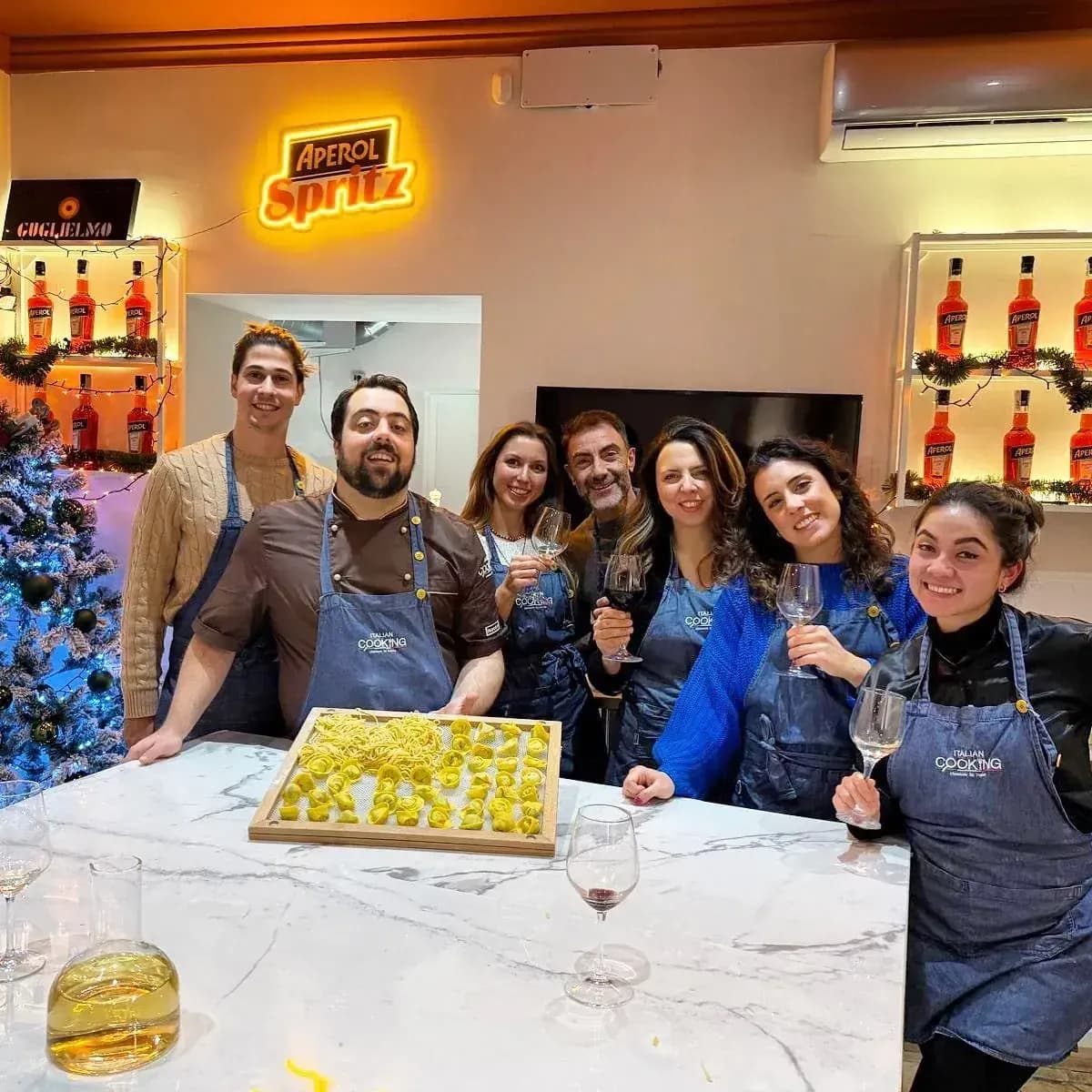
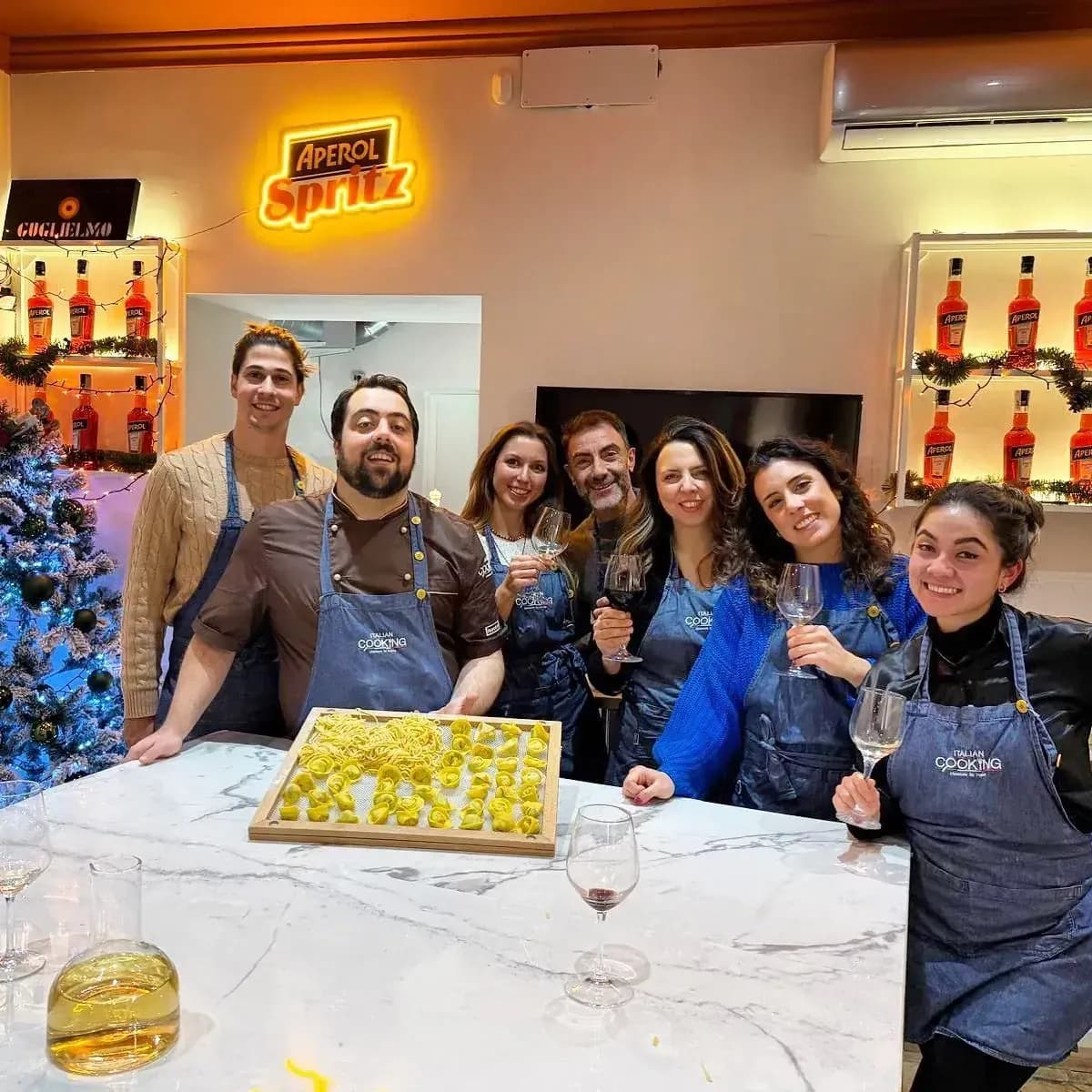
Mix the two flours and pour them onto the board in the shape of a volcano, with a wide crater in the middle. Into the crater go the yolks, then the water, the pinch of salt and a circle of oil. Beat the liquid with a fork and start drawing the flour in from the inner wall, a little at a time, as we did during the lesson: first a batter, then a mass that pulls away from the fork.
When you can tell the dough is taking shape, switch to your hands: gather what is left on the board with the scraper and knead by pushing with the palm of your hand, to warm it, folding and turning a quarter turn. In a few minutes it turns smooth and compact. If it cracks, wet your hands; if it sticks, keep kneading without adding flour, which would stiffen the sheet.
Ten minutes of rest, then the rolling pin, folding in half
Shape it into a ball, wrap it in cling film and let it rest ten minutes. The gluten you have just built relaxes and the sheet stops springing back under the pin. Go have a glass of wine, or a bottle if there are enough of you.
Then roll: pin on the ball, and every so often fold it in half and keep rolling. It is that fold, repeated, that gives the sheet its elasticity. Dust with semolina when it sticks. When the sheet is elastic and even, pass it through the pasta machine starting from the widest setting, 0, and going down one step at a time to 3: that is the tonnarelli thickness, where the strand comes out as thick as it is wide. Any thinner and the chitarra gives you flat ribbons that fall apart in the pan.
A small piece for the ravioli, the rest on the chitarra
Before cutting, set aside a small part of the sheet and keep it covered: that is the ravioli sheet, rolled thinner and sealed with the cutter. The rest goes on the chitarra: sheet dusted with semolina, laid over the strings, rolling pin across it with steady pressure. The tonnarelli drop onto the sloping board underneath, square; a strum across the strings frees the ones that cling.
Open them at once, dust them with semolina and gather them into loose nests on a tray: left in a heap without semolina they weld into a block within five minutes. From the same sheet, rolled up and knife-cut, come tagliatelle and tagliolini; from the small piece rolled thin, ravioli and lasagne.
What goes wrong at the board, and how we catch it
Extra flour is the first. Someone feels the dough sticking and starts dusting, and in a few minutes they have worked in 50 g too many: a pasta that cracks, rolls stiff and boils into something closer to a biscuit. Sticky at the start is normal and kneading with the palm fixes it.
The second is water by eye: without a scale the dough comes out dry one day and slack the next. The third is dough left uncovered or in a draught: it forms a skin in ten minutes and the skin ends up in the sheet as streaks. The fourth is the pasta machine pushed past 3: a sheet that is too thin makes lovely tagliolini and useless tonnarelli. The fifth is strands left in a heap without semolina: the block goes into the pot as one lump.
Making it ahead, and how to store it
The raw ball keeps in the fridge, wrapped in film, for a day, two at most; beyond that it dries and the surface darkens. The better route is freezing the raw pasta already cut: nests or ravioli well spaced on a tray, a couple of hours in the freezer until hard, then into freezer bags. They go straight from frozen into boiling water, with an extra minute.
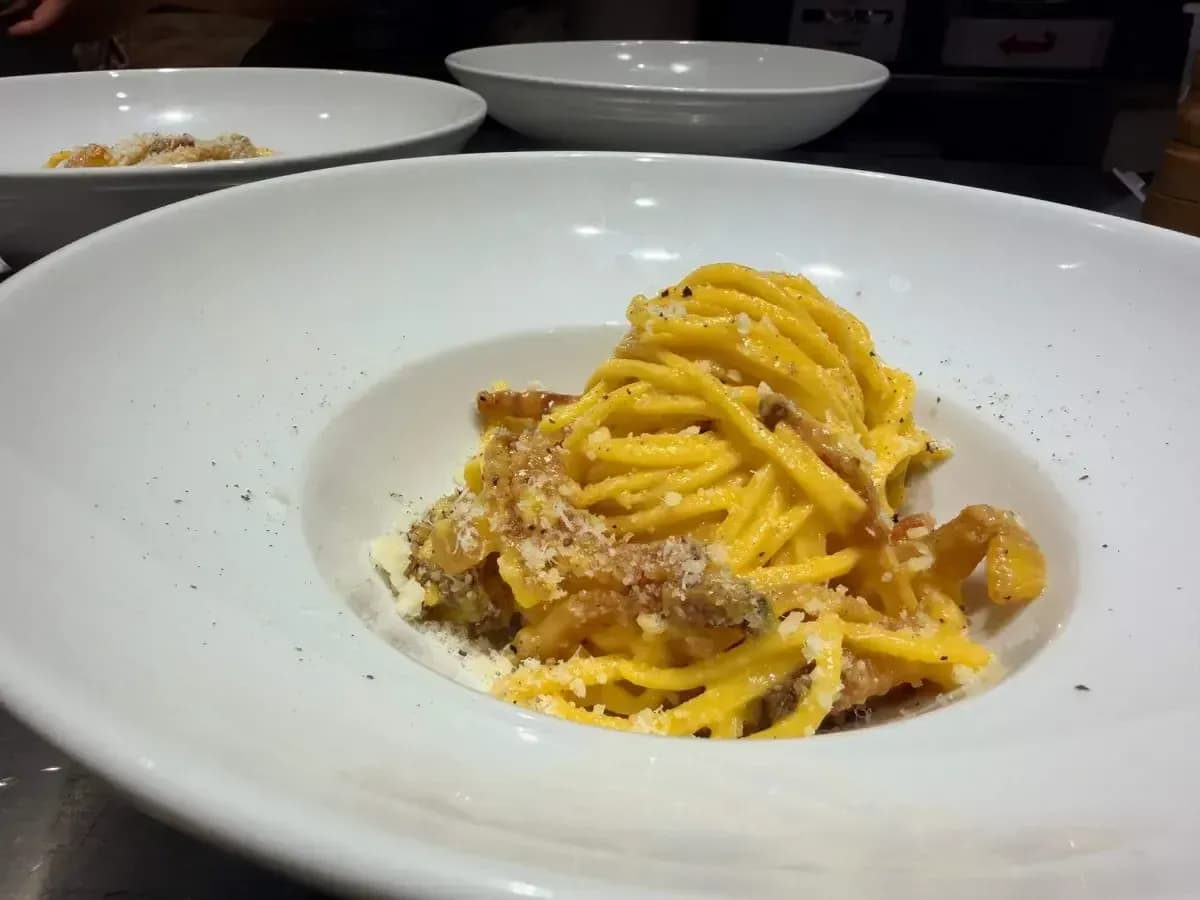
Freshly cut pasta should be cooked the same day: two to three minutes in salted boiling water, 4 litres and 40 g of coarse salt for four. It floats after a minute and is done sixty to ninety seconds later. Before draining keep a mug of the cloudy water: it is starch, and it is what makes a cacio e pepe or a carbonara cling instead of slide.
Where to learn fresh pasta in Rome
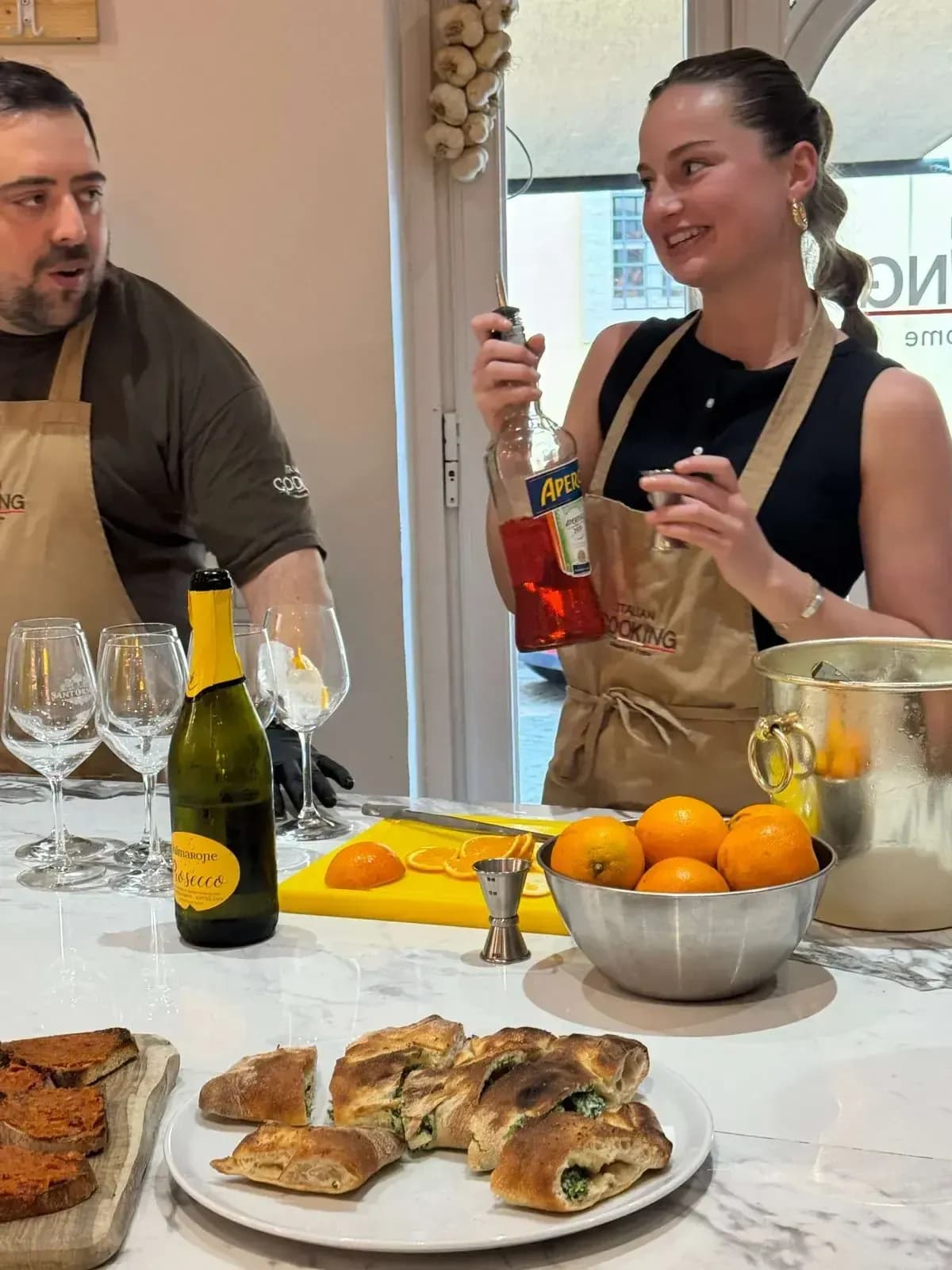
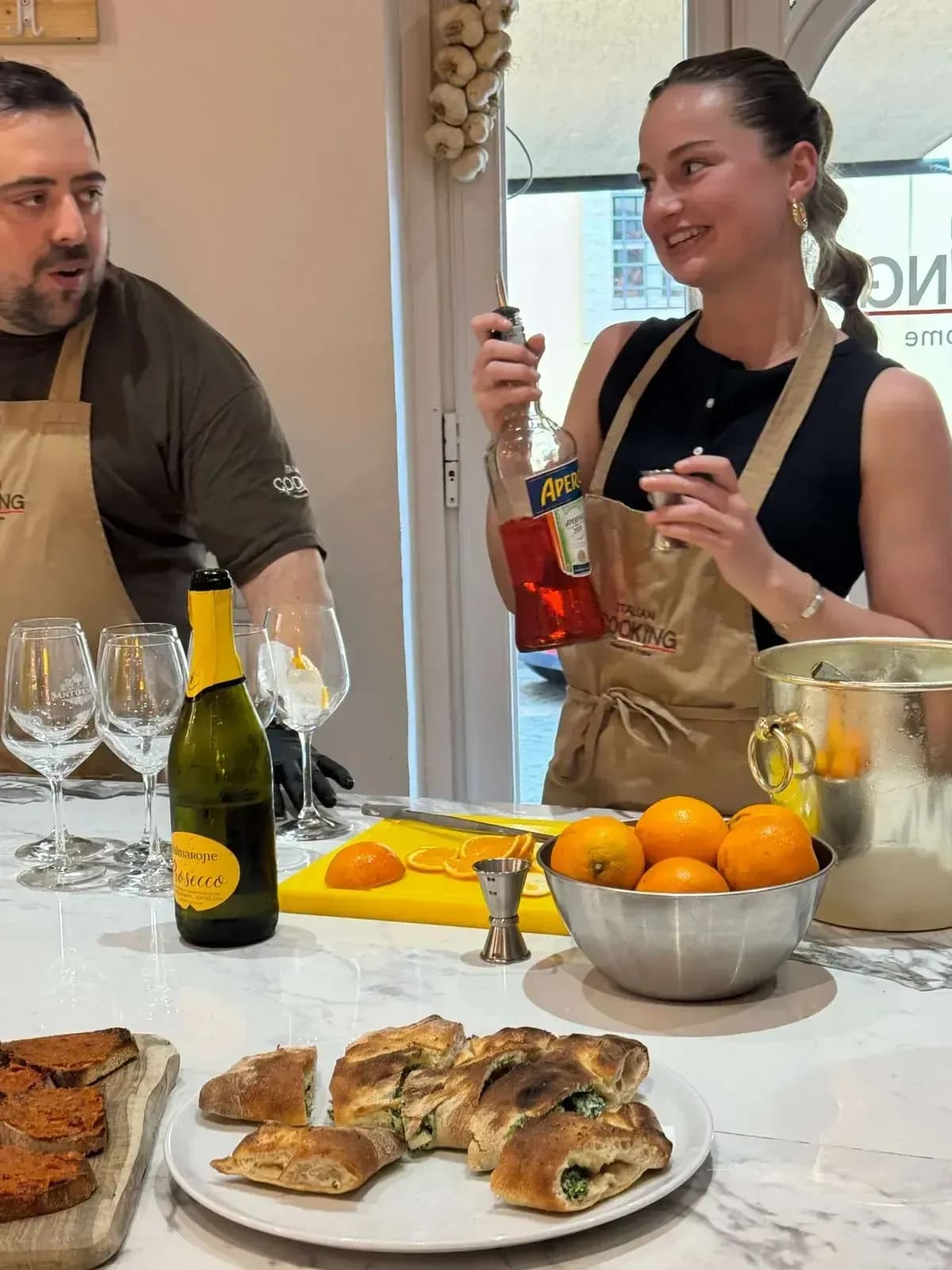
In our kitchen at Piazza Margana 22, in the centre of Rome, a short walk from Piazza Venezia. This dough is where every pasta class begins. In the Carbonara class the tonnarelli you cut on the chitarra are the pasta for the three Roman sauces, carbonara, cacio e pepe and amatriciana. In the fresh pasta and tiramisu class the same sheet becomes tonnarelli and ravioli before dessert. In the spritz and spaghetti class it is cut on the chitarra as spaghetti, and in the market tour and cooking class you knead it with what you bought that morning. Each has a private version for a group that wants the kitchen to itself. Shared classes are taught in English; for Italian or Spanish, book a private session. The full list is on the cooking classes page.
Recipe details
The dough every pasta class in our kitchen at Piazza Margana 22 starts from, per person: 100 g of flour, half re-milled durum wheat semolina and half 00 flour, one egg yolk, 30 g of water, a circle of extra virgin olive oil and a pinch of salt. Kneaded with the palm of the hand, rested ten minutes in film, rolled with a pin folding it in half and then through the pasta machine from 0 to 3. From the same sheet come the tonnarelli cut on the chitarra and, from a small piece set aside, the ravioli.
Preparation
The flour volcano and the yolk in the crater
Mix 200 g of re-milled semolina with 200 g of 00 flour and pour them onto the board as a volcano, with a wide crater in the middle. Into the crater go the 4 yolks, then the 120 g of water, a pinch of salt and a circle of extra virgin olive oil.
Mix the liquid into the flour
Beat the liquid in the crater with a fork and start drawing flour in from the inner wall, a little at a time, until the yolks and water have taken up almost all of it and the dough is taking shape. Gather what is left with a bench scraper.
Knead with the palm of your hand
Work the dough by pushing it with the palm of your hand, folding it over itself and turning it a quarter turn: the warmth of the hand makes it smooth and compact. If it cracks, wet your hands; if it sticks, keep kneading without adding flour.
Ten minutes in film
Shape it into a ball, wrap it in cling film and let it rest ten minutes at room temperature: the gluten relaxes and the sheet stops springing back under the pin. The time it takes to pour a glass of wine.
Rolling pin, folding in half
Roll the ball out with the pin and, every so often, fold it in half and keep rolling: each fold gives it elasticity. Dust with semolina when it sticks. When the sheet is elastic and even, it is ready for the machine.
Pasta machine from 0 to 3, and a piece set aside
Pass the sheet through the pasta machine starting from the widest setting, 0, and going down one step at a time to 3: that is the right thickness for tonnarelli. Cut off a small part of the sheet and keep it covered: it is for the ravioli.
Tonnarelli on the chitarra, and the pot
Dust the sheet with semolina, lay it over the chitarra and run the rolling pin across it: the strings cut the tonnarelli, square in section. Open them, flour them and gather them into nests. Cook in 4 litres of water with 40 g of coarse salt: they float after a minute and are done 60 to 90 seconds later. Set aside a mug of the cooking water.
The tools: rolling pin, pasta machine, chitarra and ravioli cutters
Fresh pasta at home takes four tools. A rolling pin, to flatten the dough by hand and give it elasticity by folding; a pasta machine, to bring the sheet to an even thickness, from 0 to 3 for tonnarelli; the pasta guitar, the chitarra, the steel-strung frame that cuts perfect strands of pasta, square in section; and ravioli cutters or pastry cutters, to seal and shape the filled pasta. Without a chitarra the sheet is rolled up and cut with a knife at 2 mm: slower, and still tonnarelli. The best surface is a wooden board, whose grain helps the work more than a smooth top.
Storage: fridge, freezer and cooking from frozen
The raw dough keeps in the fridge, wrapped in film, for a day, two at most; beyond that it dries and the surface darkens. The better route is freezing the raw pasta already cut: nests of tonnarelli or ravioli well spaced on a tray, a couple of hours in the freezer until hard, then into freezer bags. They go straight from frozen into boiling water, with an extra minute. Freshly cut pasta should be cooked the same day: the nests, dusted with semolina, hold for a few hours under a tea towel. Keep whatever dough you are not working covered and away from draughts, which dry it out.
Tonnarelli, ravioli and the classes that cut them
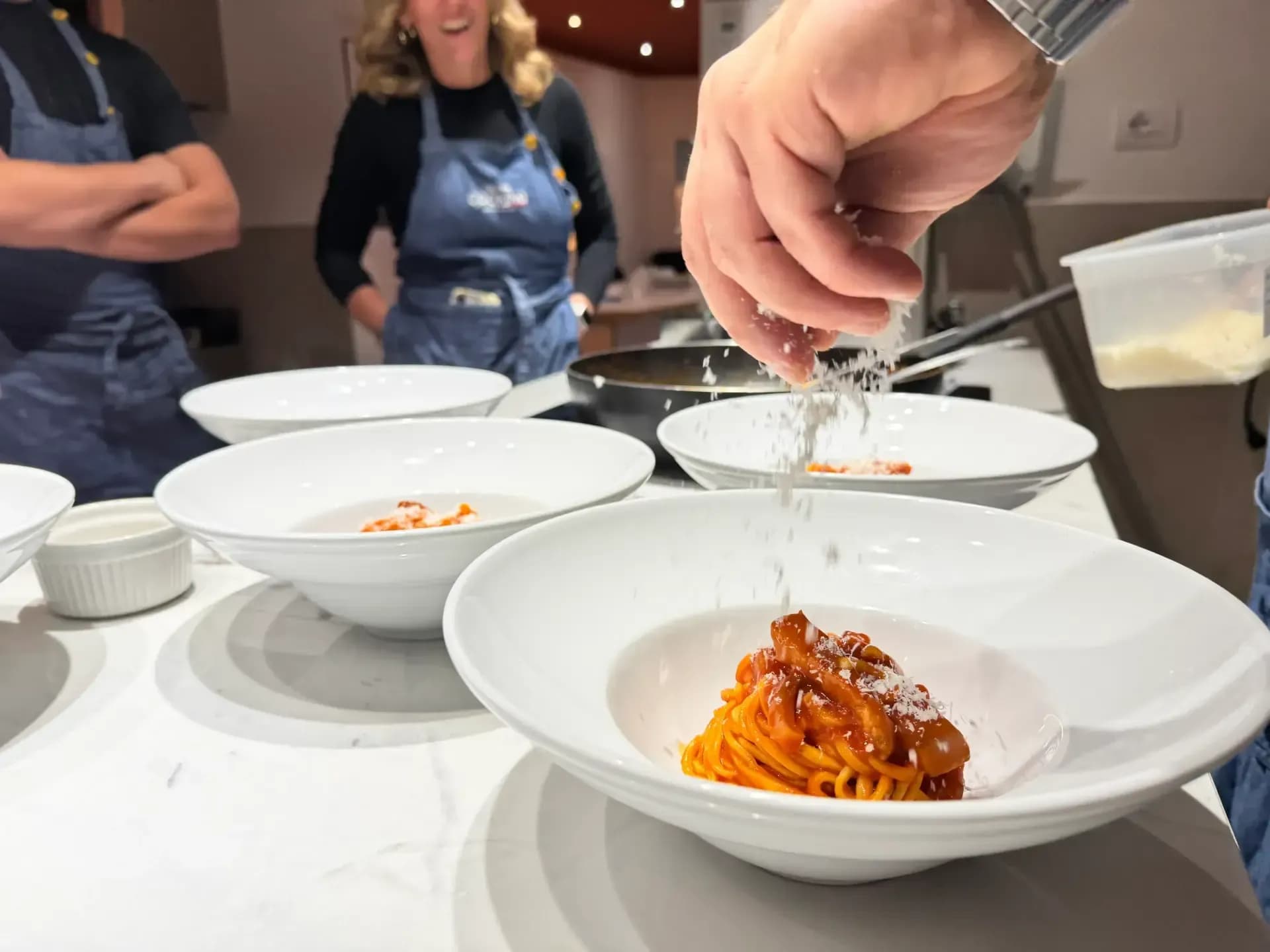
The tonnarello is the Roman cut: the sheet at setting 3 goes over the chitarra and out come square, rough-surfaced strands, made to hold sauces with no liquid of their own like cacio e pepe, carbonara and amatriciana. The piece set aside, rolled thinner, becomes the ravioli sheet. In our kitchen this dough is where every pasta class begins: in the Carbonara class the tonnarelli you cut are the pasta for the three Roman sauces, in the fresh pasta and tiramisu class the same sheet becomes tonnarelli and ravioli before dessert, in the spritz and spaghetti class it is cut on the chitarra as spaghetti, and in the market tour and cooking class you knead it with what you bought that morning. The private versions follow the same dough.
Ingredients
400 g of flour, 100 g per person: 200 g of re-milled durum wheat semolina and 200 g of 00 flour
4 egg yolks, one per person
120 g of water, 30 g per person, at room temperature
A circle of extra virgin olive oil
A pinch of fine salt
Semolina for dusting the board and the sheets
4 litres of water and 40 g of coarse salt for cooking, one litre and 10 g per person
Method
- 1
100 g of flour, one yolk, 30 g of water per person. Mix the two flours and pour them onto the board as a volcano; the yolk goes into the crater, then the water, the pinch of salt and a circle of oil. Stir the liquid with a fork, drawing flour in from the inner wall, until the dough starts taking shape.
- 2
Then the palm of your hand. Knead by pushing with the palm, to warm the dough, until it is smooth and compact. Wrap it in film and let it rest ten minutes: the time it takes to pour a glass of wine.
- 3
Rolling pin, folding in half. Roll the ball out with the pin and, from time to time, fold it in half and keep rolling: that is how it gains elasticity. When it is elastic, pass it through the pasta machine from 0 to 3, one setting at a time.
- 4
A small piece for the ravioli, the rest on the chitarra. Cut off a small part of the sheet and keep it covered for the ravioli; the rest, dusted with semolina, goes over the chitarra with the rolling pin on top: out come the tonnarelli, square in section.
- 5
Two to three minutes in the pot. Four litres of water with 40 g of coarse salt: the tonnarelli float after a minute and are done sixty to ninety seconds later. Before draining keep a mug of the cloudy water, the base of every Roman sauce.

Written by
Francesco Ieriti
Founder of Italian Cooking Classes in Rome and head chef, with more than 14 years in international hospitality. He writes the recipes on this blog the way they are taught in class at Piazza Margana 22: per person, mistakes included.