Index
Classes with this recipe


Index
Tiramisù is the dessert we close the fresh pasta class with, and we keep the rule per person because groups change in class and proportions do not: one egg, one heaping spoon of sugar, a pinch of salt, one heaping spoon of mascarpone, espresso as needed, two ladyfingers and bitter cocoa. Six things, and no substitutions: no cream, no liqueur.
The difference between a tiramisù that holds and one that slides comes down to three moves: the whites whipped to snow and folded in with a spatula without deflating them, the ladyfinger dipped halfway for three seconds in coffee lengthened with water, and the cold, twenty minutes in the freezer or six hours in the fridge. Below is the method as we do it in our kitchen at Piazza Margana 22, the tools, the mistakes we correct every week and what changes outside Italy.
Tiramisu ingredients for 4 people
For four people you need four eggs, four heaping spoons of sugar, four of mascarpone, eight ladyfingers.
- 4 eggs, one per person, very fresh, at room temperature
- 4 heaping spoons of sugar, one per person: a little into the whites, the rest into the yolks
- a pinch of salt, for whipping the whites
- 4 heaping spoons of mascarpone, one per person, out of the fridge for half an hour
- espresso as needed, doubled with the same amount of still water: five shots for a dish
- 8 ladyfingers, two per person, the dry, light kind
- bitter cocoa powder, to cover the top at the very end
The rule holds at any number: six people, six eggs, six spoons, twelve ladyfingers. The coffee is not counted: you make enough to dip the ladyfingers, and what is left you drink.
Why the whole egg: the snow in the cream
The recipe deposited in Treviso uses yolks only. We use the whole egg, and the whites whipped to snow are the reason our cream is light and tall instead of dense: the snow brings air, and the air stays if you fold it in with a spatula instead of the mixer. The pinch of salt in the whites helps them whip and cannot be tasted in the dessert; the little sugar makes them more stable.
The mascarpone goes in after the yolks have been beaten with the sugar, and it is worked only as long as it takes to make the cream smooth: it is almost all fat, and beaten too long it splits into a grainy mass that never comes back. At room temperature it blends in a minute; fridge-cold it lumps. One heaping spoon per person is enough: more mascarpone makes a heavy cream that sets like butter in the fridge.
The tools: two bowls, a mixer, a spatula
Making tiramisù needs simple kitchen equipment that is easy to find. A mixing bowl for blending, two in fact, one for the whites and one for the yolks; a whisk or hand mixer, which whips the snow and the yolks in a few minutes; a rubber spatula to fold the whites in without knocking the air out and to scrape down the sides of the bowl, so everything is evenly combined.
To serve, glasses or dessert cups for individual portions, or a square or round dish for a shared tiramisù, deep enough for at least two layers. A fine sieve for the cocoa at the end. The freezer or the fridge does the rest.
How to make tiramisu, step by step
Separate the eggs, yolks in one bowl and whites in another, and take out the mascarpone.
Whip the whites to snow with a whisk or hand mixer, with a little sugar and the pinch of salt, until they stand up.
Beat the yolks with the rest of the sugar with the mixer until pale and fluffy, then add the mascarpone and work until the cream is smooth, no longer.
Fold in the snow with a spatula, a third at a time, from the bottom up, scraping down the sides, until it is all combined.
Make the coffee: in a bowl, five shots of espresso and the same amount of still water.
Assemble in layers. In the container, a first layer of cream. Soak half a ladyfinger for three seconds and lay it on the cream from the side without coffee. Cream, ladyfingers, cream, until you reach the top of the dish.
Freezer twenty minutes, or fridge at least six hours, better overnight. Bitter cocoa on top just before serving.
Three seconds, half a ladyfinger: why the bottom must not get wet
A ladyfinger is built to absorb: left in the coffee for four or five seconds it drinks far more than it looks, and two hours later the bottom of the dish is a dark puddle with the biscuit floating in it. That is why the coffee is lengthened with the same amount of still water, so it is thinner and wets without soaking, and why the ladyfinger is dipped halfway, for three seconds, and laid on the cream from the dry side. The other half takes moisture from the cream during the rest, and after six hours in the fridge the biscuit is soft to the centre without having fallen apart.
The first layer is cream, not ladyfingers: it protects the bottom and holds the biscuits in place. Then you go up in layers, ladyfingers and cream, to the rim, finishing with cream. The cocoa waits.
The mistakes we see in class, in the order they happen
Cold mascarpone, or beaten too long. It lumps when it meets the yolks, and if you insist with the mixer it splits. Out of the fridge earlier, into the yolks already beaten, and stop as soon as the cream is smooth.
Deflated snow. The whites are folded in with a spatula, from the bottom up, not with the mixer: otherwise the air you whipped in leaves and the cream goes flat again.
The soaked ladyfinger. Half a biscuit, three seconds, coffee lengthened with water. The cold does the rest.
Haste. After twenty minutes in the freezer it holds, after six hours in the fridge it cuts, after a night it is another dessert. Served after an hour it slides off the spoon.
Cocoa dusted before the rest. It gets wet on the cream, turns into a dark paste and loses the bitterness that is supposed to sit against the sugar. Sieve at the end, on the cold cream.
Ladyfingers, mascarpone and coffee outside Italy
The biscuit matters more than people expect. Italian savoiardi are dry, crisp and light, built to absorb coffee without collapsing. The soft sponge ladyfingers sold in many supermarkets abroad are a different product: they are already moist, so a single touch in the coffee, and the layers will be softer. In our gluten-free class the same tiramisù is made with gluten-free ladyfingers, and the only difference is an even shorter dip, because they soak faster.
Mascarpone has no substitute that gives the same result: cream cheese is salty and tangy, whipped cream is thinner and does not set. The tub should say mascarpone and little else. On the coffee, a moka pot gives the same result as the espresso machine we use in class; filter coffee is too thin and should be brewed double; instant is a last resort. In every case no sugar, and lengthened with water before dipping.
Where to learn tiramisu in Rome
In our kitchen at Piazza Margana 22, in the centre of Rome, a short walk from Piazza Venezia. Tiramisù is the dessert of the fresh pasta and tiramisu class: first the fresh pasta, tonnarelli and ravioli with amatriciana, then the whipped whites and the ladyfingers, and the tiramisù rests while you eat the pasta. The private version is for a group that wants the kitchen to itself, and in the gluten-free class it is made with gluten-free ladyfingers. Shared classes are taught in English; for Italian or Spanish, book a private session. The full list is on the cooking classes page.
Recipe details
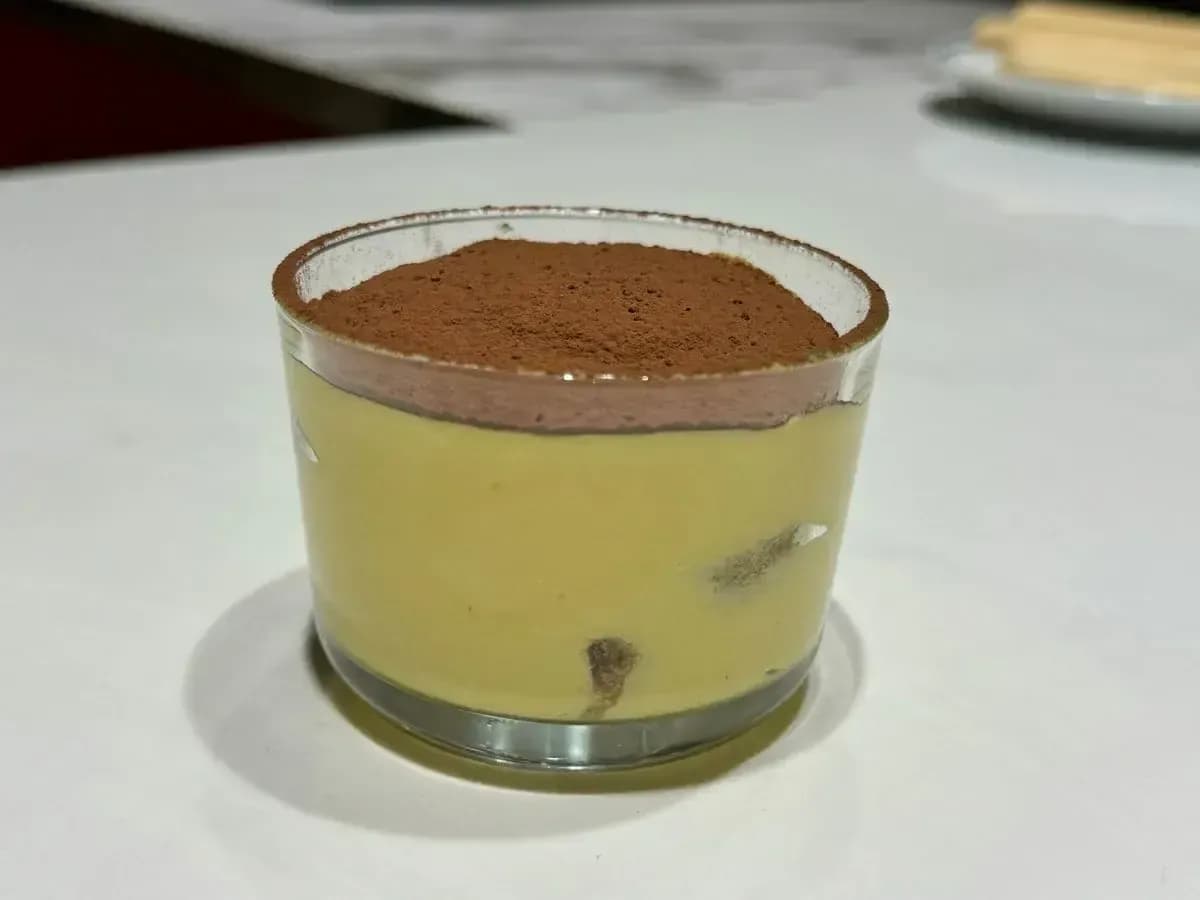
Tiramisù the way we make it in our kitchen at Piazza Margana 22, counted per person: one egg, one heaping spoon of sugar, a pinch of salt, one heaping spoon of mascarpone, espresso as needed, two ladyfingers and bitter cocoa. The whites are whipped to snow with a little sugar and the salt, the yolks are beaten with the sugar and then with the mascarpone, and the snow is folded in with a spatula: a light cream that holds. A first layer of cream, ladyfingers dipped halfway for three seconds, layers to the rim, then the cold: twenty minutes in the freezer or at least six hours in the fridge, better overnight.
Preparation
Separate yolks and whites
Break the 4 eggs and separate the yolks from the whites into two different bowls. No trace of yolk in the whites, or they will not whip. Take the mascarpone out of the fridge: at room temperature it blends without lumps.
Whip the whites to snow
With a whisk or hand mixer, whip the whites with a little sugar and a pinch of salt until they stand up: turn the bowl over and they do not move. The salt helps them whip and cannot be tasted in the dessert.
Beat the yolks with the sugar and add the mascarpone
In the other bowl beat the yolks with the rest of the sugar with the mixer until they are pale, fluffy and the mixture falls off the whisk in a ribbon. Add the 4 heaping spoons of mascarpone and work just until the cream is smooth: mascarpone beaten too long splits.
Fold in the whites with a spatula
Add the whipped whites to the mascarpone cream a third at a time, folding with a rubber spatula from the bottom up and scraping down the sides of the bowl. Keep going until it is all combined and the cream stays airy.
Make the lengthened coffee
In a wide bowl pour five shots of espresso and the same amount of still water, no sugar. Lengthened like this, the ladyfinger takes the coffee in three seconds without soaking through and falling apart.
Assemble the tiramisù in layers
Take your container, glasses or dessert cups for individual servings, a square or round dish for sharing, and spread a first layer of cream. Soak half a ladyfinger in the coffee for three seconds, then lay it on the cream from the side without coffee. Cover with cream and keep adding layers, ladyfingers and cream, until you reach the top of the dish, finishing with cream.
Cold, cocoa and to the table
Put the tiramisù in the freezer for 20 minutes, or in the fridge for at least 6 hours: better overnight. When it is done, cover the top with bitter cocoa through a sieve and serve. The cocoa goes on last, on the cold cream: dusted earlier it absorbs moisture and turns into a dark paste.
The tools: bowl, whisk or mixer, spatula and the containers
Making tiramisù needs simple kitchen equipment. A mixing bowl for blending, two in fact, one for the whites and one for the yolks; a whisk or hand mixer, which whips the snow and the yolks in a few minutes; a rubber spatula to fold the whites in without knocking the air out and to scrape down the sides of the bowl, so everything is evenly combined. To serve, glasses or dessert cups for individual portions, or a square or round dish for a shared tiramisù, deep enough for at least two layers. A fine sieve for the cocoa at the end.
Where tiramisù goes wrong, and how we correct it in class
The first mistake is cold or over-beaten mascarpone: it lumps when it meets the yolks, and if you insist with the mixer it splits into a grainy mass. Take it out earlier, add it to the yolks already beaten, and stop as soon as the cream is smooth. The second is deflated snow: the whites are folded in with a spatula, from the bottom up, never with the mixer. The third is the soaked ladyfinger: half a biscuit for three seconds in coffee lengthened with water, and the cold does the rest. The fourth is haste: after twenty minutes in the freezer it holds, after six hours in the fridge it cuts, after a night it is another dessert. The fifth is cocoa dusted before the rest, which gets wet and turns to paste.
Treviso, the deposited recipe and our version
Tiramisù is young for an Italian classic. The version most people agree on was served at Le Beccherie in Treviso in the early 1970s, and in 2010 that recipe was deposited with a notary at the Accademia Italiana della Cucina: mascarpone, egg yolks, sugar, ladyfingers, coffee and cocoa, no whites, no cream, no liqueur. In our kitchen we make it with the whole egg: the whites whipped to snow make the cream lighter and taller, and it is the version families make at home all over Italy. One egg, one heaping spoon of sugar and one of mascarpone, two ladyfingers per person: a rule that holds at any number. No cream and no liqueur, so mascarpone and coffee are the only two flavours on the fork. We make it at the end of the fresh pasta and tiramisu class and its private version, and in the gluten-free class with gluten-free ladyfingers.
Ingredients
4 eggs, one per person, very fresh
4 heaping spoons of sugar, one per person: a little goes into the whites, the rest into the yolks
A pinch of salt, for the whites
4 heaping spoons of mascarpone, one per person, at room temperature
Espresso as needed, doubled with the same amount of still water: five shots for a dish
8 ladyfingers, two per person
Bitter cocoa powder to cover the top, just before serving
Method
- 1
Separate the eggs. Yolks in one bowl, whites in another. Whip the whites to snow with a whisk or hand mixer, with a little sugar and the pinch of salt, until they stand up.
- 2
Yolks, sugar, mascarpone. In the other bowl beat the yolks with the sugar with the mixer until pale and fluffy, then add the mascarpone and work until the cream is smooth.
- 3
Fold in the snow with a spatula. The whipped whites go into the mascarpone cream by folding from the bottom up, until it is all combined and the cream stays airy.
- 4
The coffee, lengthened. In a bowl, five shots of espresso and the same amount of still water, so the ladyfinger takes the coffee without getting soggy.
- 5
Cream, ladyfingers, cream, to the rim. In the container, a first layer of cream. Soak half a ladyfinger for three seconds and lay it on the cream from the side without coffee. Keep adding layers until you reach the top of the dish.
- 6
Freezer twenty minutes, or fridge at least six hours. Better overnight. When it is done, cover the top with bitter cocoa and serve.

Written by
Francesco Ieriti
Founder of Italian Cooking Classes in Rome and head chef, with more than 14 years in international hospitality. He writes the recipes on this blog the way they are taught in class at Piazza Margana 22: per person, mistakes included.