Index
Index
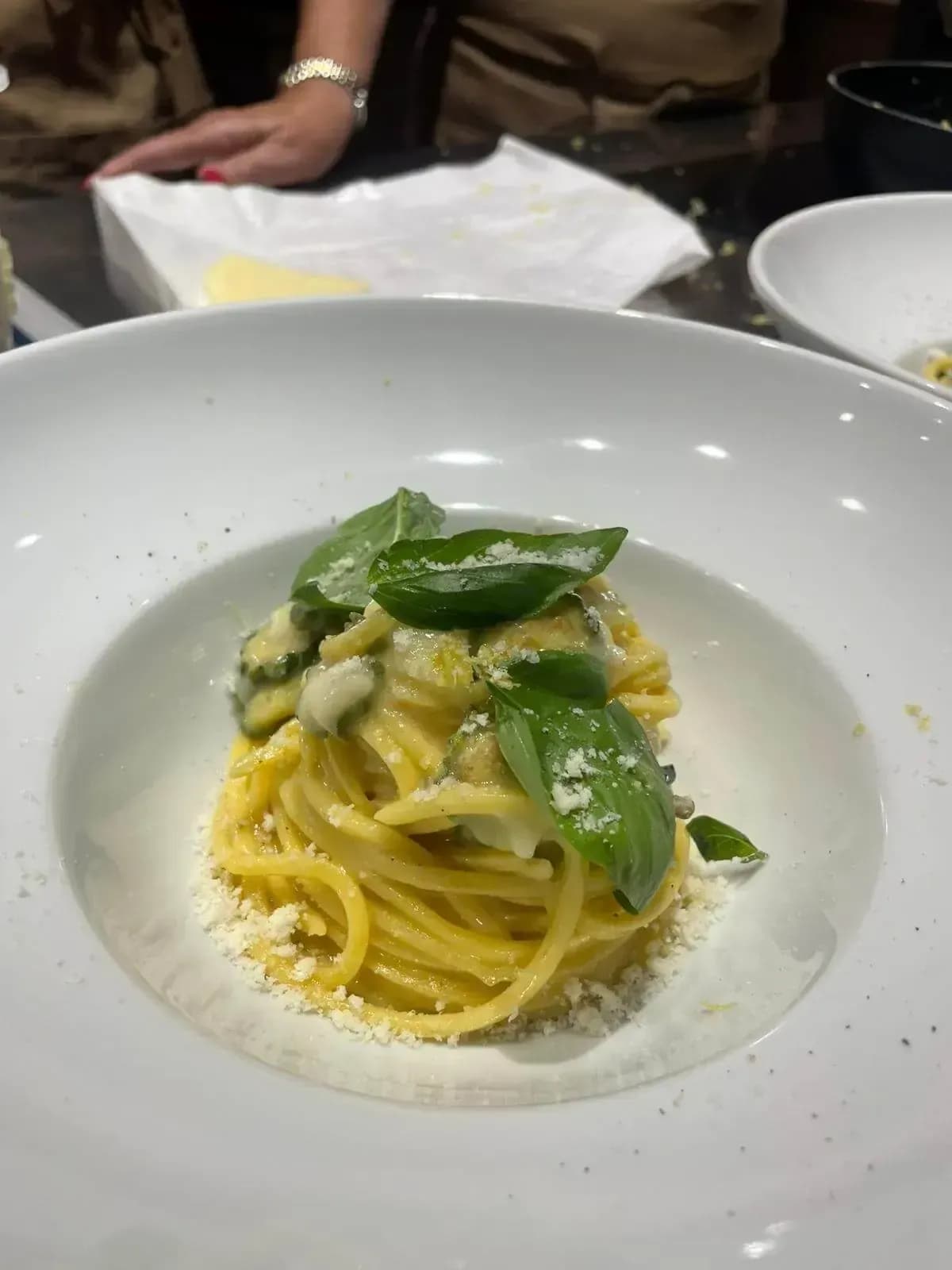
Every so often somebody at the counter of our kitchen at Piazza Margana 22 asks what the trick is, and the honest answer is that there is no trick, only a temperature. The zucchini are fried until the edges go gold. The provolone goes into the pan after the pan has left the flame. That is the whole spaghetti alla Nerano recipe, and it's the one dish in our aperitivo class that people photograph before they taste, because nobody expects a plate this green and this glossy to come out of a pan with no cream in it.
It's also the dish guests most often tell us went wrong at home, nearly always the same way: the cheese went stringy. It does that for one reason, and it's easy to fix once you've watched it happen. So here is the dish as we teach it: the doses for four, why the fried zucchini matter most, which cheese to buy, and where the cream comes from when there is no cream.
Spaghetti alla Nerano ingredients for 4 people
Four plates, 35 minutes from the first slice to the table: 15 of preparation and 20 of cooking, frying included.
- 320 g of dried spaghetti (80 g each), bronze-cut if the shop has them, for the rough surface
- 700 g of zucchini (175 g each), medium, firm, dark green
- 150 g of provolone del Monaco (37.5 g each), grated on the coarse holes
- 30 g of parmigiano reggiano (7.5 g each), about a tablespoon a head
- 1 clove of garlic, whole, fished out as soon as it colors
- 30 g of extra virgin olive oil for the pan, and about 500 ml more for frying
- 20 basil leaves (5 each), torn by hand, never chopped
- Salt for the water and the fried zucchini, less than you think, and black pepper from the mill
The zucchini are where the quality question lives. A medium zucchino, no thicker than a broom handle, is mostly flesh; a big pale one is mostly water, and water turns a fry into a boil. If the market only has big ones, slice them, salt them lightly and leave them in a colander for twenty minutes before you dry them. The frying oil is olive in every Neapolitan kitchen we know; a neutral seed oil does the job too.
Why Nerano fries the zucchini the day before
The dish comes from Marina del Cantone, the beach below Nerano on the Sorrento peninsula, where in the fifties the trattoria Maria Grazia, which already served fried zucchini as its house side, first melted the local cheese over them with spaghetti. Many kitchens in that bay share one habit that changes the dish more than anything else: the zucchini are fried the day before and left overnight with salt and torn basil.
Rested like that, the slices lose their fried edge and drink the basil. The next day they taste of zucchini rather than of the fryer, sweet and a little herbal, and in the pan they fall apart into something close to a purée. That is why a Nerano eaten in Nerano is greener and softer than most copies, and it explains what guests find odd the first time, fried slices going into a pan of water. They're not there for crunch. They're there to melt.
We don't count the rest in the recipe time because the dish works without it, and in a two-and-a-half-hour class nobody waits until tomorrow. At home, an hour under the basil already gets you halfway.
Provolone del Monaco, and what to buy outside Italy
Provolone del Monaco is a protected cheese from the Lattari mountains behind Sorrento: pulled curd, milk that comes at least in part from Agerolese cows, aged a minimum of six months. Young it is buttery and mild; at the age this dish wants it is sharp, faintly peppery, with a nutty finish that comes through the zucchini. The consortium that protects it is blunt about substitutes: made with another cheese, this is spaghetti with zucchini and cheese, not spaghetti alla Nerano. We agree, and most of our guests will never see a wheel of it at home.
Caciocavallo is the closest thing: same pulled-curd family, and an aged one behaves the same way in the pan, same 150 g, same 30 g of parmigiano. A well-aged provolone piccante from a deli counter comes next. If neither is in reach, make it with parmigiano alone, all 150 g of it, and expect a thinner, saltier cream: less water at the end and no salt on the zucchini.
One thing about the grater. Coarse holes, not the fine side, not a microplane. Coarse shreds melt one after another as you toss, while fine powder off a cold block packs into a rubber ball the second it meets hot pasta. Grate it half an hour ahead and leave it on the counter.
The cream without cream: starch, fat and a pan off the flame
The cream is three things meeting at the right temperature: the starch the spaghetti shed into the water, the fat and casein of the provolone, and the fried zucchini breaking down into the liquid. None of them is dairy cream, which would only cover the cheese.
That is why the pasta comes out of the water at 6 minutes, about half of what the packet says, and finishes in the pan for another 3. Cooking it there, like a risotto, keeps the starch in the pan, and by the time the spaghetti are al dente the liquid around them is thick and slightly sticky. That liquid is what the cheese melts into.
Then the flame goes off. Provolone is a pulled-curd cheese, the mozzarella family, and above roughly 70 °C its proteins pull back into strings and squeeze the fat out. Below that, with starchy water around it, it dissolves and holds. The bottom of a pan that just left the burner is hotter than that, so we set it on the counter, count a breath, and only then start adding cheese, a handful at a time. Thirty seconds of tossing and the water turns pale green and opaque. That is the moment. Everything after it is plating.
Spaghetti alla Nerano recipe step by step, the way we call it in class
Slice and dry first. 700 g of zucchini into rounds 3 to 4 mm thick, on a mandolin if there is one, so every slice cooks at the same pace. Then onto a towel and patted dry: a wet slice takes the oil temperature down and boils instead of frying.
Fry in batches at 150 °C. About 500 ml of olive oil in a deep pan. A test slice should sizzle at once with no smoke off the oil. A handful at a time, 5 to 6 minutes a batch, one turn, out when the edges are gold and the middle still gives. Seven hundred grams is three or four rounds. Onto paper, salt while hot, tear a few basil leaves over the top.
Six minutes for the spaghetti. 320 g into the boil. Bite one at six: white and chalky at the core is right. Before you drain, two ladles of the cloudy water go into a cup by the stove.
Wake the zucchini. In a wide pan, 30 g of extra virgin oil and the whole garlic clove over medium heat. A minute, until the garlic is pale gold, then out with it. In go the fried slices and a ladle of pasta water; one minute of stewing and the liquid goes milky as some of the slices collapse.
Three minutes in the pan. Spaghetti drained straight into the zucchini, tossed over medium heat, half a ladle of water each time the bottom dries. Taste at three: al dente, no chalk, the liquid thick and glossy. If it looks dry, water now, not after the cheese.
Off the burner, then the cheese. Pan on the counter. Provolone in three or four handfuls, a toss between each, then the parmigiano, the rest of the basil, one more ladle of water. Thirty seconds of movement, black pepper, warm plates, and out. The cream tightens within two minutes of the pan stopping.
The mistakes we see at the counter
The cheese goes in over the flame. Nine times out of ten this is the failure in front of us: a rope of provolone in the middle of the pan and dry spaghetti around it. Somebody wanted to keep things hot, and that is the one thing not to want. If the cream is only tight, a spoon of water and a hard toss brings it back. Long strings that hold their shape won't come back, and the flame turns them into rubber. Plate it anyway. It still tastes of Nerano.
Too much in the fryer at once. The whole 700 g in one go, or thick slices, or wet ones. The oil temperature collapses, the zucchini sit and drink it, and what comes out is gray and heavy where it should be gold and sweet. No version of this dish survives that.
The pasta water goes down the sink. Out of habit. Then there is nothing to turn melted cheese into a sauce, and people reach for more cheese, which makes it worse. Water is the fix. Never cheese, never heat.
Salt from three directions. The zucchini after frying, the water, the finished plate. The provolone is already salty and the parmigiano more so. Salt the water less than usual and taste before you touch the plate.
Ahead of time, leftovers and fresh spaghetti
The only part that likes waiting is the zucchini. Leftovers set into something closer to a frittata than a pasta. Pressed into a pan with a beaten egg they're worth eating, but they're not the same dish.
Fresh spaghetti change two numbers. In class everyone rolls their own, and if you do the same at home, cook them 2 to 3 minutes instead of 6 and go easier with the water at the end, because fresh pasta sheds starch faster. The dough itself is in our fresh egg pasta article, and if you roll more than you need, the same strands carry our spaghetti and meatballs just as well the next day.
Where to learn spaghetti alla Nerano in Rome
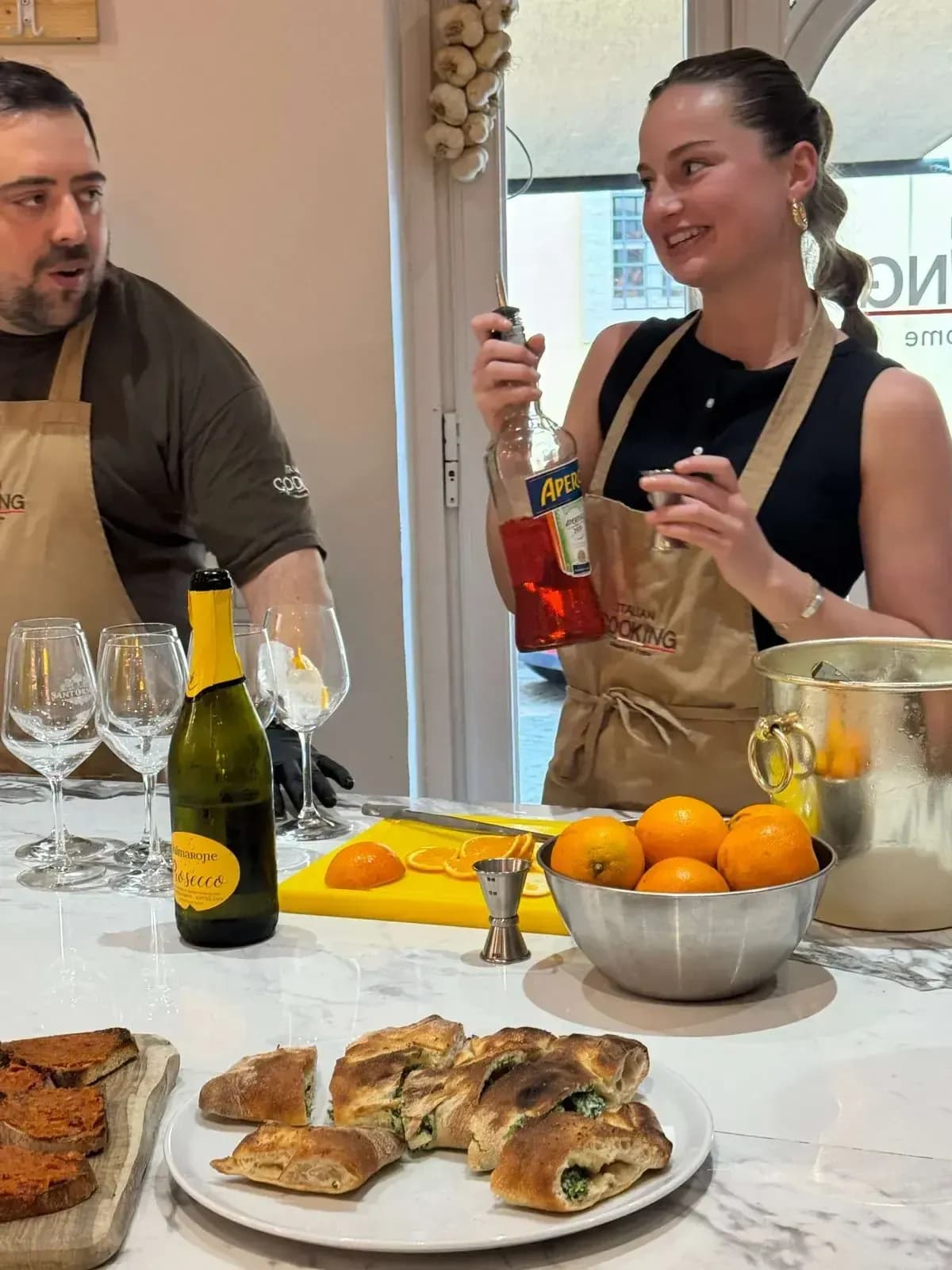
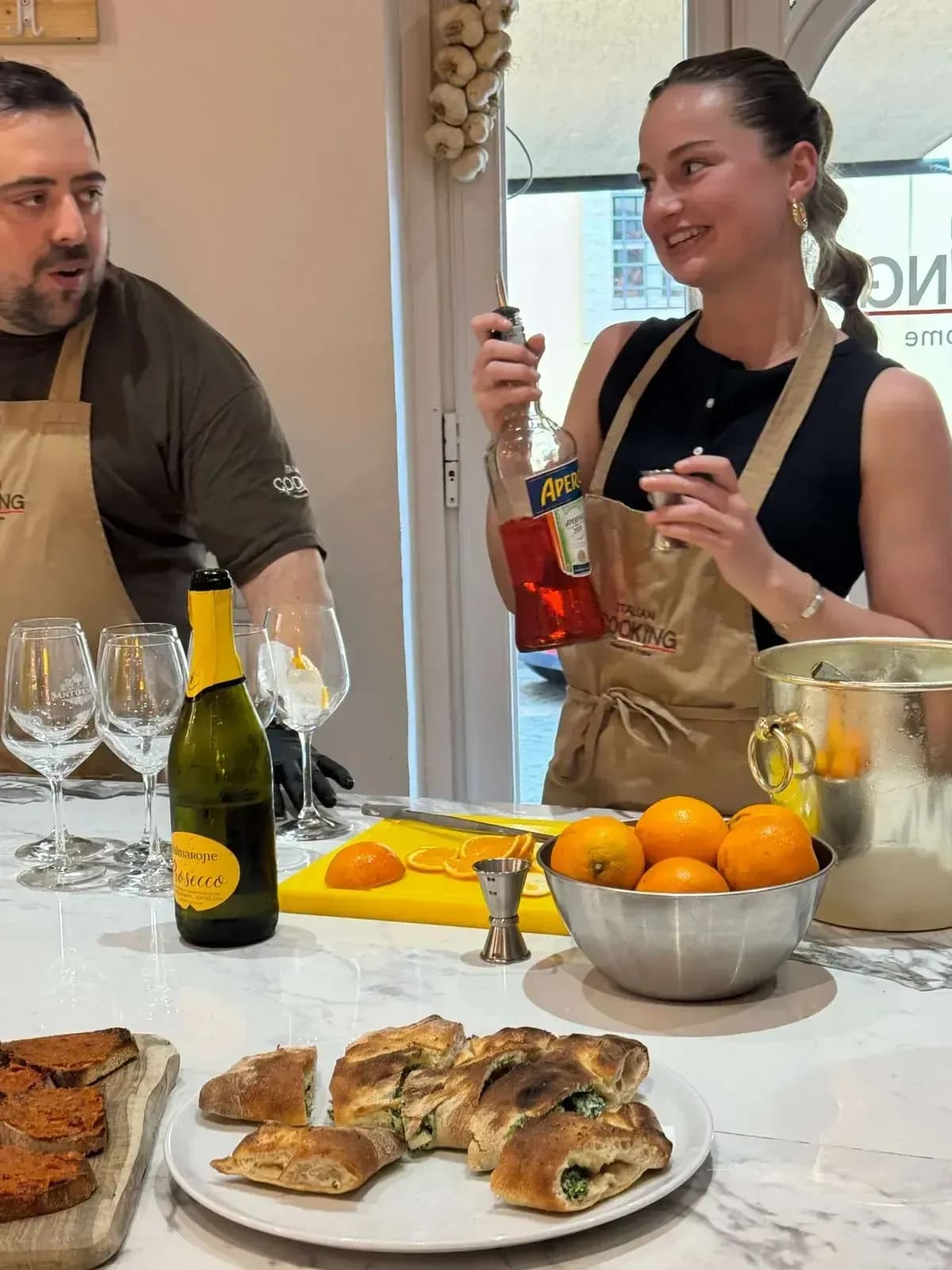
In our kitchen at Piazza Margana 22, in the center of Rome, it's one of the two recipes of the Spritz and Spaghetti class: about two and a half hours in the evening, an Aperol spritz and Italian wines poured while you work, fresh spaghetti made from scratch and shaped by hand, then the shared table and an espresso to close. The Nerano is where the room goes quiet, because everybody wants to see the cream appear.
Groups who want the kitchen to themselves book the private version of the same class. The rest of what we run is on the cooking classes page.
Bring an appetite. The plate at the end is dinner, not a sample.
Recipe details
Spaghetti alla Nerano as we cook it in our kitchen at Piazza Margana 22: zucchini sliced thin and fried until golden, provolone del Monaco melted into the pasta water off the heat, torn basil and nothing else. No cream, no butter, no cheese stirred in over the flame. The rule we repeat in class is that the zucchini give the flavour and the cheese gives the cream, and both fail if the pan is too hot when they meet.
Preparation
Slice the zucchini 3 to 4 mm thick
Wash and trim 700 g of zucchini and cut them into rounds 3 to 4 mm thick, with a mandolin if you have one, so every slice fries at the same speed. Spread them on a clean towel and pat them dry: water carried into the pan drops the oil temperature and the slices boil instead of frying. Choose medium zucchini, firm and no thicker than a broom handle. The big ones are full of water and go limp.
Fry them at 150 °C, a handful at a time
Heat about 500 ml of olive oil in a deep pan to 150 °C: a slice dropped in should sizzle at once without the oil smoking. Fry the zucchini a handful at a time for 5 to 6 minutes, turning them once, until the edges are golden and the centre is still soft. Crowding the pan cools the oil and leaves you with grey, greasy discs. Lift each batch onto kitchen paper, salt it while hot and tear a few basil leaves over the top.
Grate the cheese on the coarse holes
Grate 150 g of provolone del Monaco and 30 g of parmigiano on the large holes of the grater, into two separate bowls, and leave them at room temperature. Coarse shreds melt one after another as you toss; fine powder from a cold block packs into a rubbery ball the moment it touches hot pasta. Meanwhile bring a large pot of water to the boil and salt it less than usual: the cheese already brings plenty.
Cook the spaghetti for 6 minutes only
Drop 320 g of spaghetti into the boiling water and cook them for about 6 minutes, roughly half the time printed on the packet. Bite one: it should still be white and chalky at the core, because the second half of the cooking happens in the pan, among the zucchini and their starch. Before draining, keep at least two ladles of the cloudy cooking water within reach of the stove.
Warm the zucchini in the pan
While the pasta cooks, heat 30 g of extra virgin olive oil in a wide pan over medium heat with one whole clove of garlic. When the garlic turns pale gold, after about a minute, take it out. Add the fried zucchini and a ladle of pasta water and let them stew for a minute: the slices soften, some of them fall apart and the liquid starts to look milky. That is the base of the sauce.
Finish the pasta in the pan like a risotto
Drain the spaghetti straight into the zucchini and keep them moving over medium heat for about 3 minutes, adding half a ladle of pasta water whenever the bottom of the pan goes dry. Taste a strand: it should be al dente with no chalky centre, and the liquid around it should be thick and slightly sticky. If the pan looks dry at this point, add water now, not after the cheese.
Melt the cheese off the heat and serve
Take the pan off the burner and set it on the counter. Add the provolone in three or four handfuls, tossing between each, then the parmigiano, the remaining basil torn by hand and one more ladle of pasta water. Keep tossing for 30 seconds: the liquid turns into a pale green cream that clings to the strands without any threads of cheese. Black pepper, warm plates, and serve at once. This cream tightens within two minutes.
Why the cheese strings, and how we stop it in class
The failure we see most often is a ball of cheese sitting in the middle of the pan while the pasta around it stays dry. It happens when the provolone goes in over the flame. Provolone is a pulled-curd cheese, the same family as mozzarella, and above roughly 70 °C its proteins pull back into strings and squeeze the fat out. Below that, with enough starchy water around, it melts into the liquid and holds. So the pan comes off the burner first, the cheese goes in second, in three or four handfuls with a toss between each. Watch the cream form on the last handful: if it has not appeared after thirty seconds, add a spoon of water and keep tossing. Not heat.
Cold cheese does the same damage from the other side. Shreds straight from the fridge pull the temperature of the pan down and pack together before they have a chance to melt, so grate the provolone half an hour ahead and leave it on the counter. And know when to stop: a cream that is merely tight comes back with a spoon of water, but long threads of cheese that hold their shape will not go back, and the flame only turns them into rubber. Plate it as it is; it still tastes of Nerano.
The second place things go wrong is the fryer. Zucchini sliced too thick, or dropped in wet, or in one big pile: the oil temperature collapses, the slices sit in it and drink it, and what comes out is grey and heavy instead of golden and sweet. Seven hundred grams means three or four batches, and there is no shortcut worth taking.
Then the pasta water. People drain the spaghetti into the sink out of habit and lose the only thing that turns melted cheese into a sauce. Save two ladles before draining, and if the pan looks dry after the cheese is in, water is the fix. Never more cheese, never the flame. Salt is the quiet one: the zucchini are salted after frying, provolone is a salty cheese, parmigiano too. Salt the pasta water less than you would for a tomato sauce and taste before adding anything at the end.
Provolone del Monaco, and what to use outside Italy
Provolone del Monaco is a protected cheese from the Lattari mountains behind Sorrento, made with milk that comes at least in part from Agerolese cows and aged for a minimum of six months. Young it is mild and buttery; at the age the dish wants it is sharp, a little peppery, with a nutty finish that comes through the zucchini. The consortium that protects it is blunt on the point: cooked with another cheese, this is spaghetti with zucchini and cheese, not spaghetti alla Nerano. We agree, and we also know most of our guests will not find it at home.
Caciocavallo is the closest replacement: same family, same pulled curd, and an aged one behaves the same way in the pan. Use the same 150 g and the same 30 g of parmigiano. A well-aged provolone piccante from a deli counter is the next choice and melts a shade more easily. If neither exists where you live, make it with parmigiano alone, 150 g of it, and expect a thinner, saltier cream: use less pasta water at the end and no salt on the zucchini.
On the zucchini themselves, the small dark-green Italian type has less water and more flavour than the pale, fat ones. If large zucchini are all you can find, slice them, salt them lightly and leave them in a colander for twenty minutes before drying and frying. The oil for frying is olive oil in every Neapolitan kitchen we know; a neutral seed oil fries them just as well and is what many people prefer at home.
On the pasta: dried spaghetti, bronze-cut if possible, because the rough surface holds the cream. In the class where we cook this dish everyone rolls fresh spaghetti by hand; if you toss the Nerano with fresh pasta, cook it 2 to 3 minutes instead of 6 and expect the water to thicken faster, so use a little less of it.
From a bay below Sorrento to an aperitivo table in Rome
The dish was born in the fifties at Maria Grazia, a trattoria on the beach at Marina del Cantone, the bay below Nerano, a hamlet of Massa Lubrense on the Sorrento peninsula, where fried zucchini were already the house side dish and somebody thought to melt the local cheese over them with pasta. Every trattoria in that bay has its own version now. Many of them fry the zucchini the day before and leave them overnight with salt and basil, so the slices soak up the herb and lose their fried edge, which is why a Nerano eaten in Nerano tastes more of zucchini than of frying. If you have the time, an hour of rest with the basil already gets you halfway there; we do not count it in the recipe time because the dish works without it.
It is served as a first course, on its own, without extra cheese at the table and without any garnish beyond a basil leaf. It does not wait: the cream tightens as it cools, so plates go out the moment the pan stops moving, and any leftover firms into something closer to a frittata than a pasta.
In our kitchen at Piazza Margana 22 it is one of the plates of the spritz and spaghetti evening, a class of about two and a half hours where the group makes fresh spaghetti by hand, cooks this dish and a plate of spaghetti with meatballs, and has a spritz on the way. It is the dish people are most surprised by, because nobody walks in expecting that much from zucchini and cheese.
Ingredients
320 g of spaghetti, 80 g per person, bronze-cut if you can find them
700 g of zucchini, 175 g per person, sliced 3 to 4 mm thick
150 g of provolone del Monaco, 37.5 g per person, grated on the coarse holes (caciocavallo or parmigiano outside Italy)
30 g of parmigiano reggiano, 7.5 g per person, about a tablespoon each
1 clove of garlic, whole, removed as soon as it colours
30 g of extra virgin olive oil for the pan, plus about 500 ml for frying
20 basil leaves, 5 per person, torn by hand
Salt for the pasta water and for the fried zucchini, less than usual
Black pepper, freshly ground
Method
- 1
The zucchini come first and take the longest. Seven hundred grams, sliced 3 to 4 mm thick, patted dry and fried in olive oil at 150 °C, a handful at a time, 5 or 6 minutes per batch until the edges go golden. Salt them on kitchen paper and tear a few basil leaves over them while they are still hot.
- 2
Grate the cheese while the water comes to the boil. A hundred and fifty grams of provolone del Monaco and 30 g of parmigiano, both on the coarse holes so the shreds melt one by one instead of packing into a clump. Cook 320 g of spaghetti in salted water for about 6 minutes, half the time on the packet, because the rest of the cooking happens in the pan.
- 3
Warm the zucchini in a wide pan with 30 g of olive oil and a clove of garlic that comes out as soon as it colours. Add a ladle of pasta water and let the slices soften into it for a minute.
- 4
Finish the pasta in the pan, like a risotto. Drain the spaghetti into the zucchini and keep tossing for about 3 minutes, adding pasta water as it dries out, until the strands are al dente and coated in a starchy liquid.
- 5
The cheese goes in off the heat, never on it. Pull the pan off the burner, add the provolone in three or four handfuls, tossing between each, then the parmigiano, the rest of the basil and one more ladle of water. Thirty seconds of movement and the liquid turns into a pale green cream that clings to every strand. Black pepper and straight to the table.

Written by
Francesco Ieriti
Founder of Italian Cooking Classes in Rome and head chef, with more than 14 years in international hospitality. He writes the recipes on this blog the way they are taught in class at Piazza Margana 22: per person, mistakes included.