Index
Index
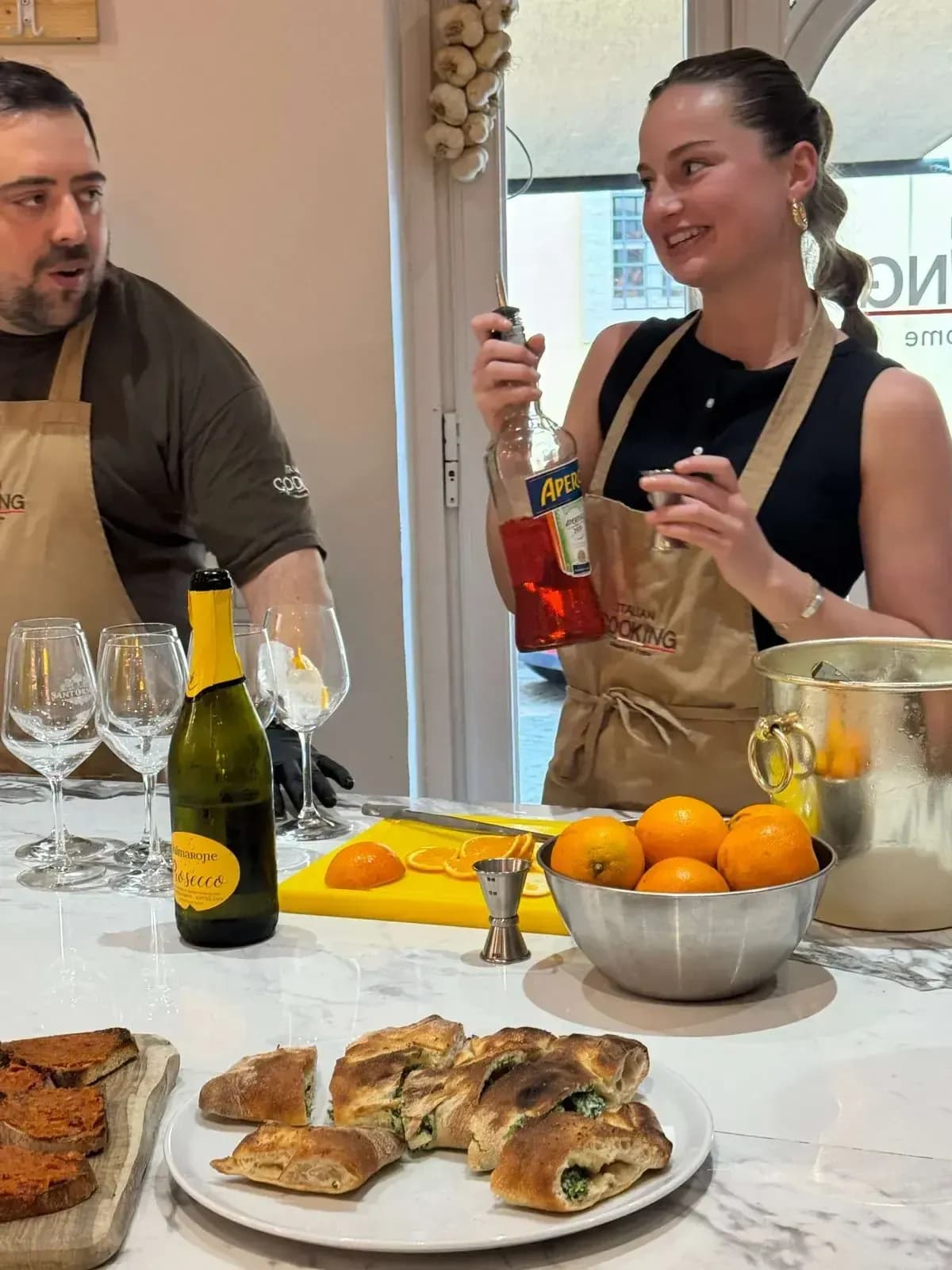
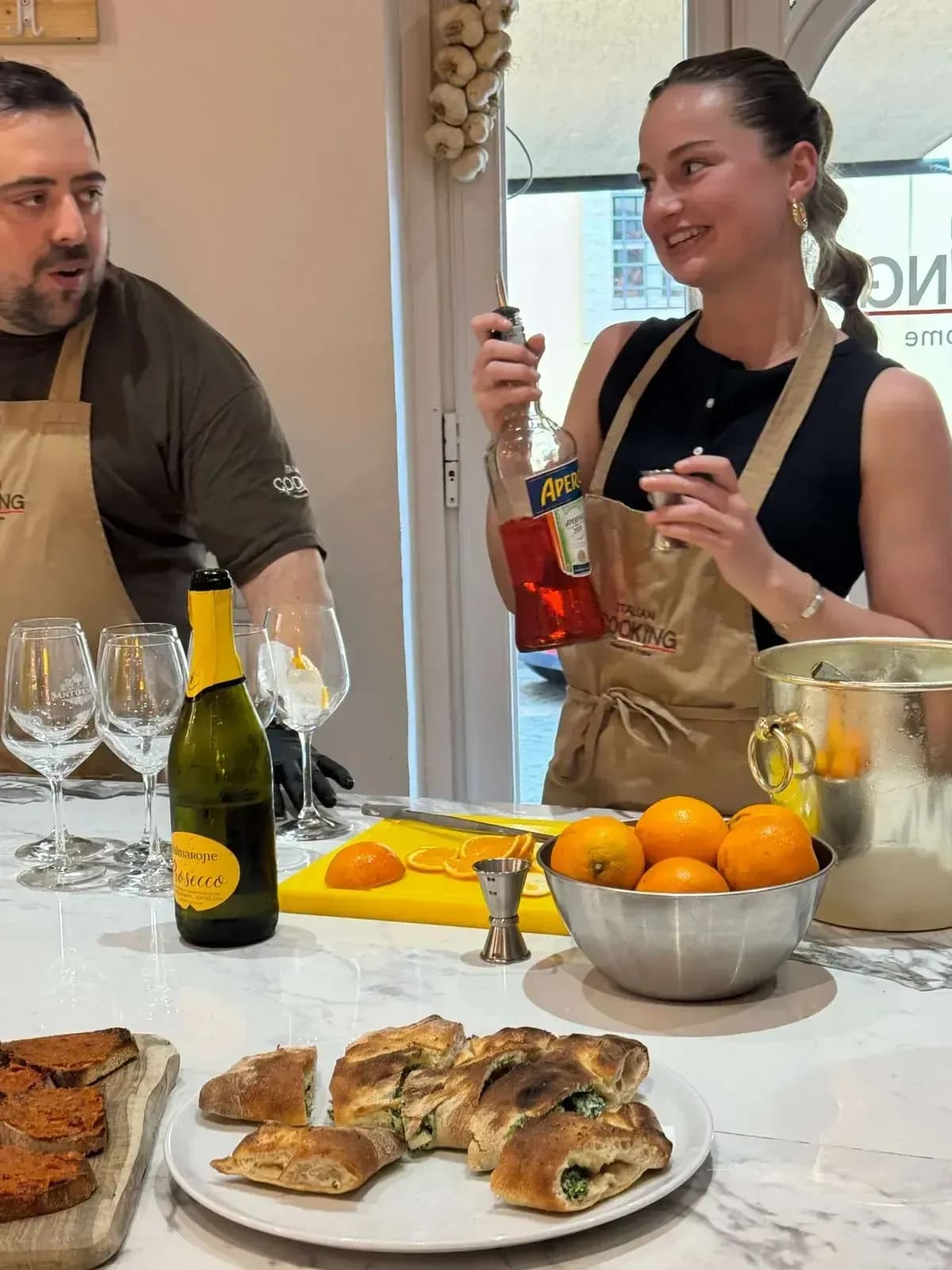
Is there anyone who has never sipped a spritz? It is the most famous long drink in Italy alongside the Negroni and the Americano, the centrepiece of the aperitivo ritual from the squares of the Veneto to the café tables of Rome. In our kitchen at Piazza Margana 22 it is the first glass of the Spritz and Spaghetti class: we pour it while the spaghetti dough rests, and from there the class changes pace.
The Aperol spritz recipe is short and leaves no room for improvising: 90 ml of prosecco, 60 ml of Aperol, a splash of soda, ice to the rim and half a slice of orange. Three, two, one. It is the official recipe, the one the International Bartenders Association put on its list of recognised cocktails in 2011, and everything there is to learn lies in the order the three liquids go into the glass and in how much ice you put in first. Below is the version we make in class, with the history, the mistakes we see every week and what to bring to the table next to the glass.
Aperol spritz ingredients for one glass
A spritz is built one glass at a time, straight in the wine glass, and the measures are these:
- 90 ml of prosecco, dry, brut or extra dry, straight from the fridge
- 60 ml of Aperol, fridge-cold as well
- a splash of soda water or very sparkling mineral water, ice cold
- half a slice of orange, thin, with the peel on
- ice, large cubes, enough to fill the glass to the rim, plus a couple to top up
The proportion is three parts prosecco, two parts Aperol, one part soda: 9, 6 and 3 cl. If you are pouring for a table, the rule multiplies without changing: a 75 cl bottle of prosecco makes eight spritzes, and eight spritzes take 48 cl of Aperol, just under a 70 cl bottle. Ice, on the other hand, is never to be rounded down: it is the ingredient everyone skimps on and the one that separates the bar glass from the home glass.
From spritzen to an official cocktail: the history of the spritz
The spritz was born in the nineteenth century, in the Kingdom of Lombardy-Venetia. The troops of the Austrian empire stationed in the Veneto found the local wines too strong for their taste and asked to have them lengthened with a spray of sparkling water: spritzen, in German, means exactly that, to spray. That glass of white wine lengthened with seltzer is the first spritz, and in Venice it still goes by that name.
The bitter came later. Aperol was created in Padova in 1919 by the Barbieri brothers, with orange, rhubarb, gentian and cinchona in a recipe the company still keeps secret. The lengthened wine and the orange bitter met around the middle of the last century, and from there the marriage was sealed: prosecco, Aperol and soda over ice became the recipe everyone means when they say spritz. In 2011 the IBA, the international bartenders' association, added it to its official cocktails with the 3-2-1 measures. Alongside the Aperol version there has always been the one with Campari, drier and more bitter, which many in the Veneto prefer; the name stays the same, the colour changes.
How to make a spritz, step by step
The glass, full of ice. Take a wine glass, not a tumbler, and fill it with cubes to the rim. It looks like too much and it is not: ice that fills the glass melts slowly and keeps the drink cold, ice that sits at the bottom melts in minutes and turns the last third into orange water.
Prosecco first. Pour the 90 ml over the ice, letting it run down between the cubes so the foam settles. The bubbles are what carry the bitterness of the Aperol around the glass, so a freshly opened bottle matters more than an expensive one.
Then the Aperol. The 60 ml poured over the prosecco sink through the cubes and colour the glass from the bottom up: that slow fall mixes the drink without a spoon.
Soda last, then a little more ice. A short splash of soda or very sparkling water, and if the ice has dropped below the rim, one or two more cubes. Stir gently with the stirrer, the long bar spoon: two turns, not ten, or the gas goes.
Half a slice of orange, and drink. Push it in among the cubes, peel against the glass, and serve at once, while the outside of the glass is still fogged. A spritz does not keep: you make it and you drink it.
The mistakes we correct in class: order, ice and glass
The question we hear most often during the class is why the spritz made at home does not taste like the one at the bar. The answer is almost always one of these three.
Aperol poured first is the most common mistake, because it is the bottle you reach for first. Aperol is denser than prosecco: put in at the bottom it stays there in a syrupy layer the wine never fully lifts, the first sip is sweet and the last is plain prosecco. Prosecco first, then Aperol: it sinks on its own and mixes itself on the way down.
Ice is the second. People use two or three cubes out of fear of watering the drink down, and it is exactly the other way round: a little ice in a lot of liquid melts fast and dilutes everything within five minutes, while a glass packed to the rim holds its temperature and melts slowly. Large cubes, fresh out of the freezer, glass full.
The glass is the third. A tumbler will do if there is nothing else, but a stemmed wine glass keeps your hand away from the liquid and gives the bubbles room to rise. Ten minutes in the freezer, if there is space. And the orange goes into the glass, not hooked on the rim: among the cubes it perfumes the drink, on the edge it perfumes your nose and nothing else.
Soda, siphon or sparkling water, and the variants worth knowing
Soda is carbonated water with a pinch of minerals, and the classic way to have it is a siphon. If you do not own one, no problem: it is easy to find in shops, even in single-use bottles at the supermarket, and a good, very sparkling mineral water does the same job as long as it is ice cold. Avoid tonic water, which brings its own sugar and quinine and turns the spritz into a different drink.
On the wine, the most widespread and oldest variant is still white wine in place of prosecco: it is the spritz of the origins, the glass lengthened with seltzer, and it is made with the same measures. Outside Italy any dry sparkling wine works as long as the label says brut or extra dry, a cava or a crémant; anything sweet or demi-sec weighs the glass down.
On the bitter, with Campari the spritz turns drier and sharper; with Select, the Venetian bitter, and a green olive instead of the orange, you have the version served in the bacari of Venice. The garnish allows alternatives too: a slice of lemon instead of orange gives a fresher glass, a green olive makes it saltier and more of an aperitivo. The measures stay the same.
What to eat with a spritz
The spritz was born for the aperitivo, and an aperitivo comes with something to eat. The pairings that work best are salty and not too rich: cured meats, young cheeses, nuts such as almonds, peanuts, cashews and hazelnuts, crisps and popcorn if the aperitivo is a casual one. Sweet green olives have always been the perfect company for the orange glass.
With fish it works very well: salmon, creamed baccalà, octopus and shellfish stand up to the bitterness of the Aperol without covering it. Given the Venetian origin of the drink, a selection of Venetian cicchetti, from sarde in saor to baccalà mantecato to baby octopus, is the most coherent pairing there is. And with vegetables? Yes: a pinzimonio of carrots, celery and fennel, or small dishes built on spinach, courgettes and aubergines.
In our kitchen the spritz opens an evening that ends at the table with pasta: spaghetti alla Nerano with fried courgettes and provolone, or spaghetti and meatballs in tomato sauce. The first glass goes with the dough, the second arrives when the spaghetti reach the table.
Where to learn the spritz in Rome
In our kitchen at Piazza Margana 22, in the centre of Rome, a short walk from Piazza Venezia. The Spritz and Spaghetti class is an aperitivo with your hands in the dough: you roll the fresh egg pasta, cut the spaghetti on the chitarra, cook two Italian recipes with the chef and, in between, learn to pour a spritz in the right order with the right ice. At the end you sit down and eat what you cooked.
The private version is for a group that wants the kitchen to itself, with customisable recipes and the same sequence. Shared classes are taught in English; for Italian or Spanish, book a private session and choose the language when you book. The full list is on the cooking classes page.
Recipe details
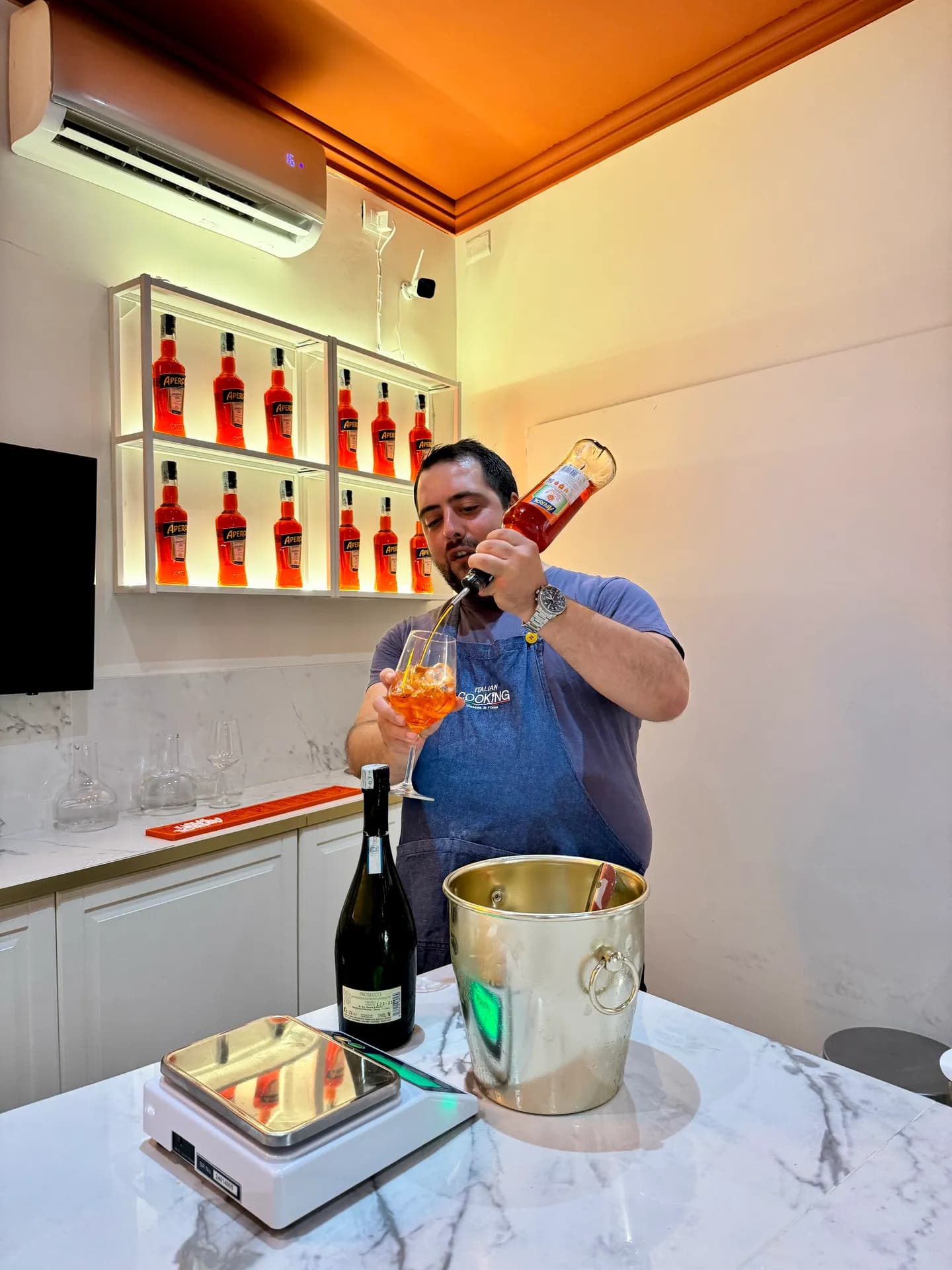
The aperitivo we pour in our kitchen at Piazza Margana 22 while the spaghetti dough rests. One rule, the 3-2-1 written out by the IBA and by Aperol itself: three parts prosecco, two parts Aperol, one part soda, 9, 6 and 3 cl, in a wine glass filled with ice before anything liquid goes in. Prosecco first, Aperol second, soda last, half a slice of orange and two turns of the spoon. Nothing shaken, nothing measured by eye.
Preparation
Fill a wine glass with ice
Choose a wine glass with a wide bowl and a stem, so your hand never warms the drink, and chill it beforehand if you can. Fill it to the rim with large ice cubes, five or six: a glass half full of ice is the most common mistake we see, because a little ice melts fast and waters everything down. When the cubes are stacked to the top and the glass has fogged on the outside, you are ready to pour.
Pour 9 cl of prosecco
Pour 9 cl of prosecco over the ice, slowly, letting it run down between the cubes. Keep the bottle in the fridge until this moment and open it just before: the bubbles carry the bitterness of the Aperol through the whole glass, and a prosecco that has lost its fizz gives a flat, sugary spritz. Use a jigger the first few times. After that, look at where the level lands in your own glass and remember it: every glass is different, and the jigger never lies.
Add 6 cl of Aperol and 3 cl of soda
Add 6 cl of Aperol, pouring it over the prosecco. Watch it sink through the ice and colour the glass from the bottom up: that slow fall is what mixes the drink without a spoon. Then top with 3 cl of very cold soda, a short splash from a freshly opened bottle. The soda is there to dilute and lift, not to fill the glass: past 3 cl the spritz starts tasting like a soft drink.
Orange, two turns of the spoon, serve
If the ice has dropped below the rim, add 1 or 2 cubes. Push half a thin slice of orange down among the cubes, peel side out, and give the drink two gentle turns from the bottom with a long spoon. Two turns, not ten: shaking or fast stirring knocks the gas out and the drink goes flat within a minute. The colour should be uniform from top to bottom and the foam should settle in a few seconds. Serve at once, while the outside of the glass is still fogged.
From the Austrian garrisons to the 3-2-1 rule
The word comes from the German spritzen, to spray. In the nineteenth century, when Veneto was part of the Austrian empire, the soldiers stationed there found the local wines too strong and asked for a splash of water in the glass. That lengthened wine, sometimes with sparkling water, was the first spritz, and in Venice a glass of white with a shot of seltzer still goes by that name.
The bitter came later. Aperol was created in Padova in 1919 by the brothers Luigi and Silvio Barbieri, after seven years of trials in their father's liqueur company: 11% alcohol, orange, rhubarb, gentian and cinchona bark, the rest of the list is still a company secret. The recipe most people mean when they say spritz, prosecco plus Aperol plus soda over ice, dates from the 1950s, and in 2011 the International Bartenders Association put it on its list of official cocktails: 9 cl of prosecco, 6 cl of Aperol and a splash of soda, which Aperol's own recipe fixes at 3 cl, the third number of the 3-2-1.
The proportions matter more than they look. Aperol is sweet and bitter at the same time, with less alcohol than most aperitivo bitters, and prosecco at around 11% is dry and sharp. Three to two gives you a glass where the sugar of the Aperol is cut by the acidity of the wine and the bitterness is still there at the bottom of the glass. The soda is one part, and it is not decoration: it brings the alcohol down to something you can drink before dinner without losing the evening, and it stretches the bubbles. Push the Aperol up to equal parts and the drink turns thick and sweet, which is what happens in a lot of bars outside Italy; drop it to one part and you are drinking flavoured prosecco.
In the Spritz and Spaghetti class we pour the first one while the spaghetti dough rests, and the question we hear most often is why it tastes different from the one made at home. The answer is almost always the ice, or the order. Both are in the next section.
Order, ice and glass: where a spritz goes wrong, and the variants worth knowing
Aperol first is the mistake we correct most. It is the natural instinct, because it is the bottle you reach for, but Aperol is denser than prosecco and, poured first, it sits at the bottom in a syrupy layer that the wine never fully lifts. The first sip is sweet, the last is plain prosecco. Prosecco first, Aperol second: it sinks through the wine and mixes itself on the way down, and two turns of the spoon finish the job.
Ice is the second. People use two or three cubes because they are afraid of watering the drink down. It is the other way round. A little ice in a lot of liquid melts fast and dilutes everything within five minutes; a glass packed to the rim keeps its temperature and melts slowly. Big cubes, freshly out of the freezer, glass full. If your freezer gives you small hollow cubes, use even more of them.
The glass is the third. A tumbler will do in a pinch, but a wine glass with a stem keeps your hand away from the liquid and gives the bubbles somewhere to rise. Ten minutes in the freezer, if there is room. And the orange goes in the glass, not on the rim: pushed among the cubes it perfumes the drink, hooked on the edge it perfumes your nose and nothing else.
On variants: swap the Aperol for Campari and you get a spritz that is drier and more bitter, the one many Venetians actually drink; swap it for Select, the Venetian bitter, with a green olive instead of the orange, and you have the version served in the bacari of Venice. Cynar, made from artichoke, gives a darker, earthier glass. Outside Italy, any dry sparkling wine works as long as the label says brut or extra dry: cava, crémant, a dry sekt. Avoid anything labelled sweet or demi-sec, and avoid tonic water in place of soda, which brings its own sugar and quinine and turns the drink into something else. Plain sparkling mineral water is the honest substitute for soda.
Ingredients
9 cl of prosecco, dry (brut or extra dry), straight from the fridge
6 cl of Aperol, from the fridge as well
3 cl of soda water or very sparkling mineral water, ice cold
Half a slice of orange, thin, with the peel on
Ice cubes, enough to fill the glass to the rim, 5 or 6 large ones
1 or 2 extra ice cubes to top up after the soda, if the level has dropped
Method
- 1
Cold glass, full of ice. Take a wine glass, not a tumbler, and fill it to the rim with large cubes, five or six of them. It looks like too much; it is not. Ice that fills the glass melts slowly and keeps the drink cold, ice that sits at the bottom melts in minutes and turns the last third into orange water. Bottles come straight from the fridge, prosecco and Aperol both.
- 2
Prosecco first, 9 cl. Pour it over the ice, not down the side of the glass, so the foam settles. The bubbles are what carry the bitterness of the Aperol around, so a freshly opened bottle matters more than an expensive one: a prosecco opened yesterday makes a flat spritz.
- 3
Aperol second, 6 cl. Poured over the prosecco it slides down through the ice and colours the glass from the bottom up. Poured first, as most people do at home, it sits in a syrupy layer that the prosecco never fully lifts: the first sip is sweet, the last one is wine.
- 4
Soda last, 3 cl, then the orange. A short splash of very cold soda or sparkling water, half a thin slice of orange pushed down among the ice, and two gentle turns with a long spoon. Do not stir it like a cocktail, you would knock the gas out. Serve within a minute. The colour should be an even orange from top to bottom and the foam on the surface should be gone in about ten seconds.

Written by
Francesco Ieriti
Founder of Italian Cooking Classes in Rome and head chef, with more than 14 years in international hospitality. He writes the recipes on this blog the way they are taught in class at Piazza Margana 22: per person, mistakes included.