Index
Classes with this recipe
Index
Homemade gluten-free fresh pasta usually fails in one of two places: under the rolling pin, where the sheet crumbles, or in the pot, where the strands come apart. Neither is bad luck. A wheat dough has gluten to hold it together, and a gluten-free one has to be given something that does the same job, plus more water than you would expect.
This is the dough of our gluten-free class at Piazza Margana 22, counted per person so there is nothing to convert: 100 g of Caputo Fioreglut gluten-free flour, 50 g of water, 1 g of xanthan gum, one egg yolk, a circle of extra virgin olive oil and a pinch of salt. The method is the one we use for our wheat fresh pasta, from the flour volcano to the chitarra, with a few changes that decide whether the sheet survives. Below: what the xanthan does, why the water goes up to 50 g, how to roll a sheet that tears more easily, and how to keep wheat flour away from all of it.
Gluten-free fresh pasta for 4: what goes on the board
For four people you need 400 g of flour, 200 g of water, 4 g of xanthan and four yolks. The rest is a circle of oil, a pinch of salt and the water for the pot.
- 400 g of Caputo Fioreglut gluten-free flour, 100 g per person
- 200 g of water, 50 g per person, at room temperature
- 4 g of xanthan gum, 1 g per person, mixed into the flour
- 4 egg yolks, one per person
- a circle of extra virgin olive oil and a pinch of fine salt
- gluten-free flour for dusting the board and the sheet: never semolina, which is wheat
- 4 litres of water and 40 g of coarse salt for cooking
The rule holds at any number. Six people: 600 g of Fioreglut, 300 g of water, 6 g of xanthan and six yolks. Weigh everything, xanthan included: 1 g a head looks like too little to matter, and it is the one ingredient this dough cannot do without.
Fioreglut and 50 g of water: why this dough is wetter
Caputo's Fioreglut is a gluten-free blend made for bread and pasta. Its starches and fibres take up more water than wheat flour does, and that is where the number comes from: 50 g of water per person, where our wheat fresh pasta takes 30 g with the same yolk. The wheat quantity would leave this dough too dry to come together.
The water is weighed and goes in at room temperature. It sets the consistency, and a weighed 50 g gives the same dough every time, which a splash from the tap does not.
The yolk and the oil come straight from the wheat recipe, and here they earn their place twice. They bring colour and flavour, and they make the sheet less fragile. With gluten-free pasta, a less fragile sheet is what you are working towards from the first pass of the pin.
Xanthan gum: one gram that does the job of gluten
In wheat pasta, gluten is what lets the sheet stretch without tearing and what holds the strand together in boiling water. Fioreglut has none, so something has to take its place: xanthan gum, 1 g for every 100 g of flour. It binds the dough, makes it workable under the pin and keeps the tonnarello whole in the pot.
Leave it out and you get the two failures this page started with. The sheet crumbles as soon as the pin touches it, and whatever makes it to the pot falls apart in the water.
With it, the dough is still not a wheat dough, and it is worth knowing that before you start. It does not turn elastic the way wheat does, and you will not get the smooth, springy ball you may be used to. It only has to hold together without crumbling, and that is enough to roll it and cut it.
The xanthan goes into the dry flour before any liquid touches it, and then it needs the ten minutes of rest after kneading. That is when it hydrates, and the sheet rolls better for it.
The volcano and the palm: a dough that only has to hold together
On the board it starts like all our fresh pasta. Mix the Fioreglut with the xanthan, pour it out as a volcano and open a wide crater in the middle. Into the crater go the yolks, then the water, the pinch of salt and the circle of oil. Beat the liquid with a fork and draw the flour in from the inner wall, a little at a time, until the yolks and water have taken it up and the dough starts to take shape. Whatever is left on the board, gather with the bench scraper.
Then the palm of your hand. Push the dough away with it, fold it back, give it a quarter turn and push again, until it is smooth and compact. If you are used to wheat dough, this is where you would keep going, waiting for it to turn silky and elastic. It won't, and there is nothing to wait for: once it holds together without crumbling, it is ready. If it cracks under your palm, wet your hands and carry on.
Shape it into a ball, wrap it in cling film and give it its ten minutes.
Rolling a sheet that tears more easily
A gluten-free sheet tears more easily than a wheat one, and the whole rolling stage is built around that. Dust the board with gluten-free flour and roll the ball out with the pin. Every so often fold it in half and keep rolling, gently: the same move we make with wheat dough, with a lighter hand.
Then the pasta machine, from 0 to 3, one setting at a time. Work in short strips rather than one long sheet, because they are much easier to handle, and dust them with gluten-free flour whenever they stick. Three is where we stop for tonnarelli, the same as with our wheat dough.
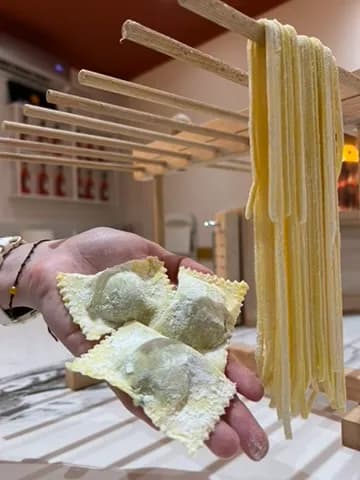
Before cutting, set a small piece aside and keep it covered. That is the sheet for the ravioli.
Tonnarelli on the chitarra, then two or three minutes in the pot
Dust the sheet with gluten-free flour, lay it over the strings of the chitarra and run the rolling pin across it: out come the tonnarelli. Open them straight away and gather them into loose nests. Because the sheet is fragile, it is cut as soon as it comes off the machine, without leaving it to dry in the air.
For four people, bring 4 litres of water to the boil with 40 g of coarse salt. The nests go in, the tonnarelli float after about a minute and they are done sixty to ninety seconds later: two to three minutes in all. Before draining, set aside a mug of the cooking water for the sauce.
That pot is a gluten-free pot. In our kitchen this pasta cooks in its own water, never in water that has had wheat pasta in it.
The mistakes that break a gluten-free sheet
Leaving out the xanthan, or cutting it down. One gram per 100 g of flour is the binder. Without it the sheet crumbles under the pin and the pasta falls apart in the water.
Skipping the ten minutes of rest. The rest is when the xanthan hydrates. Roll the dough straight after kneading and you lose the thing that makes it roll better.
Treating the sheet like wheat. Long sheets, hard pressure and a quick fold are fine for a wheat dough. A gluten-free sheet wants short strips, a gentle fold and the machine one setting at a time, or it tears.
Leaving the sheet out. Cut it as soon as it is rolled, and open the tonnarelli into nests straight away.
Semolina on the board. It is the reflex of anyone who makes wheat pasta, and semolina is durum wheat. For a coeliac guest one dusting of it undoes everything else in this recipe. Gluten-free flour, and nothing else.
Dedicated tools: what touches the pasta counts as much as what goes in it
For a coeliac guest, the flour is only half the story. The other half is everything the dough touches on its way to the plate. In class the gluten-free sheet is worked with dedicated tools: board, pasta machine and chitarra clean of any trace of wheat flour, gluten-free flour for dusting, and a pot of water of its own.
At home the principle is the same. If the board, the machine or the chitarra have been used for wheat pasta, clean off every trace of flour before the gluten-free dough goes anywhere near them, and keep a pot just for this pasta.
The same logic shapes how our classes work. The wheat pasta classes do not become gluten-free, not even for a single plate. A coeliac guest books one of our two dedicated gluten-free classes: the pasta and tiramisù class this dough comes from, or the gluten-free pizza and gelato class.
Where to learn gluten-free fresh pasta in Rome
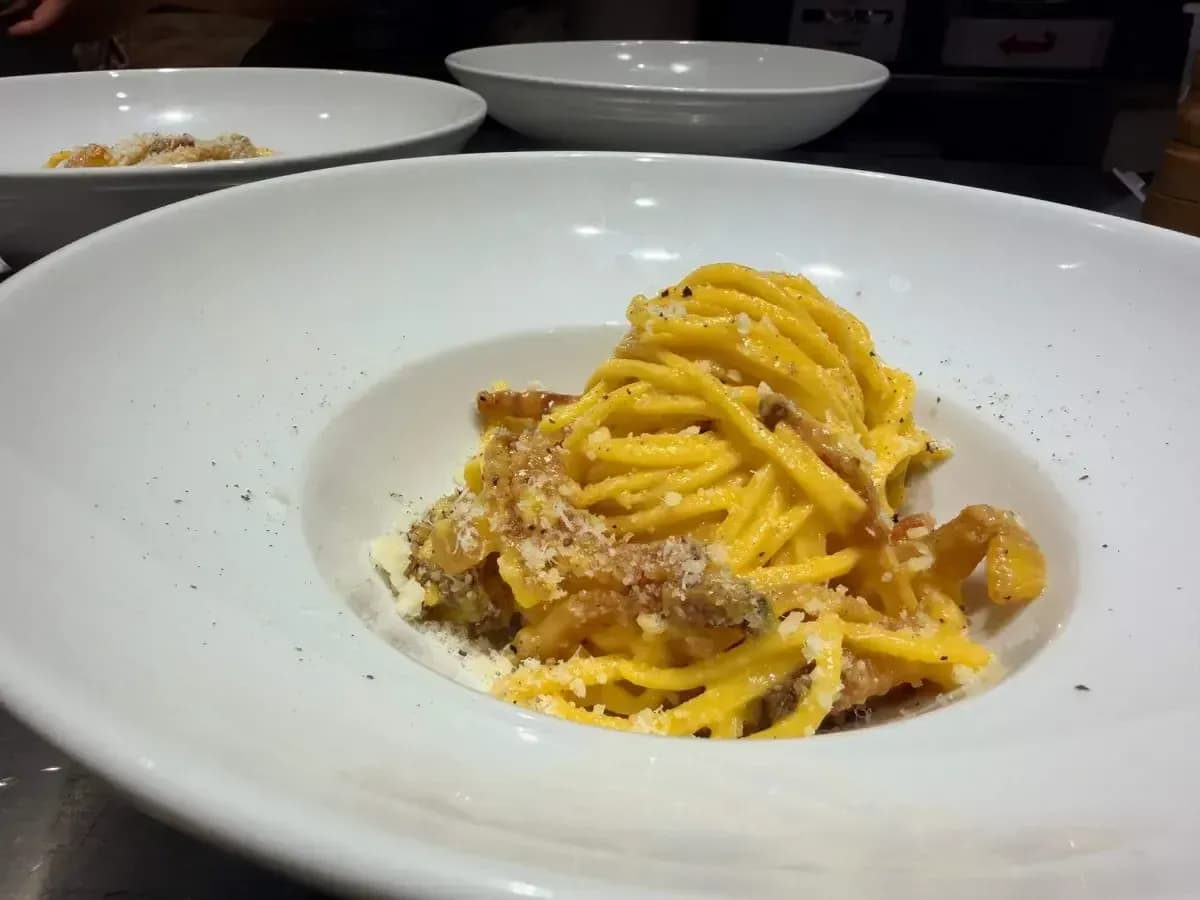
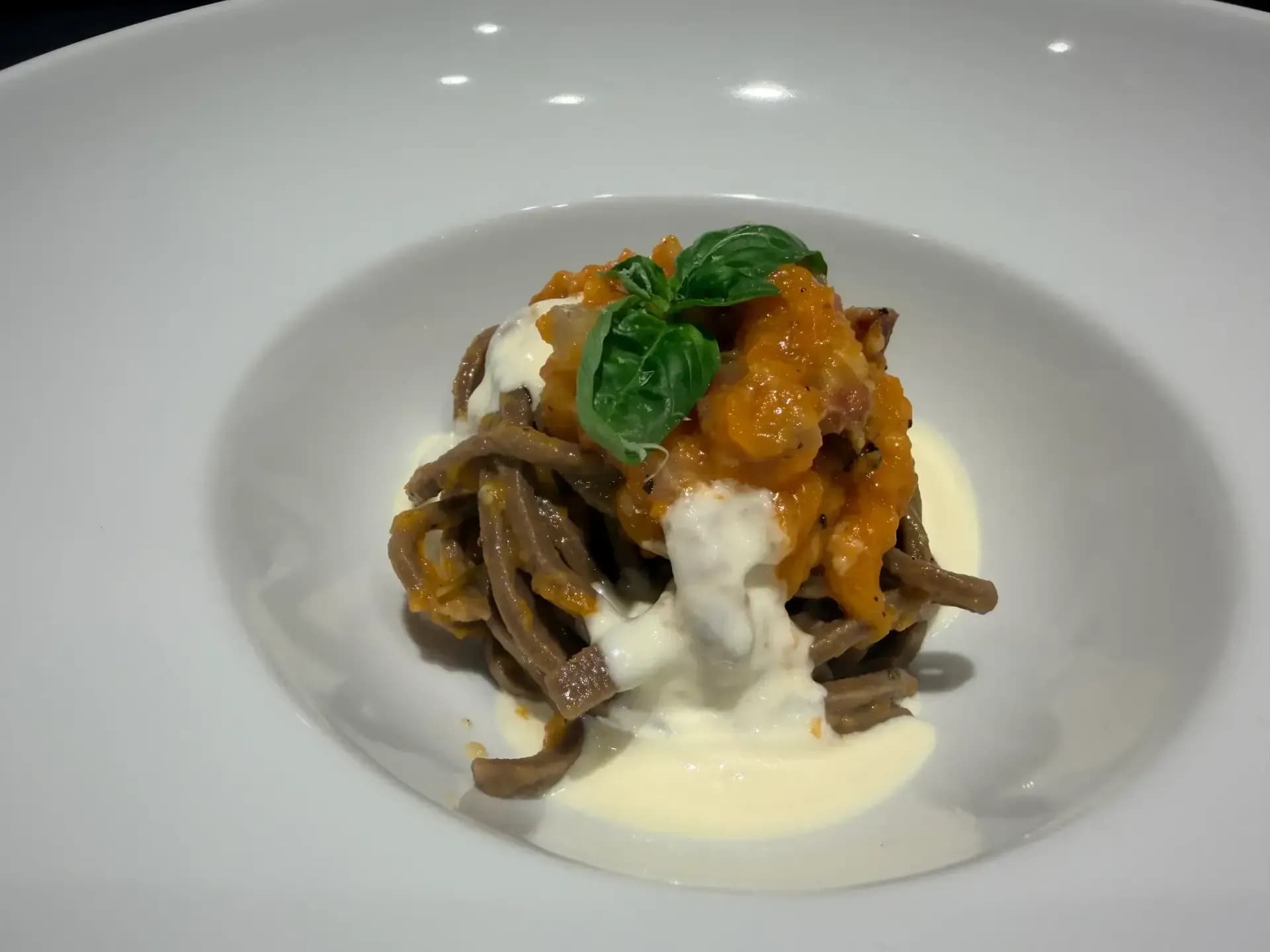
In our kitchen at Piazza Margana 22, in the historic centre of Rome, close to Piazza Venezia. The gluten-free pasta and tiramisù class lasts about three hours and starts from this dough. The sheet becomes tonnarelli for the amatriciana, which is gluten-free by nature. The piece set aside becomes ricotta and spinach ravioli with butter and sage. The class closes with tiramisù, which is naturally gluten-free once the ladyfingers are swapped for gluten-free ones.
The class is private: only your group in the kitchen, with the chef beside you for the whole session, in English, Italian or Spanish. No previous experience is needed. It is gluten-free for everyone taking part, and open to anyone who eats gluten-free, whether by diagnosis or by choice; if the reason is medical, say so when you book. The Fioreglut pizza from the other gluten-free class uses the same flour with a completely different method. Both classes are on the gluten-free cooking classes page.
Recipe details
Gluten-free fresh pasta the way we make it in the gluten-free class at Piazza Margana 22, per person: 100 g of Caputo Fioreglut gluten-free flour, 50 g of water, 1 g of xanthan gum, one egg yolk, a circle of extra virgin olive oil and a pinch of salt. The xanthan does the job of gluten, holding the sheet together and giving it elasticity. The method is the same as our fresh pasta: flour volcano, palm of the hand, ten minutes in film, rolling pin, pasta machine from 0 to 3 and chitarra. Made with dedicated tools and dusted only with gluten-free flour, never semolina.
Preparation
Flour and xanthan, then the volcano
Mix 400 g of Fioreglut with 4 g of xanthan gum and pour it onto the board as a volcano, with a wide crater in the middle. Into the crater go the 4 yolks, then the 200 g of water, a pinch of salt and a circle of extra virgin olive oil.
Mix the liquid into the flour
Beat the liquid in the crater with a fork and draw the flour in from the inner wall, a little at a time, until the yolks and water have taken it up and the dough takes shape. Gather what is left with a bench scraper.
Knead with the palm of your hand
Work the dough by pushing it with the palm, folding it and turning it a quarter turn, until it is smooth and compact. Without gluten it does not turn elastic like wheat dough: it only has to hold together without crumbling. If it cracks, wet your hands.
Ten minutes in film
Shape it into a ball, wrap it in cling film and let it rest ten minutes: the xanthan hydrates and the sheet rolls better.
Rolling pin, folding in half
Roll the ball out with the pin on a surface dusted with gluten-free flour, never semolina, and every so often fold it in half and keep rolling, gently: gluten-free sheet tears more easily than wheat sheet.
Pasta machine from 0 to 3, and a piece set aside
Pass the sheet through the pasta machine from 0 to 3, one setting at a time, in short strips that are easier to handle. Cut off a small part and keep it covered for the ravioli.
Tonnarelli on the chitarra, and the pot
Dust the sheet with gluten-free flour, lay it over the chitarra and run the rolling pin across it: out come the tonnarelli. Open them and gather them into nests. Cook in 4 litres of water with 40 g of coarse salt: they float after a minute and are done 60 to 90 seconds later. Set aside a mug of cooking water.
Fioreglut and xanthan: what replaces the gluten
Caputo's Fioreglut is a gluten-free blend made for bread and pasta, with starches and fibres that absorb more water than wheat flour: that is why it takes 50 g of water per person, not 30. Xanthan gum, 1 g for every 100 g of flour, does the job gluten does in wheat: it binds the dough, makes it workable and holds the tonnarello together in the pot. Without xanthan the sheet crumbles under the pin and the pasta falls apart in the water. The yolk and the oil bring colour, flavour and a less fragile sheet.
Dedicated tools and no semolina
For a coeliac guest what touches the pasta matters as much as what is in it. In class the gluten-free sheet is worked with dedicated tools: board, pasta machine and chitarra clean of any trace of wheat flour, and its own pot of water. The dusting is gluten-free flour, never the semolina we use for wheat pasta. Gluten-free sheet is more fragile: it is rolled in short strips, folded gently and cut at once, without leaving it to dry in the air.
The gluten-free class: tonnarelli, ravioli and tiramisù
In the gluten-free pasta class this sheet becomes the tonnarelli for the amatriciana, which is gluten-free by nature, and from the piece set aside the ricotta and spinach ravioli with butter and sage. The class closes with tiramisù, which is naturally gluten-free: only the ladyfingers change, for a gluten-free version. Shared classes are taught in English; for Italian or Spanish, book a private session.
Ingredients
400 g of Caputo Fioreglut gluten-free flour, 100 g per person
200 g of water, 50 g per person, at room temperature
4 g of xanthan gum, 1 g per person, mixed into the flour
4 egg yolks, one per person
A circle of extra virgin olive oil
A pinch of fine salt
Gluten-free flour for dusting the board and the sheets: never semolina, which is wheat
4 litres of water and 40 g of coarse salt for cooking
Method
- 1
100 g of Fioreglut, 50 g of water, 1 g of xanthan and one yolk per person. Mix the flour with the xanthan and pour it onto the board as a volcano; into the crater go the yolk, then the water, the pinch of salt and a circle of oil. Stir the liquid with a fork, drawing flour in from the edge, until the dough takes shape.
- 2
Then the palm of your hand. Knead by pushing with the palm until smooth and compact: without gluten it does not turn elastic like wheat dough, it only has to hold together. Film and ten minutes of rest.
- 3
Rolling pin, folding in half, then the machine from 0 to 3. Gluten-free sheet is more fragile: roll it in short strips, dusted with gluten-free flour, and fold gently. A small piece set aside for the ravioli.
- 4
The chitarra, and two to three minutes in the pot. The sheet over the strings, the rolling pin on top, and out come the tonnarelli. In 4 litres of water with 40 g of coarse salt they float after a minute and are done sixty to ninety seconds later. A mug of cooking water set aside for the sauce.
Want to learn this recipe with us? Discover the best cooking classes in Rome.

Written by
Francesco Ieriti
Founder of Italian Cooking Classes in Rome and head chef, with more than 14 years in international hospitality. He writes the recipes on this blog the way they are taught in class at Piazza Margana 22: per person, mistakes included.